
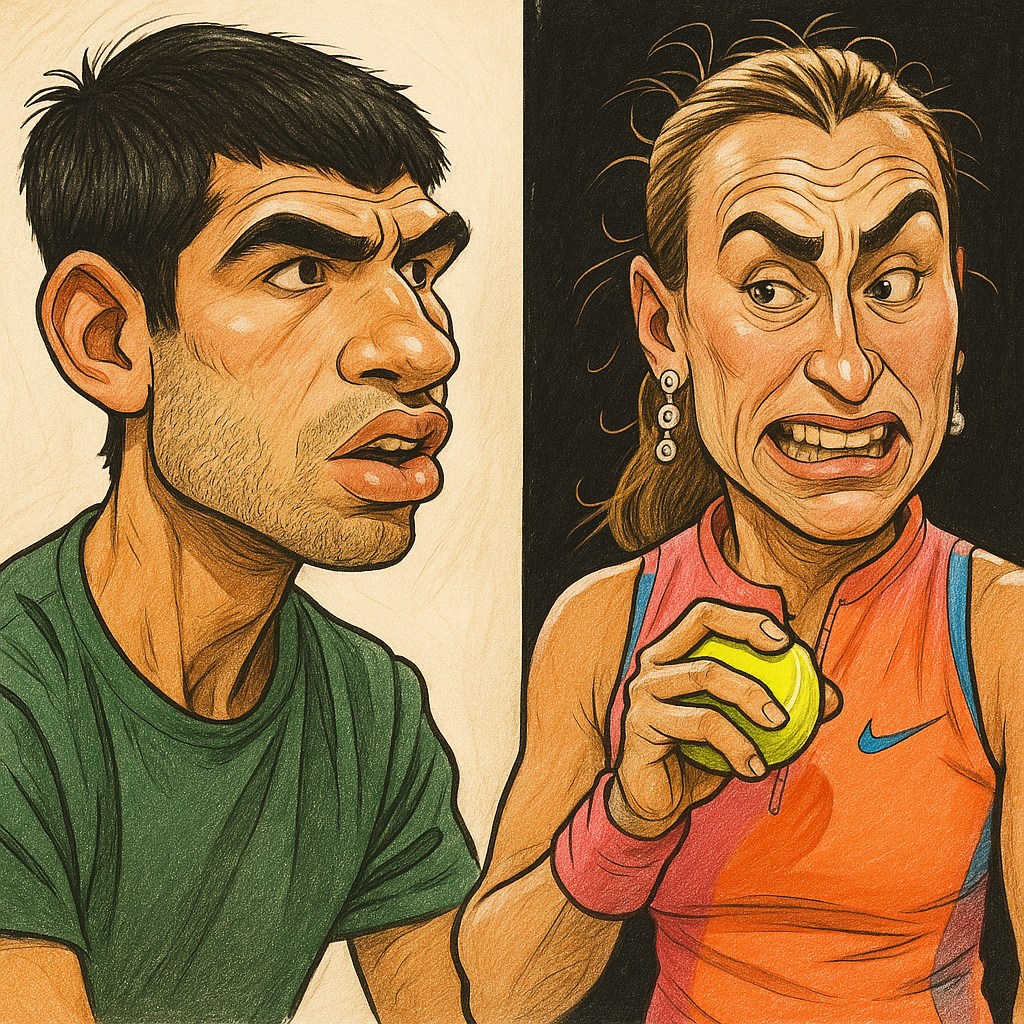
LONDON — The simmering tension over player compensation at Wimbledon has escalated dramatically, with the tournament's reigning champions, Carlos Alcaraz and Aryna Sabalenka, reportedly among a significant group of top players to have rejected a special financial offer from the All England Club. This development signals a deepening rift between the sport's biggest stars and the most prestigious Grand Slam over the distribution of its record-breaking revenues.
According to widespread reports from The Telegraph and other outlets, Wimbledon officials presented a proposal to increase the prize money for first-round losers by a substantial margin. However, this offer was contingent upon the top players—specifically those who reach the latter stages of the tournament—agreeing to a disproportionately smaller increase for the champions and finalists. The move was seen by many players and their representatives as a divisive tactic, and it has been firmly rebuffed by the game's leading figures.
The Core of the Dispute: Prize Money Distribution
At the heart of the conflict is a fundamental disagreement on how Wimbledon's soaring income should be allocated. The All England Club recently announced a new £10 million annual partnership with Rolex and is set to begin a groundbreaking broadcast deal with the BBC and Sky Sports next year, worth a reported £90 million annually. With total prize money for The Championships 2024 already set at a record £50 million, players argue that the increases do not reflect the tournament's financial growth or their role as the primary draw. The rejected offer highlighted this disparity. As one agent involved stated to The Telegraph, "It was a classic case of 'divide and rule' and the players are having none of it."
The Professional Tennis Players Association (PTPA), which has been gaining influence among both male and female competitors, has been vocal in its criticism. They argue that while supporting early-round players is important, the current model still sees players receive a remarkably small slice of the Grand Slam revenue pie. The PTPA's stance is that the sport's biggest stars, who drive viewership and sponsorship, should see their earnings grow in line with the tournaments' expanding coffers. This rejection by champions like Alcaraz and Sabalenka represents a unified front rarely seen in the often-fragmented world of tennis.
A Unified Front: Champions and Contenders Align
The involvement of the defending champions is particularly significant. Carlos Alcaraz, the men's winner, and Aryna Sabalenka, the women's winner, are not only top stars but also members of the Player Councils for the ATP and WTA tours, respectively. Their reported rejection of Wimbledon's offer indicates that the discontent is not limited to players ranked outside the top echelons but is a concern shared at the very pinnacle of the sport. They are understood to be aligned with a broad coalition of players who believe the prize money structure needs a more equitable overhaul.
This player unity extends to other major contenders. It is reported that the offer was also rejected by figures such as world number one Novak Djokovic, a long-time advocate for increased player compensation, and seven-time Wimbledon champion Novak Djokovic. On the women's side, alongside Sabalenka, other top names like world number one Iga Świątek are believed to be part of the collective stance. The key grievances shared by this group include:
- The perceived attempt to pit lower-ranked players against top players.
- The lack of transparency in how Grand Slam revenue is distributed.
- The belief that the percentage of revenue returned to players remains unfairly low compared to other major sports.
A player representative, speaking anonymously, captured the sentiment: "Wimbledon is posting record profits and signing huge new deals, yet they seem to think a modest prize money increase is a favor to the players. The champions are the ones who fill the seats and drive the TV ratings. Their value should be recognized accordingly, not used as a bargaining chip."
Historical Context and the Grand Slam Standoff
This is not the first time players have clashed with Grand Slam organizers over money. The most notable recent conflict culminated in the 2022 ATP and WTA tours stripping Wimbledon of ranking points after its ban on Russian and Belarusian players. However, the current dispute is purely financial. The Grand Slams have historically operated with a significant degree of autonomy, and while they have steadily increased prize money, players argue the rises are incremental rather than transformative.
Wimbledon, for its part, has consistently pointed to its investments in the sport at large, including substantial contributions to the Lawn Tennis Association (LTA) for grassroots development in Britain. In a statement following the announcement of the Rolex deal, a Wimbledon spokesperson said, "Our continued investment into The Championships is aimed at benefiting the entirety of tennis, from the players competing on court to the future generations of the sport."
Players, however, are increasingly unwilling to accept this trickle-down rationale. The PTPA and player councils are pushing for a more formalized revenue-sharing model, similar to those in North American team sports, where players receive a defined percentage of total revenue. The standoff at Wimbledon is thus a microcosm of a larger battle for the economic soul of professional tennis.
What Happens Next? Stalemate or Resolution?
With the offer rejected and the tournament's prize money for 2024 already finalized, an immediate change before this year's Championships (beginning July 1st) appears unlikely. The ball is now in Wimbledon's court. The All England Club must decide whether to return to the negotiating table with a more palatable proposal for 2025 or maintain its current distribution model and risk further public relations damage and player unrest.
The unified action of champions like Alcaraz and Sabalenka sends a powerful message that the player base is more organized and resolute than ever. This episode proves that the issue of fair pay is no longer a cause championed only by outspoken veterans or players struggling to break even, but a central demand for the sport's global superstars. As one veteran coach observed, "When the reigning king and queen of your tournament say 'no,' you have to listen. This isn't a minor squabble; it's a fundamental challenge."
The coming months will be crucial. Negotiations for the 2025 prize money pool will begin later this year, and the fallout from this rejected offer will loom large over those discussions. The hope among players is that this show of strength will force Wimbledon and the other Grand Slams to engage in a more genuine and transparent dialogue about creating a sustainable and equitable financial future for the athletes who are the lifeblood of the sport.