
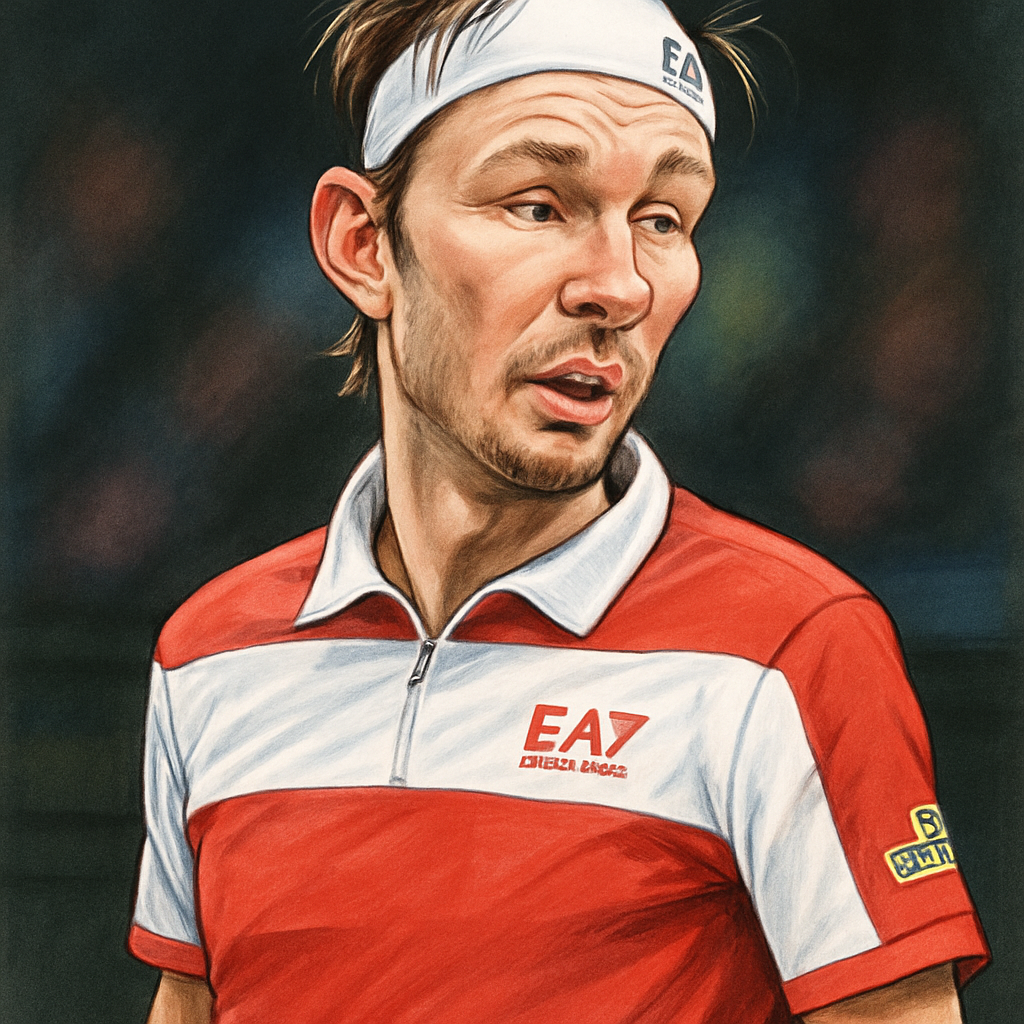
ASTANA, Kazakhstan — The world of professional tennis was jolted by a terrifying incident this week, as World No. 10 Alexander Bublik found himself caught in the middle of a geopolitical storm while traveling to a tournament. The Kazakh star’s flight was forced to make an emergency landing in Iran after U.S. airstrikes targeted sites in Iraq and Syria, creating a perilous situation for the aircraft and its passengers.
Bublik, the charismatic and top-ranked player from Kazakhstan, was en route from the Middle East to Europe for the upcoming ATP 500 event in Rotterdam when his flight was abruptly diverted. The diversion occurred as the United States launched retaliatory strikes against Iran-backed militia targets in response to a drone attack that killed three American soldiers in Jordan. The escalating conflict turned a routine commercial flight into a scene of high anxiety.
A Flight Interrupted by Conflict
According to reports and Bublik’s own social media posts, his flight was scheduled to fly over Iraqi and Syrian airspace. As the U.S. military operation commenced, air traffic control in the region issued urgent directives to multiple aircraft, ordering them to alter course or land immediately due to the active military engagement and the heightened risk to civilian aviation. Bublik’s plane was one of those instructed to land at the nearest available airport, which happened to be in Iran. The player later described the experience as "one of the scariest flights" of his life.
The situation underscores the unpredictable challenges athletes face with the grueling, globe-trotting nature of the tennis tour. Players frequently crisscross continents and volatile regions, their schedules dictated by tournament dates with little margin for geopolitical disruptions. For Bublik, a player known for his entertaining style and underhand serves, this was a stark reminder of the world beyond the court. He took to social media to share his ordeal, posting a message that read, "Welcome to the world," accompanied by a weary face emoji, capturing the surreal and frightening nature of the event.
The Aftermath and Journey to Rotterdam
After the emergency landing in Iran, Bublik and his fellow passengers faced hours of uncertainty. They were required to remain on the grounded aircraft while airline officials and authorities assessed the safety of the airspace and arranged for a new flight plan. This delay threatened Bublik’s participation in the ABN AMRO Open in Rotterdam, a crucial tournament where he was seeded eighth and slated to face a qualifier in the first round.
Miraculously, after the all-clear was given and a new route was established that avoided the conflict zone, Bublik’s flight was able to continue. He arrived in Rotterdam with little time to spare, a disruption that would impact any athlete’s pre-tournament routine of practice, rest, and acclimatization. The stresses of the journey were multifaceted:
- Physical Fatigue: Extended, unplanned travel and time zone changes.
- Mental Strain: The acute stress of a safety scare and the lingering anxiety.
- Professional Pressure: The need to immediately switch focus to high-level competition.
Despite the harrowing experience, Bublik displayed remarkable professionalism. He did not withdraw from the tournament and addressed the media briefly upon arrival. When asked about the incident, he stated, "It was not pleasant, but I’m here to play tennis. That’s my job."
Broader Implications for Sport
The incident involving Alexander Bublik highlights a rarely discussed aspect of international sports: the vulnerability of athletes to global political and military conflicts. Tennis, as a truly global sport, is particularly exposed. The ATP and WTA calendars include events in or require travel through regions that can become flashpoints with little warning. This event raises pertinent questions for tour organizers and player associations regarding contingency planning, travel advisories, and support systems for athletes caught in such crises.
Other players expressed relief that Bublik was safe. The tennis community, closely knit despite its competitive nature, reacted with concern on social media. The episode serves as a sobering counterpoint to the glamorous image of international tennis, reminding fans and participants alike that the players are not insulated from the world’s troubles. It echoes past incidents where athletes have faced travel nightmares, but the direct link to active military strikes is exceptionally rare and alarming.
A Tense Backdrop for the Tour
This scare for Bublik occurs against a complex geopolitical backdrop that has already deeply affected tennis since Russia’s invasion of Ukraine in 2022. Players from Russia and Belarus compete as neutrals without national flags, a policy that has itself been a source of significant tension and emotional distress for Ukrainian players. Bublik’s experience, while different, adds another layer, illustrating how regional conflicts can directly and physically impact athletes from any nation simply going about their careers. The tours have protocols for weather delays and medical emergencies, but protocols for sudden war-zone diversions are far less defined.
Focus Returns to the Court
Ultimately, Alexander Bublik’s resilience was tested both in the skies and on the court in Rotterdam. After his traumatic travel experience, he managed to win his first-round match, demonstrating tremendous focus. However, the cumulative toll may have shown, as he was defeated in a tight second-round match. His ability to compete at all was commended by commentators and peers, a testament to the mental fortitude required at the highest level of sport.
In the end, the terrifying scenes over the Middle East will likely become a unforgettable, albeit unwanted, chapter in Bublik’s career. It stands as a powerful anecdote of the unforeseen perils of global travel and a reminder that the lives of elite athletes, often seen as existing in a bubble of hotels and stadiums, are inextricably linked to the unfolding events of our world. As Bublik himself succinctly put it after landing safely, the message was clear: in today’s interconnected world, no one, not even a top-ten tennis star, is immune to the reverberations of international conflict.