
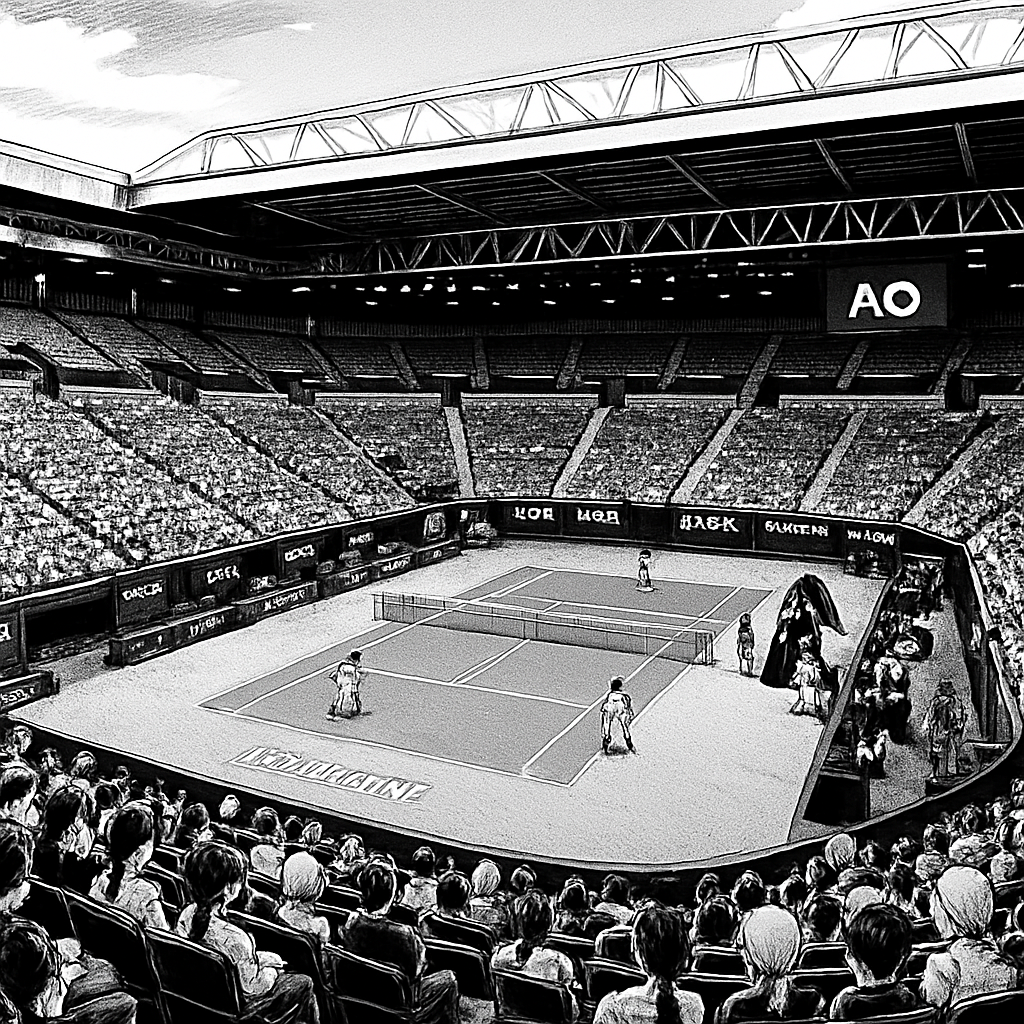
MELBOURNE — The 2024 Australian Open has been jolted by a stunning, last-minute withdrawal, as Wimbledon finalist Ons Jabeur announced she will not compete in the year's first Grand Slam. The Tunisian world No. 6, a beloved figure on tour and a three-time major finalist, released an emotional statement citing a knee injury, casting a pall over the tournament's opening day and raising urgent questions about her future.
A Devastating Blow on the Eve of Battle
The news broke just hours before the first balls were scheduled to be struck at Melbourne Park, sending shockwaves through the tennis community. Jabeur, seeded sixth, was slated to be a central figure in a wide-open women's draw and was considered among the leading contenders for the title. Her absence is a significant loss for the event, robbing it of one of its most charismatic and creative players, whose quest for a maiden Grand Slam title has become one of the sport's most compelling narratives.
In a heartfelt post on social media, Jabeur shared the difficult decision with her fans. "After consulting with my medical team regarding my knee injury, we have decided that I need to withdraw from the Australian Open this year," she wrote. The tone of her message was one of profound disappointment and frustration, a sentiment echoed by tournament director Craig Tiley, who said, "We are saddened to lose Ons ahead of the Australian Open. She is a tremendous fighter and we know how much she loves competing here at Melbourne Park."
The Injury: A Persistent and Painful Problem
While the timing is sudden, concerns over Jabeur's knee are not new. The 29-year-old struggled with the issue throughout the latter half of the 2023 season. After her runner-up finish at Wimbledon—her second consecutive final at the All England Club—she was forced to miss tournaments in Montreal and Cincinnati. She received treatment and managed to compete at the US Open, where she reached the fourth round, but the problem resurfaced during her off-season training block.
Sources close to the player indicate that the injury involves the patella (kneecap), causing significant pain during high-impact movements like sprinting and jumping. Despite intensive physiotherapy and a modified training regimen in December, a recent MRI scan and consultation with specialists led to the unanimous and painful conclusion that competing in a best-of-five-set Grand Slam would risk a more serious, long-term setback.
Key factors in the decision to withdraw include:
- The intensity of Grand Slam play: Seven potential matches over two weeks on hard courts is an immense physical challenge.
- Precaution for the season: Jabeur and her team are prioritizing a full recovery to salvage the rest of the 2024 season, which includes the Paris Olympics.
- Historical precedent: The player is acutely aware of how lingering injuries can derail a career and is determined not to let this one define her prime years.
The Ripple Effect on the Australian Open Draw
Jabeur's withdrawal creates immediate logistical and competitive ramifications. Her spot in the draw is taken by a lucky loser from the qualifying tournament, altering the path for several top seeds. Most notably, it opens up the bottom quarter of the draw, where she was projected to potentially face reigning US Open champion Coco Gauff in the quarterfinals. This development will be seen as a significant opportunity for other contenders in that section, including Maria Sakkari and two-time Australian Open champion Victoria Azarenka.
Beyond the bracket mechanics, her absence is a blow to the tournament's atmosphere. Known as the "Minister of Happiness," Jabeur's inventive shot-making, engaging personality, and heartfelt interactions with fans have made her a standout attraction. Her press conferences are often highlights, filled with humor and insight. Tournament organizers now face the task of filling an undeniable void in both the competitive field and the event's character.
A Career at a Crossroads
This setback arrives at a critical juncture in Ons Jabeur's career. After breaking through to her first major final in 2022, she has established herself as a perennial threat, reaching three finals in the span of five Grand Slams. Yet, the elusive title remains just out of reach. Each near-miss has added a layer of psychological weight, and now a physical hurdle threatens to stall her momentum entirely. The mental toll of this cycle—soaring hope followed by crushing defeat or injury—was palpable in her statement.
"The decision wasn't easy," Jabeur continued. "I have worked so hard to get ready for Melbourne, and it hurts deeply to miss it. My love for this tournament and its fans is immense. Right now, I have to listen to my body and give it the time it needs to heal so I can come back strong and continue to chase my dreams. Thank you for your support—it means everything."
The Road to Recovery and What Comes Next
The immediate focus for Jabeur and her team is a period of complete rest followed by a carefully managed rehabilitation program. No official timeline for her return has been given, but it is expected she will target a comeback during the Middle Eastern swing in February, with tournaments in Doha and Dubai. However, the primary goal will be ensuring she is fully fit for the spring clay-court season and her beloved grass-court campaign, where she has enjoyed her greatest successes.
The broader question looming over her season is the status of the Paris Olympics. Representing Tunisia on the Olympic stage is a paramount goal for Jabeur, who carried the flag in Tokyo 2020. The tennis event at Roland Garros will be played on clay, a surface she excels on, making a gold medal a realistic and burning ambition. This injury scare underscores the precarious balance elite athletes must maintain between chasing immediate glory and preserving their long-term health for career-defining moments.
As the Australian Open begins without her, the sentiment among players and fans is one of collective sympathy and hope for a swift recovery. Iga Świątek, the world No. 1, expressed her support, saying, "Ons is such an important part of our tour. We will miss her here, but health is the most important thing. We all wish her a speedy recovery and can't wait to have her back."
Conclusion: A Tournament Dimmed, A Champion's Spirit Tested
The 2024 Australian Open will proceed, crowned by a new champion, but it will do so in the shadow of Ons Jabeur's painful withdrawal. Her story—of groundbreaking success, heartbreaking near-misses, and now physical adversity—adds a layer of poignant drama to the season's start. It is a stark reminder of the fragility of an athlete's prime and the immense pressure they carry. For Jabeur, this is not the end of her quest, but perhaps its most challenging interlude. The tennis world now watches, waits, and hopes that the Minister of Happiness can heal her knee and return soon, her unique talent and joyful spirit undimmed, ready to resume the pursuit of the glory she so richly deserves.