
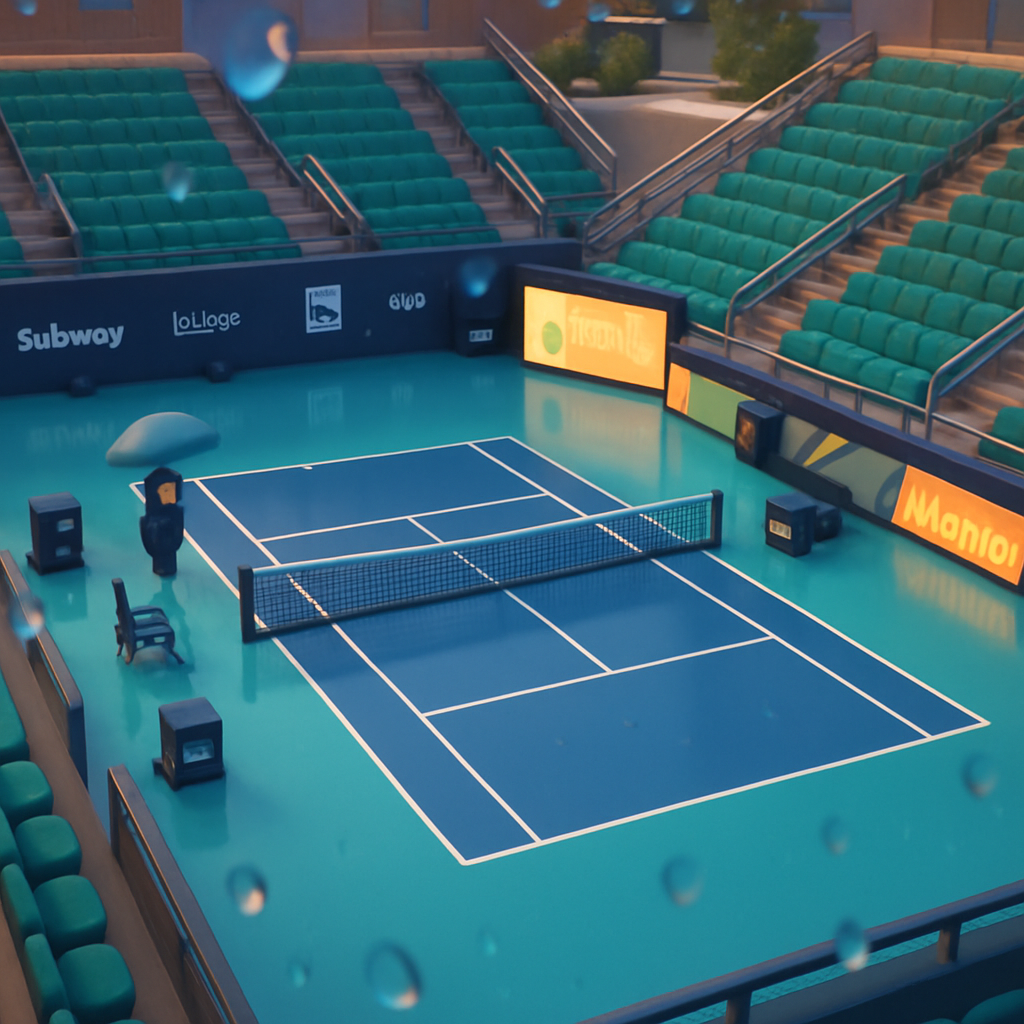
MIAMI — The 2024 Miami Open has been plunged into chaos as relentless rain has brought play to a complete standstill, causing significant delays and a massive backlog of matches. The inclement weather, which has soaked Hard Rock Stadium and its surrounding courts for consecutive days, has not only disrupted the tournament schedule but has also sparked controversy, with world No. 2 Aryna Sabalenka threatening to withdraw from the event entirely over scheduling concerns.
Tournament officials have been forced to postpone all matches scheduled for Tuesday, March 26th, and the forecast offers little immediate relief. This follows a Monday that saw only a handful of matches completed before the skies opened. The result is a logistical nightmare, with dozens of first-round and second-round matches in both the men's and women's draws yet to be played, while players who have already advanced are left in a state of uncertainty.
A Soggy Standstill and a Mounting Backlog
The primary issue is the lack of indoor court facilities at the Miami Open venue. Unlike other major tournaments, such as the Australian Open or the US Open, which have extensive indoor complexes, the Miami Open is entirely at the mercy of the elements. When rain falls, play stops. Tournament director James Blake acknowledged the frustration, stating, "We are doing everything we can with the weather we are dealt. Player safety is our top priority."
The current backlog is severe. As of Wednesday morning, the situation includes:
- Over 20 singles matches from the early rounds still pending.
- A complete reshuffling of the order of play, with some players facing the prospect of playing multiple matches in a single day to catch up.
- Significant compression of the rest of the tournament, potentially forcing winners to play with minimal recovery time.
This compression is at the heart of the growing player discontent. The Miami Open is a mandatory event for top players, meaning they are required to participate barring injury. However, the ATP and WTA tours have strict rules regarding rest periods between matches, especially concerning late-night finishes. The current delays make it increasingly likely these rules will be tested or broken.
Sabalenka's Ultimatum: Player Welfare vs. Tournament Demands
The tension erupted into public view when Aryna Sabalenka, the two-time Australian Open champion and a marquee name in the draw, voiced her strong objections. Having received a first-round bye, Sabalenka is scheduled to face either Paula Badosa or Simona Halep in her opening match—a contest that has now been pushed back multiple days.
Sabalenka expressed her frustration to reporters, making it clear she would prioritize her health and preparation for the clay-court season over an unsafe schedule. "If I will have to play without at least one day of rest, I'm going to pull out," she stated bluntly. "I'm not going to kill myself and risk an injury before the clay season. It's just common sense. I really hope that the WTA and the tournament will make a wise decision for the players."
Her comments highlight a critical conflict in modern tennis: the balance between tournament obligations and athlete welfare. Sabalenka’s stance has been privately supported by several other top players who are concerned about the physical toll of playing best-of-three set matches on consecutive days, especially in Miami's often humid conditions when play resumes.
The WTA's Scheduling Dilemma
The WTA finds itself in a difficult position. It must enforce its rules to ensure the tournament is completed, while also adhering to its own protocols designed to protect players. A spokesperson for the WTA said, "We are in constant communication with the tournament and our players. Our goal is always to complete the event in a fair manner that respects the well-being of the athletes."
The precedent is not on the tournament's side. In recent years, similar weather-related crunches at outdoor events have led to player withdrawals, widespread criticism, and calls for infrastructure investment. Sabalenka's threat brings this ongoing issue into sharp focus, putting pressure on organizers to find a solution that avoids losing one of the sport's biggest stars.
The Domino Effect on the Tour Calendar
The delays in Miami have a ripple effect far beyond the Florida coast. The Miami Open is the second leg of the "Sunshine Double," following Indian Wells, and is a crucial Masters/Premier Mandatory event offering 1000 ranking points to the winners. A prolonged event pushes dangerously close to the start of the European clay-court swing.
Key upcoming tournaments, such as the Porsche Tennis Grand Prix in Stuttgart and the Madrid Open, begin in mid-April. Players, particularly those who go deep in Miami, now face a severely truncated turnaround time to transition from hard courts to clay—a surface that demands different physical conditioning and technical adjustments.
This scheduling crunch could lead to:
- Increased risk of injury as players have less time for proper recovery and surface adaptation.
- More last-minute withdrawals from early clay-court events as players manage their workloads.
- A potential impact on the quality of play at the start of the Roland Garros buildup.
Looking for Solutions and a Path Forward
In the immediate term, tournament organizers are exploring every option to get back on track. This includes extending play later into the evening and utilizing all available courts simultaneously once the weather clears. There is also discussion of potentially reducing the doubles event format to ease the court load, though no final decision has been announced.
Long-term, Sabalenka's protest adds fuel to the longstanding debate about building a roof over Hard Rock Stadium's main court. While an enormously expensive undertaking, other tournaments, like Wimbledon and the Australian Open, have made such investments to guarantee play. James Blake hinted at the complexity, noting, "It's a conversation we continue to have with all stakeholders. The scale is significant, but so is the desire for consistency."
For now, players, fans, and officials are stuck in a holding pattern, all looking skyward. The hope is for a break in the weather that will allow the world-class tennis Miami is known for to finally take center stage. However, the damage may already be done in terms of player relations and schedule integrity.
Conclusion: A Tournament at a Crossroads
The 2024 Miami Open will be remembered not just for its champions, but for the storm that disrupted it and the storm of controversy that followed. Aryna Sabalenka's firm stance has amplified a critical conversation about player power and scheduling ethics in professional tennis. While the rain is an act of nature, the response from the WTA and tournament organizers is a test of their commitment to the athletes who drive the sport's popularity.
As the tour waits for the sun, the pressure mounts. The coming days will reveal whether a compromise can be found that satisfies the competitive requirements of a premier event while upholding the physical well-being of its participants. The outcome will set a telling precedent for how future weather crises—and player grievances—are handled at the highest level of the game.