
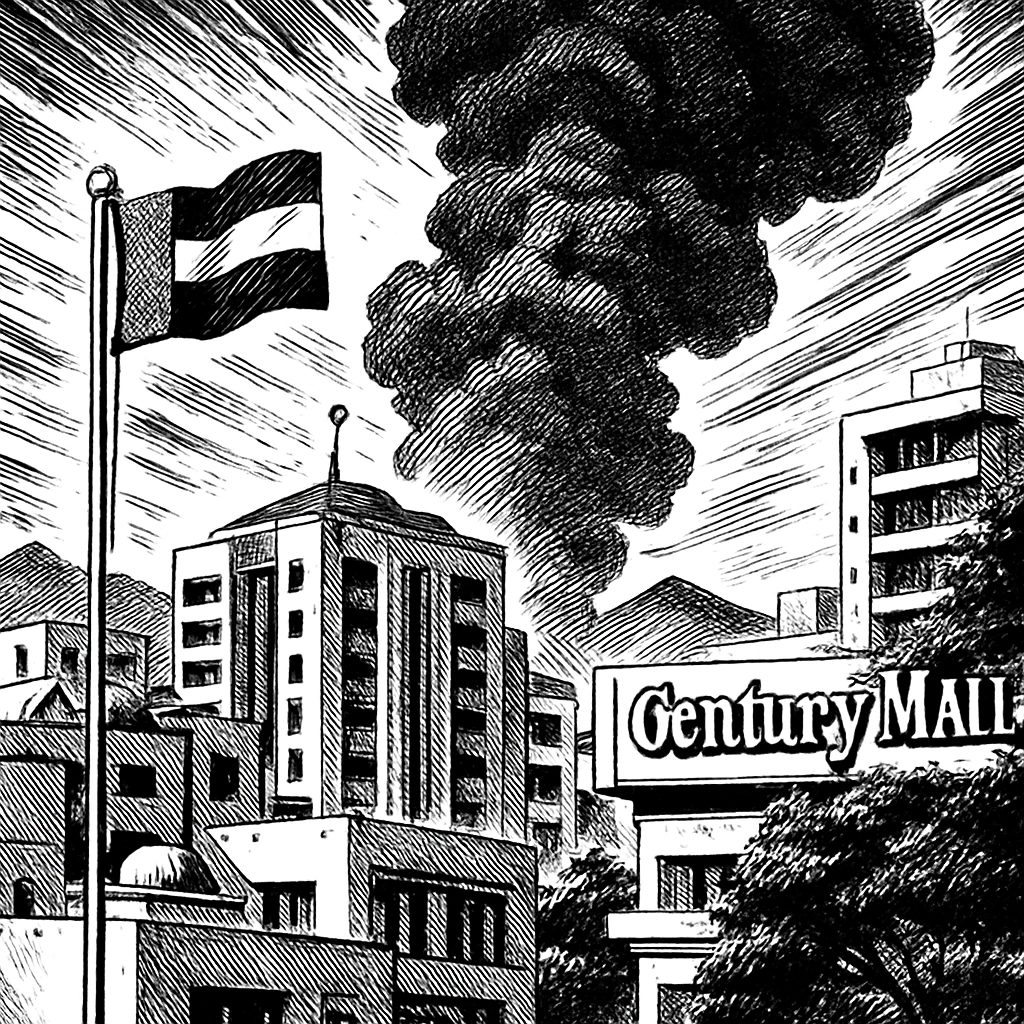
DUBAI — The prestigious Dubai Duty Free Tennis Championships, a staple of the WTA Tour calendar, concluded last week under a cloud of controversy far removed from the on-court action. The tournament, held in the United Arab Emirates from February 18-24, 2024, became an unintended focal point of geopolitical tensions as it coincided with a significant escalation of conflict in the Middle East, leaving players feeling unsafe, stranded, and questioning the decision to proceed.
The crisis unfolded as Iranian-backed Houthi rebels in Yemen launched a series of missile and drone attacks targeting the UAE, a key regional ally of Saudi Arabia. One attack, occurring just days before the tournament's start, struck an Abu Dhabi oil facility, killing three people. This marked a serious escalation, bringing the long-running regional proxy conflict to the doorstep of one of the world's most prominent sporting and commercial hubs.
A Tournament Under the Shadow of Drones
Despite the heightened security alerts and palpable anxiety, the WTA and tournament organizers decided the show would go on. For many players arriving in Dubai, the reality of the situation became immediately clear. Enhanced security was visible, but so was the underlying tension. Practice sessions and matches proceeded, yet players were acutely aware of the news headlines and security briefings.
The most vocal critic was Sorana Cîrstea of Romania. After her first-round loss, she took to social media to express her dismay, writing a post that resonated with many of her peers. "We should not have played this week in Dubai... the situation was serious and we players were not put first," she stated. Cîrstea detailed how players felt pressured to compete despite their fears, citing a lack of clear communication and options.
Her sentiments were echoed by other competitors who spoke anonymously to the press, describing an atmosphere of unease. The core of their frustration centered on several key issues:
- Perceived Lack of Player Agency: Many felt they were not given a genuine choice to withdraw without facing penalties or damaging their rankings.
- Inadequate Communication: Updates on the security situation were described as vague and insufficient, leaving players to rely on news reports and social media.
- Moral and Ethical Concerns: Questions arose about the appropriateness of holding a high-profile international event while a neighboring nation was under direct attack.
Stranded in a Conflict Zone
The logistical fallout from the conflict extended beyond the tournament's final point. With airspace in the region becoming a potential risk zone, several airlines suspended or altered flights. This led to a nightmare scenario for at least one player, Lesia Tsurenko of Ukraine, who found herself unable to leave Dubai after her participation ended.
Tsurenko, who has been outspoken about the psychological toll of competing during wartime following Russia's invasion of her homeland, was reportedly stranded for several days as she sought a safe flight path out of the region. Her situation highlighted the very real, practical dangers players faced—risks that extended beyond the court. "It's one thing to decide to play under threat, it's another to be trapped there afterwards," a source close to the player commented.
The WTA, in response to the growing criticism, issued a statement defending its decision. It emphasized its collaboration with global security experts and local authorities, stating that "the safety of our players is our absolute priority." The statement outlined that security protocols were continuously reviewed and that players were provided with support and information throughout the week.
Broader Implications for Sport and Safety
This incident is not isolated. It feeds into an ongoing, global debate about the role of international sports in geopolitically sensitive regions. The UAE, along with Saudi Arabia and Qatar, has invested billions in hosting elite sporting events as part of a broader "sportswashing" strategy to bolster global image and diversify economies. However, the Dubai controversy exposes the fragility of this model when regional instability intervenes.
Critics argue that governing bodies like the WTA and ATP are too financially reliant on lucrative hosting fees from these regions, potentially clouding safety judgments. "There's an inherent conflict between multi-million dollar hosting contracts and the ability to make a purely safety-first call," noted one sports risk analyst speaking to Reuters.
The episode raises urgent questions for tennis tours and all international sports leagues:
- Transparent Safety Protocols: What are the clear, objective thresholds (e.g., travel advisories, active military conflict) that trigger event cancellation or relocation?
- Player Consent & Penalties: Should "force majeure" clauses for safety concerns be explicitly written into tournament rules, allowing players to withdraw without penalty?
- Duty of Care: What is the extent of a tour's responsibility for player safety and logistics before, during, and after an event in a volatile region?
Conclusion: A Wake-Up Call
The 2024 Dubai Championships will be remembered not for its champion, but for the stark lesson it provided. The image of elite athletes feeling like pawns in a geopolitical standoff, with one left literally stranded, damages the sport's integrity. Sorana Cîrstea's simple, powerful statement—"We should not have played"—stands as a direct indictment of the decision-making process.
As tennis continues its global expansion, the tours must develop more robust, transparent, and player-centric safety frameworks. The alternative is to risk not only the well-being of the athletes but also the trust and goodwill that form the foundation of professional sport. The drones over Dubai have served as a wake-up call; the response from tennis's governing bodies will determine whether they were heard.