
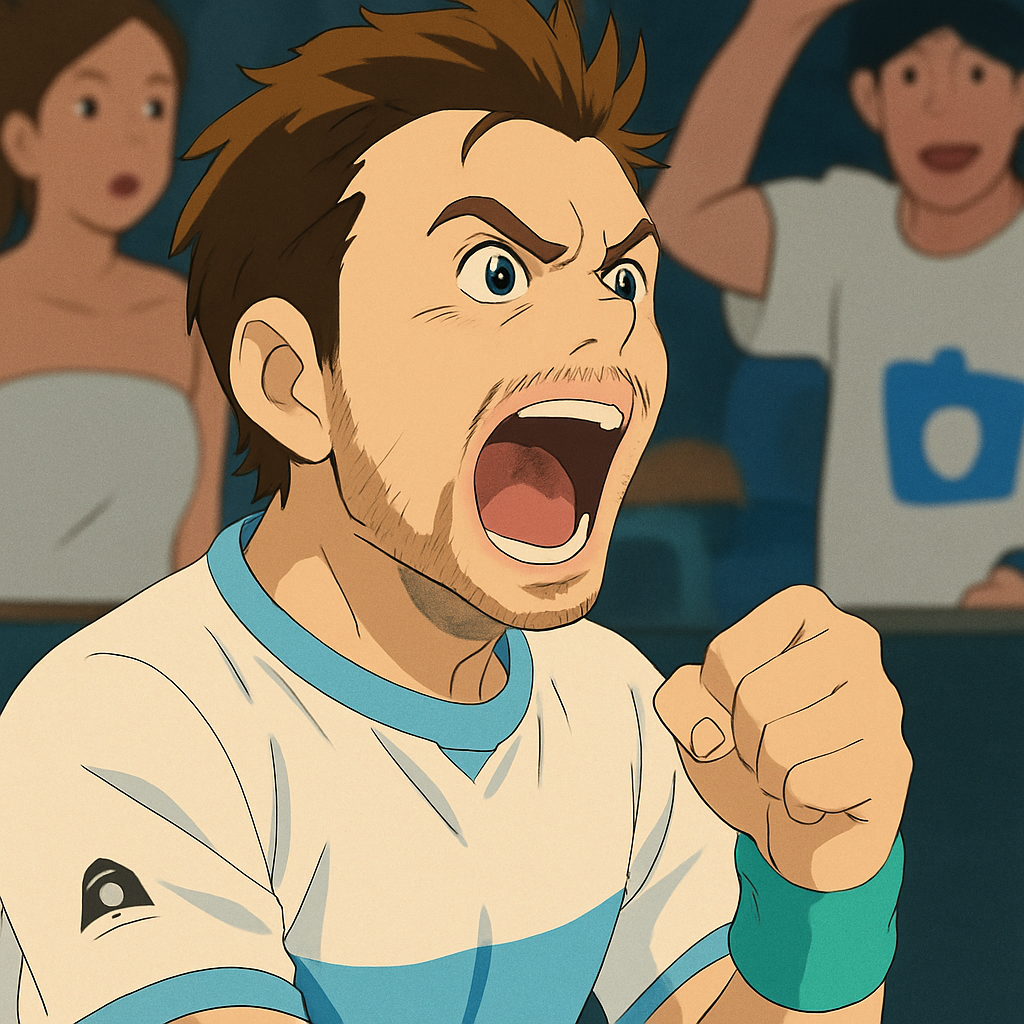
PARIS — The opening week of a Grand Slam is often about survival, but for the veterans, it’s a testament to resilience. On a sun-drenched Wednesday at Roland Garros, three former champions, with a combined age of 112 and seven major titles between them, navigated the treacherous early rounds, but only one did so the hard way. Stan Wawrinka, at 40 years old, authored a marathon five-set epic to join fellow stalwarts Novak Djokovic and Marin Cilic in the third round.
The Swiss maestro, champion here in 2015, faced a daunting challenge in the form of French qualifier Arthur Gea, who rode a wave of partisan support on Court Suzanne-Lenglen. What unfolded was a 4-hour and 35-minute thriller, a brutal yet beautiful display of old-school power tennis against youthful grit. Wawrinka ultimately prevailed 7-6(3), 7-6(7), 3-6, 6-3, 6-0, but the scoreline only tells part of the story of a match that pushed the veteran to his absolute limits.
The Ageless Warrior: Wawrinka's Gritty Triumph
For two tense sets, Wawrinka’s famed one-handed backhand and crushing groundstrokes were matched by the fearless aggression of the world No. 184. Gea, playing in his first Grand Slam main draw, saved multiple set points and refused to be intimidated. Wawrinka needed all his experience to edge two tie-breaks, but the physical toll was evident. As the third set slipped away, questions arose about whether the 40-year-old body could withstand another prolonged battle.
“It was an incredible battle,” Wawrinka said, visibly drained but satisfied in his post-match interview. “He was playing amazing tennis, with the crowd behind him. At my age, you have to fight for every point, every game. You never know how many more of these matches you will have, so you give everything. The legs were heavy, but the heart was strong.” The fourth set proved pivotal. Wawrinka found a second wind, breaking Gea’s serve and forcing a decider. There, the gulf in class and stamina became clear as the Swiss legend raced through the final set, handing the young Frenchman a brutal “bagel” to close the show.
Business as Usual for Djokovic and Cilic
In stark contrast to Wawrinka’s odyssey, 24-time major champion Novak Djokovic and 2014 US Open winner Marin Cilic advanced with the efficiency expected of seasoned champions. Djokovic, the defending champion and world No. 1, dispatched Spanish veteran Roberto Carballés Baena 6-4, 6-1, 6-2. While not at his absolute peak, Djokovic’s performance was a masterclass in controlled aggression and problem-solving, a clear statement of intent as he seeks a record 25th Grand Slam title.
“The goal is always to build the form and intensity as the tournament progresses,” Djokovic stated. “I felt better today than in the first round. I’m managing the matches well, conserving energy. That’s crucial, especially at this stage of my career and in these conditions.” Similarly, Marin Cilic, continuing his comeback from a serious knee injury, looked impressive in a 6-0, 6-3, 6-2 victory over Hungarian Fábián Marozsán. The Croatian’s serve was a potent weapon, and his flat, powerful groundstrokes were too much for his opponent to handle.
Key Factors in the Veterans' Success
The simultaneous success of these three champions, all in their mid-30s or beyond, is no coincidence. Their progression highlights the common traits that extend careers at the highest level. While their games differ, their approach to the sport in this latter stage shares crucial elements:
- Experience & Match IQ: They possess an unparalleled ability to manage the emotional and tactical ebbs and flows of a best-of-five-set match, knowing precisely when to raise their level.
- Physical Preservation: Rigorous, intelligent training and recovery regimens allow them to withstand the physical demands that break younger, less-prepared players.
- Serve as a Weapon: All three possess dominant serves (Wawrinka’s powerful delivery, Djokovic’s precision, Cilic’s cannon) that earn cheap points and shorten rallies.
- Grand Slam Mentality: They treat the early rounds with the seriousness of a final, avoiding the complacency that can trap higher-ranked, younger players.
Cilic, reflecting on the challenge of returning to top form, emphasized the mental hurdle. “After a long injury, you don’t just come back physically. You have to rebuild the confidence, the belief that you can win these matches again. To be here competing and winning at Roland Garros, it means all the hard work is paying off. It’s a great feeling.” His straight-sets win is a promising sign that the 35-year-old is rapidly rediscovering the game that took him to a major title and a Wimbledon final.
The Road Gets Tougher in Round Three
The relative comfort of the early rounds is now over. The draw presents formidable challenges that will truly test the veterans’ title credentials. Novak Djokovic will face a blockbuster clash against the talented and unpredictable Lorenzo Musetti of Italy, a player who has taken sets off him on clay before. Stan Wawrinka’s reward for his marathon effort is a meeting with the powerful and in-form Russian, Pavel Kotov. Marin Cilic will take on the always-dangerous Hungarian, Márton Fucsovics.
For Wawrinka, recovery will be paramount. “The most important thing now is to do everything right to recover,” he admitted. “Ice bath, treatment, rest. It’s one day less than the others, but this is why I still work so hard physically. To be ready for these moments, to push the body when it’s tired.” The spectacle of these champions, defying time and the ambitions of a younger generation, continues to be one of tennis’s most compelling narratives.
As the tournament moves into its second week, the presence of Djokovic, Wawrinka, and Cilic in the third round is a reminder of their enduring quality. Whether it’s Djokovic’s relentless pursuit of history, Wawrinka’s explosive, crowd-pleasing power, or Cilic’s resilient comeback, they bring a gravitas and drama that only experience can provide. Their journeys, though distinct, converge on a shared truth: in the grueling arena of Grand Slam tennis, heart, wisdom, and a big game can still trump youthful vigor.