
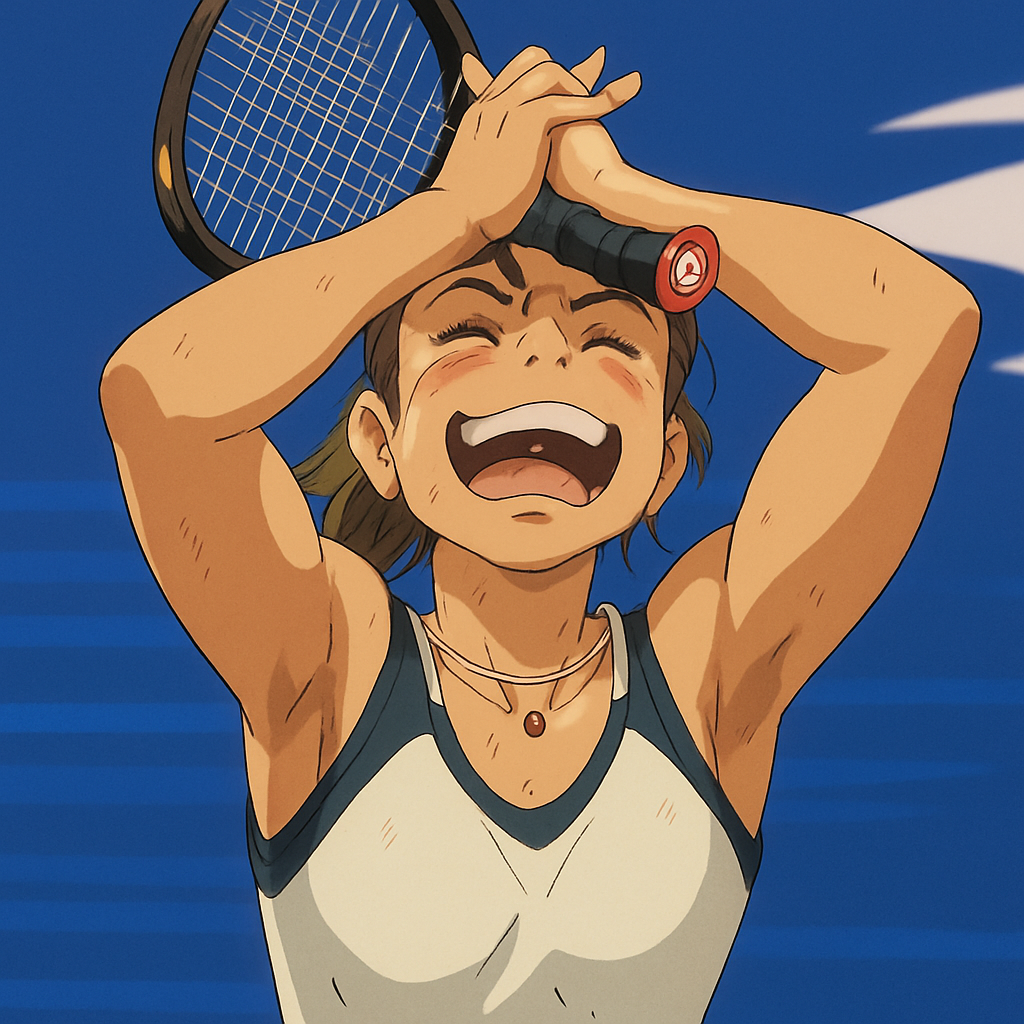
MELBOURNE — The roar that erupted from Rod Laver Arena in late January 2025 was one of pure, unadulterated catharsis. Aryna Sabalenka, having just clinched her second Australian Open title, fell to her knees, not just in celebration of a single victory, but in triumph over a year of profound mental and professional challenges. This moment, a hard-fought win over a resurgent Coco Gauff, was the culmination of a journey that saw her transform from a player plagued by near-misses into an unshakable year-end world number one.
The path to that pinnacle, however, was anything but linear. The first half of Sabalenka's 2025 season was a masterclass in frustration. She reached the finals of three consecutive WTA 1000 events in the spring—Indian Wells, Miami, and Madrid—only to finish as runner-up each time. Her powerful game was there, but a critical ingredient was missing in the decisive moments. As she later admitted, "I was playing great tennis, but my head was not in the right place."
The Breaking Point and a Mediterranean Pause
The lowest point came in a gut-wrenching, three-set loss to Elena Rybakina in the Roland-Garros semifinals. Sabalenka had held a commanding lead in the second set, only to see it evaporate in a cascade of unforced errors and mounting frustration. In her post-match press conference, a visibly dejected Sabalenka was uncharacteristically brief. "I don't know what happened. I lost my way," she confessed to reporters.
It was this Parisian disappointment that forced a radical change. Instead of heading straight to the grass-court season, Sabalenka made a bold decision. She withdrew from the Berlin tournament and, with her team's full support, booked a spontaneous, week-long holiday to a secluded villa in Sardinia. This was not a training block; it was a mandated mental reset. There were no courts, no fitness regimens—just introspection, the Mediterranean Sea, and honest conversations with her closest confidants.
Reflecting on that pivotal break, Sabalenka shared, "In Sardinia, I finally stopped running. I was running from the losses, from the pressure of being number one, from the expectation. I sat with myself and asked, 'What are you so afraid of? You have already won a major. You are one of the best players in the world. Why are you playing with fear?' That week, I found my fight again."
The Mid-Season Recalibration
Returning to the tour for Wimbledon, a subtle but significant shift was evident. The raw power remained, but it was now channeled through a newfound layer of tactical patience and emotional control. While she fell in a thrilling quarterfinal to Markéta Vondroušová, the defeat felt different. There was no emotional collapse, only a acknowledgment of a great match and a clear-eyed focus on the lessons learned.
This period of recalibration involved several key adjustments, both technical and mental, that her coach, Anton Dubrov, helped her implement. The focus was on building a more versatile and resilient game plan for the hard court swing ahead. The key changes included:
- Strategic Serving: Developing a more reliable second-serve kicker to reduce double faults in high-pressure moments.
- Point Construction: Integrating more slice backhands and drop shots to disrupt opponents' rhythm, rather than relying solely on power.
- Emotional Anchors: Establishing a simple, repeatable routine between points to maintain focus and prevent negative emotions from spiraling.
Dubrov noted the transformation, stating, "Aryna has always had the weapons. The difference now is her mind. She is playing chess, not checkers. She understands that sometimes you must lose a battle to win the war. That patience was the final piece of the puzzle."
The North American Hard Court Conquest
The proof of this transformation was delivered emphatically during the US Open Series. Sabalenka stormed to the title in Montreal, avenging her Indian Wells loss to Iga Świątek in a brutal three-set final. She followed this with a semifinal run in Cincinnati, where she narrowly lost to Naomi Osaka but felt her level was precisely where it needed to be for New York.
At the US Open, Sabalenka was a force of nature. She bulldozed through the draw without dropping a set, her confidence growing with each match. In the final, she faced Świątek once more, and in a display of sheer will and improved tactical nuance, she dethroned the defending champion. The victory completed a hard court sweep of the summer and catapulted her back to the world number one ranking.
After lifting the trophy, Sabalenka was reflective. "This feels different from the first time I was number one," she told the crowd. "That came from just hitting the ball hard. This one… this one came from growing up, from learning, from losing and not breaking. This one means more."
Sealing the Deal: The WTA Finals
The final test of her reign came at the year-end WTA Finals in Riyadh. The format, pitting the world's best against each other in a round-robin before knockout stages, was a true test of consistency and nerve. Sabalenka navigated her group with composure, setting up a final showdown against a familiar foe: Coco Gauff.
The match was an epic, a three-hour thriller that showcased the very best of women's tennis. Sabalenka saved a championship point in the second set with a fearless forehand winner down the line, a shot she admitted she would have shanked six months prior. She rode that momentum to a 6-7(5), 7-6(4), 6-3 victory, securing the prestigious title and mathematically guaranteeing she would finish the year as the undisputed world number one.
In her champion's speech, Sabalenka looked back on the entirety of her season. "2025 taught me that the toughest losses contain the most valuable lessons. You have to be brave enough to look at them, to learn from them. That week away, that break, it saved my season. It reminded me that I am a fighter, and that this," she said, gesturing to the court, "is where I belong."
A Champion Forged in Adversity
Aryna Sabalenka's 2025 campaign will be remembered not just for the trophies and the top ranking, but for the profound personal evolution it represented. She demonstrated that even at the highest level of sport, the greatest battles are often fought within. By having the courage to step away, to be vulnerable, and to critically self-reflect, she unlocked a more complete and resilient version of her champion self.
Her journey from the crushed red clay of Paris to the triumphant hard courts of New York and Riyadh is a blueprint for mental fortitude. It proves that in the relentless pursuit of greatness, sometimes the most powerful move is not a harder hit, but a conscious pause. Sabalenka didn't just win the number one ranking in 2025; she earned it the hardest way possible, by first conquering the doubts in her own mind.