
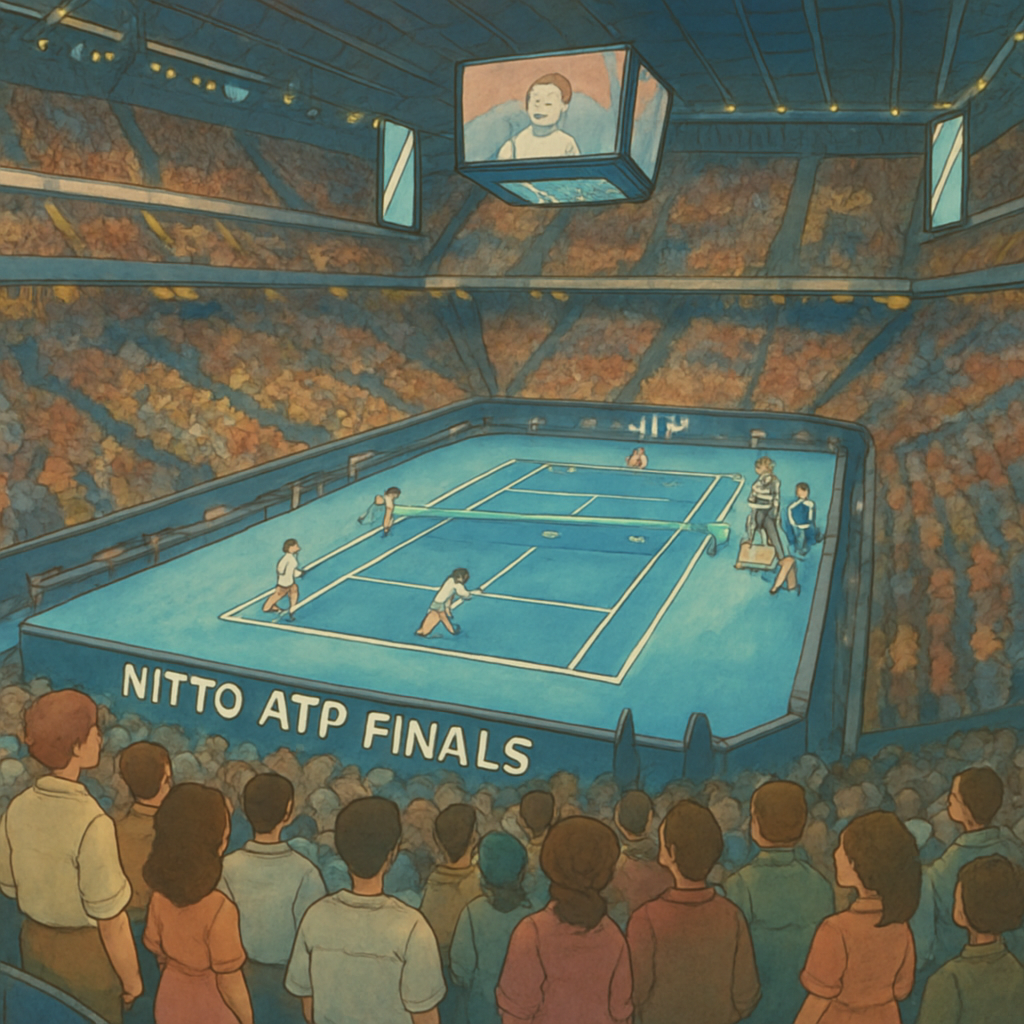
TURIN, Italy — A somber mood has descended upon the prestigious ATP Finals in Turin after the Italian Tennis Federation (FIT) and the ATP confirmed that two spectators died from separate cardiac arrests during the evening session on Monday, November 13, 2023. The tragic incidents occurred inside the Pala Alpitour, casting a shadow over one of the sport's premier annual events.
The Evening of Tragedy
The first medical emergency unfolded during the highly anticipated match between Italian star Jannik Sinner and Novak Djokovic. According to reports from Italian media, a 69-year-old Italian man, later identified as Alberto A., suffered a sudden cardiac arrest while in his seat. Spectators nearby immediately alerted security and medical personnel. A doctor who happened to be in the audience reportedly rushed to assist, performing CPR until the venue's medical team arrived with a defibrillator. Despite these extensive and prolonged resuscitation efforts, which continued for approximately forty minutes, the man was pronounced dead at the scene.
Tragically, this was not an isolated incident on that fateful evening. In a separate and unrelated occurrence, a second spectator, a 76-year-old man, also experienced a cardiac arrest. This event took place either just before or during the subsequent doubles match. Emergency services were again swiftly dispatched, and the man was transported to the nearby Molinette hospital. FIT President Angelo Binaghi later confirmed in a statement that, despite the best efforts of medical professionals, this second man also passed away. "The two episodes were completely independent of each other," Binaghi emphasized, ruling out any connection between the two medical emergencies.
Official Responses and Condolences
Both the ATP and the Italian Tennis Federation moved quickly to acknowledge the tragedies and express their sympathies. In an official statement, the ATP said, "We are deeply saddened by the tragic events that took place on Monday evening at the Nitto ATP Finals. Our thoughts and condolences are with the families and loved ones of those who passed away."
FIT President Angelo Binaghi's statement echoed this sentiment, highlighting the shock felt by the entire tennis community. "The Italian Tennis Federation, together with the entire world of tennis, expresses its deepest condolences for what happened and embraces the families of the two victims with immense sorrow," he stated. He also took a moment to praise the swift and professional response of the medical teams, security personnel, and the volunteers present at the Pala Alpitour.
Venue Protocols and Medical Response
The Pala Alpitour, a state-of-the-art arena, is equipped with comprehensive medical facilities to handle emergencies, a standard requirement for hosting an event of this magnitude. The protocol for such situations involves:
- Immediate alerting of on-site medical personnel and security.
- Rapid deployment of a medical team with a defibrillator and emergency kit.
- Coordination with local emergency services for potential hospital transport.
In both instances on Monday, these protocols were activated without delay. Witnesses described the medical teams as responding "very quickly" and working diligently to save the spectators' lives. The fact that the matches were not immediately suspended has been a point of discussion; however, tournament organizers typically follow the guidance of medical professionals on site, who determine whether an ongoing medical situation requires a halt in play to facilitate care or if it is contained enough to continue.
The Dilemma of Play Continuation
The decision not to stop the Sinner-Djokovic match, in particular, has been subject to some scrutiny. Tournament director Adam Hogg explained the difficult position officials were in. "The medical staff were dealing with the situation, and they felt it was best to not create panic or disrupt their work," he said. The incident occurred in a section of the stadium away from the court, and the medical team confirmed that suspending the match would not have aided their efforts, which were already fully underway.
A Broader Context: Spectator Health at Events
The tragic events in Turin have sparked a wider conversation about spectator health and safety at large-scale sporting events, which often involve intense emotional stress, potential overexertion, and consumption of food and alcohol. Cardiac arrests, while rare, are a known risk in such environments. Key factors that can contribute to such medical emergencies include:
- Pre-existing and potentially unknown heart conditions.
- High levels of emotional stress and excitement during pivotal moments.
- Physical exertion from travel, walking long distances, and climbing stairs.
Medical experts often stress the importance of widespread public access to Automated External Defibrillators (AEDs) and basic CPR training for the general public. The minutes immediately following a cardiac arrest are critical, and bystander intervention can dramatically increase the chances of survival. The presence of a defibrillator and trained personnel at the ATP Finals was crucial, even though, in this heartbreaking instance, it was not enough to save the two men.
The Tournament Continues with Heavy Hearts
Following the confirmation of the deaths, the tournament continued on Tuesday with a moment of silence held before the day's session. Players, including Novak Djokovic and Carlos Alcaraz, expressed their shock and offered their condolences. Djokovic, who was on court when the first incident occurred, later stated, "It's devastating to hear that someone passed away while watching our match. My team and I send our heartfelt condolences to the family." The atmosphere, while still competitive, was noticeably more subdued as the tennis world processed the loss.
The deaths at the ATP Finals serve as a stark and heartbreaking reminder of the fragility of life, even in the midst of a celebratory sporting spectacle. The incidents have prompted event organizers globally to reaffirm the importance of robust emergency medical plans and have highlighted the silent health battles that can unfold anonymously in a crowd of thousands. The focus now remains on supporting the grieving families and honoring the memory of the two spectators who lost their lives while enjoying the sport they loved.