
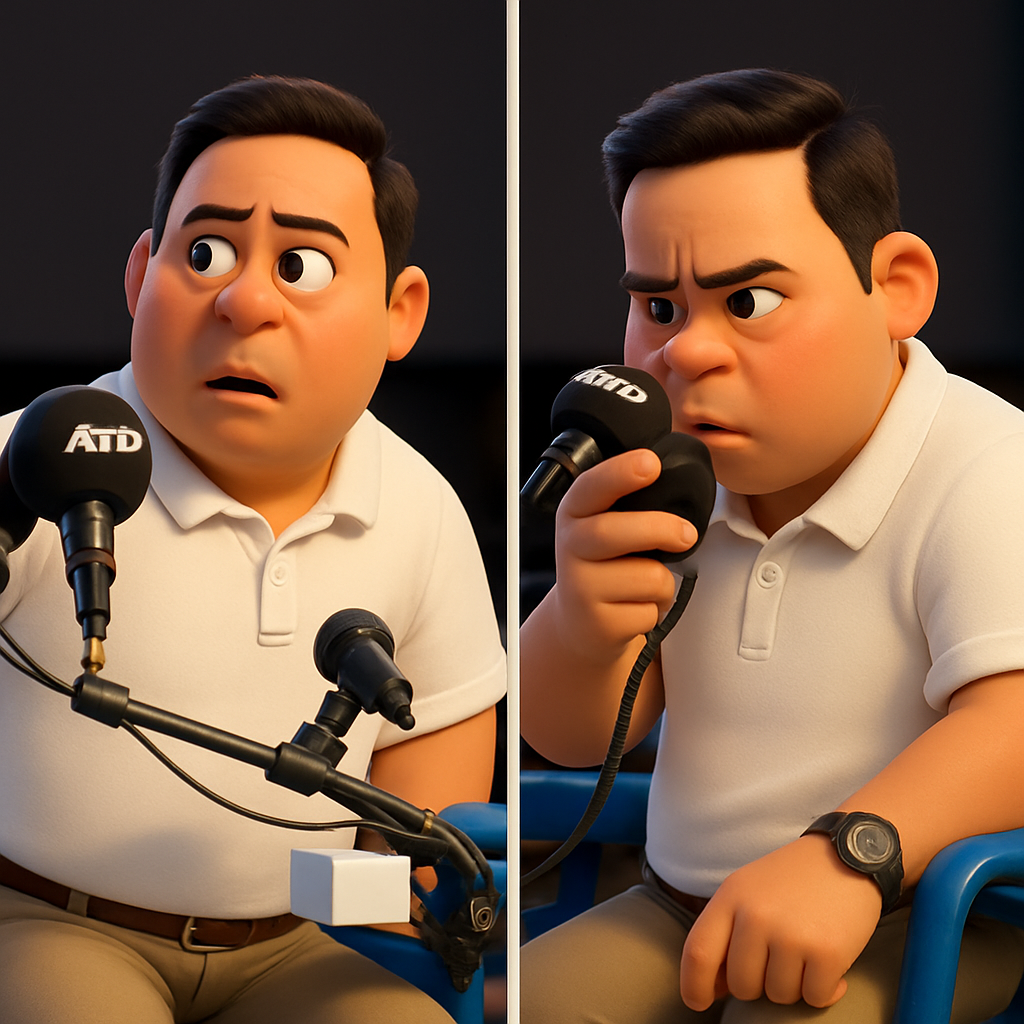
BRISBANE — In an age where professional tennis is increasingly reliant on sophisticated electronic line-calling technology, a simple audio failure at the Brisbane International served as a stark reminder of the sport's human element. During a high-stakes qualifying match, the electronic line-calling system's voice, known as "Cyclops" or "the electronic voice," fell silent, leaving players and spectators in limbo. It was then that chair umpire James Keothavong stepped out from behind the technology and back into the spotlight, taking over the calls with his own voice in a moment that blended chaos, nostalgia, and expert officiating.
The incident occurred on Saturday, December 30th, 2023, during a qualifying match between Russia's Mirra Andreeva and Italy's Lucia Bronzetti on Court 5 at the Queensland Tennis Centre. As the players contested the first set, the familiar, automated "OUT" call simply stopped being broadcast through the on-court speakers. While the Hawk-Eye Live system continued to track the ball's trajectory and display the correct "OUT" or "FAULT" graphic on the stadium screens, the crucial auditory confirmation was absent, creating confusion and halting play.
The Umpire Steps Up
With the match in a state of suspended animation, chair umpire James Keothavong, a seasoned British official and brother to former British No. 1 Anne Keothavong, immediately took control. Demonstrating quick thinking and professionalism, he announced to the players and the crowd that he would be verbally calling the lines until the technical issue was resolved. For the next 20 minutes, Keothavong’s voice became the authority, calling "Out," "Fault," and "Foot Fault" with the clarity and decisiveness of a bygone era. His performance was met with applause from spectators who appreciated the throwback to traditional officiating.
Keothavong later explained his thought process to reporters, stating, "The system was still working, the graphics were still coming up on the screen, but the audio had failed. So I just had to step in and make the calls verbally to keep the match flowing. It’s part of the job—you have to be prepared for anything. The players were understanding, and we got through it." His calm demeanor was praised by players and fans alike, turning a potentially disruptive glitch into a showcase of expert umpiring.
A Glitch in the System
The Brisbane International, a key warm-up event for the Australian Open, utilizes the Hawk-Eye Live system across all its courts. This fully automated system uses a network of cameras to track the ball and make instantaneous line calls without human intervention. The audio component is a critical part of this ecosystem, providing immediate, unambiguous communication to everyone on court. The failure, while isolated, highlighted the vulnerability of even the most advanced technology. Tournament director Cam Pearson confirmed the issue was a localized audio fault on a single court and was rectified by technicians during a changeover.
This incident is not the first of its kind but is particularly notable for occurring at a premium ATP 250 and WTA 500 event. It sparked immediate discussion about the sport's direction and its dependence on technology. While electronic line-calling has dramatically reduced human error and contentious disputes, the Brisbane glitch underscored that a human official remains an indispensable backup. The key advantages and vulnerabilities of the system were laid bare in those 20 minutes:
- Speed & Accuracy: Hawk-Eye Live provides near-instantaneous calls, eliminating the delays of player challenges.
- Consistency: The system is not subject to fatigue, angle, or bias, offering uniform application of the rules.
- Vulnerability: As demonstrated, it is reliant on power, software, and hardware, all of which can fail.
- The Human Factor: A skilled umpire like Keothavong provides adaptability, judgment, and the ability to manage the flow of the game when technology falters.
Player and Fan Reaction
The players, Mirra Andreeva and Lucia Bronzetti, adapted quickly to the unusual circumstance. Both are part of a generation that has grown up with electronic line-calling as the norm. Andreeva, the 16-year-old Russian phenom, later remarked on the surreal experience, "It was a bit strange at first. You are so used to hearing the electronic voice. But the umpire was very clear, and we could just play." The incident did not affect the outcome, as Andreeva went on to win the match 6-2, 6-3.
For fans in attendance and those following on social media, the moment was a fascinating novelty. Many expressed admiration for Keothavong's seamless intervention. Comments ranged from nostalgic reflections on the "good old days" of line judges to serious questions about contingency planning at major tournaments. The episode served as a live demonstration of the skills still required of a chair umpire, even in an automated era. As one fan tweeted, "Take a bow, James Keothavong. That's why you have a human in the chair. Technology fails, professionalism doesn't."
The Bigger Picture for Tennis
The Brisbane audio failure arrives at a pivotal moment for tennis officiating. The ATP Tour has fully adopted electronic line-calling for all tournaments from 2025, and the WTA is on a similar path. The Australian Open itself uses a hybrid system, with electronic calls on all courts but line judges still present on the show courts. This transition aims for uniformity and efficiency but necessitates robust technical support and trained officials capable of stepping in. The incident proved that the role of the chair umpire is evolving, not becoming obsolete—shifting from primary line-caller to system overseer and crisis manager.
A Seamless Conclusion
After approximately 20 minutes of human-powered calls, the audio system on Court 5 was successfully rebooted. The familiar, robotic voice returned, and James Keothavong seamlessly handed the duties back to the technology. The match proceeded without further issue, the brief interlude of chaos resolved by competent human intervention. Tournament officials confirmed that a full check of all systems was conducted to prevent a recurrence during the main draw.
In the end, the story of the Brisbane International's technical issue is not one of failure, but of resilience. It was a testament to the preparedness of tournament staff and, most notably, the skill of a chair umpire who proved that even when the machines go quiet, the game can go on. James Keothavong's calm takeover provided a reassuring glimpse into the enduring importance of human judgment in sport, ensuring that what could have been a moment of chaos became, instead, a masterclass in officiating under pressure.