
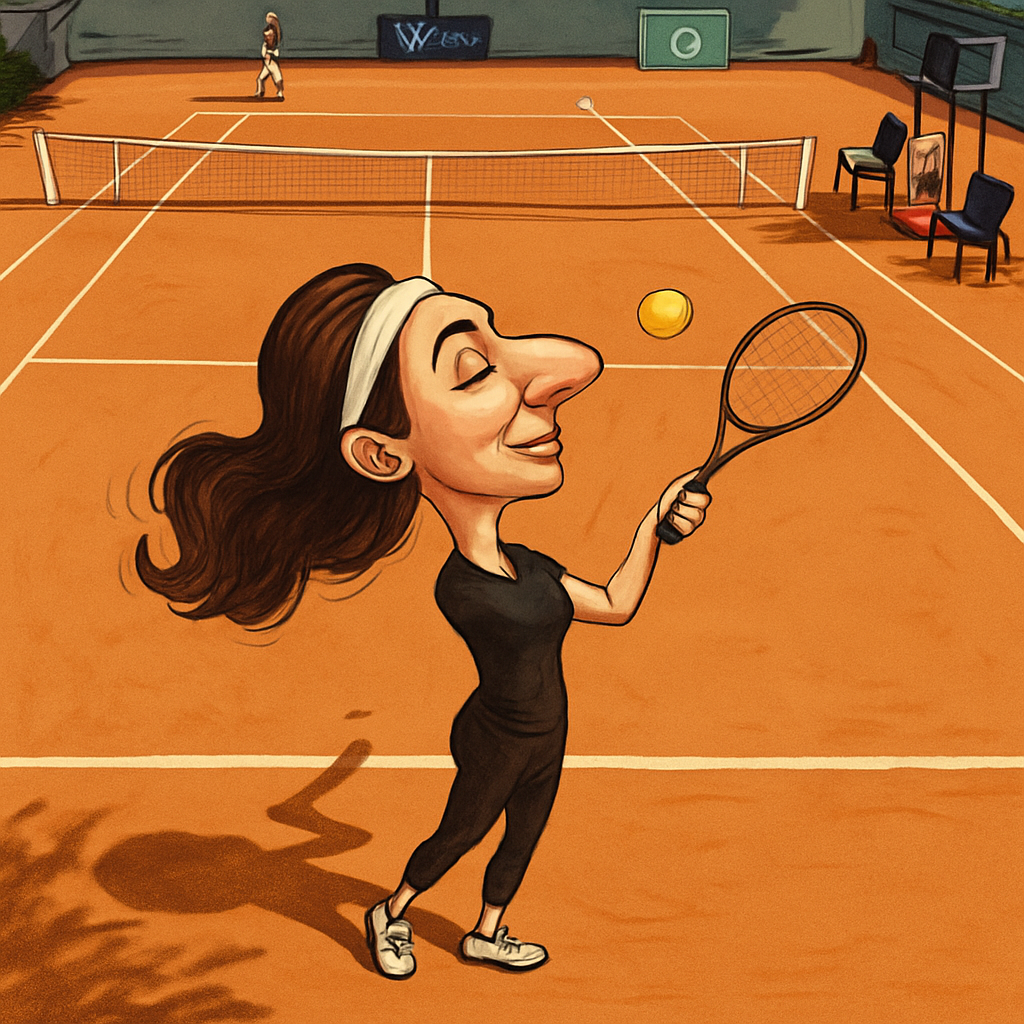
LONDON — The world of professional tennis was confronted with an uncomfortable and extreme result this week, prompting a rare public statement from governing bodies. Moroccan tennis player Hajar Abdelkader, a 20-year-old qualifier, suffered a devastating 6-0, 6-0 defeat in the first round of a WTA 125 tournament in France, managing to win just three points in the entire 36-minute match against world No. 65 Varvara Gracheva.
The scoreline, known colloquially as a "double bagel," is uncommon at the highest levels of the sport, but the near-total lack of points won by Abdelkader—three out of a possible 65—sent shockwaves through the tennis community and ignited a fierce debate about player development, tournament entry systems, and the psychological toll of such public humiliations.
The Match That Sparked the Controversy
The match took place at the Open de Rouen Capfinances, a WTA 125 event on indoor clay. Abdelkader, ranked No. 1,042 in the world, had earned her place in the main draw through two qualifying victories. Her opponent, Varvara Gracheva, a naturalized French player formerly representing Russia, is a seasoned professional with a WTA title to her name and years of experience on the main tour.
From the first serve, it was clear a vast gulf in class existed. Gracheva dominated every facet of the game, while Abdelkader struggled to win even the most basic of rallies. The final statistics were stark:
- Total points won: Abdelkader 3, Gracheva 65
- Winners: Abdelkader 0, Gracheva 17
- Unforced errors: Abdelkader 28, Gracheva 2
- First serve points won: Abdelkader 8%, Gracheva 92%
The match footage, which circulated widely on social media, showed a visibly distressed Abdelkader, at times appearing to fight back tears. The nature of the loss transcended a simple bad day at the office; it appeared to be a systemic mismatch of catastrophic proportions.
The Official Response and Mounting Pressure
In the immediate aftermath, online criticism was directed not only at the tournament's entry system but also at the WTA and the International Tennis Federation (ITF) for allowing a player of such a low ranking into a relatively high-level event. The pressure mounted quickly, leading to a coordinated statement from the sport's governing bodies.
The WTA and ITF issued a joint release, acknowledging the unusual result and outlining their perspective on player pathways. They stated, "While individual match results can vary, the WTA and ITF are committed to providing developmental opportunities for players from all regions through a structured pathway system."
The statement continued, emphasizing the challenges of development: "The journey from junior and ITF-level tournaments to the WTA Tour is intentionally rigorous. Occasional mismatches can occur, but they are part of a broader learning process essential for player growth and resilience building."
However, the statement did little to quell the debate. Many former players and pundits argued that "resilience building" should not come at the cost of a player's mental health and public dignity. The question at the heart of the controversy was whether the qualifying system had failed Abdelkader by placing her in a situation she was demonstrably not ready for.
A Deeper Look at the Pathway System
To understand how this matchup happened, one must look at the tennis pyramid. The WTA 125 event in Rouen is several tiers below a Grand Slam or even a standard WTA 250 tour event. Players gain entry through a combination of:
- Direct acceptance based on WTA ranking.
- Wild cards awarded by the tournament.
- Success in a separate qualifying tournament.
Abdelkader earned her spot via the qualifying draw, where she defeated two players ranked similarly to her. This highlights a potential flaw: winning a few matches at one's own level can grant access to a competition where the lowest-ranked direct entrant may still be 800 places higher. The gap between the top 100 and players outside the top 500 is often described as the largest in professional sports.
Tennis analyst and former player Mary Carillo commented on the situation, stating, "This isn't just about a bad loss. It's about the ecosystem. We have a responsibility to nurture talent, not throw lambs to the lions for the sake of filling a draw. What did anyone learn from this? Gracheva got a walkover, and a young player's confidence may have been shattered."
The Human Cost and Player Welfare
Beyond the rankings and systems lies the human element. For Hajar Abdelkader, the match represented a career milestone—a first appearance in a WTA main draw. It ended in a very public nightmare. The psychological impact of such a defeat cannot be understated.
Sports psychologists note that while adversity is part of sport, extreme, demoralizing failures without adequate support can be deeply damaging. The WTA/ITF statement mentioned "support systems" in place, but critics argue reactive support after the fact is less valuable than proactive measures to prevent such mismatches.
The incident has sparked calls for reform. Suggestions from within the tennis community include:
- Implementing a minimum ranking cutoff for WTA 125 main draws.
- Creating more "graduated" tournaments to bridge the ranking gap.
- Mandating enhanced mental performance support for players entering high-level events for the first time.
Varvara Gracheva, to her credit, handled the victory with grace and sensitivity. In her post-match comments, she said, "It's never easy. I just focused on my game. I hope she can recover and keep working. Tennis is a very tough sport."
Conclusion: A Wake-Up Call for Tennis
The 6-0, 6-0, three-point match in Rouen is more than a statistical anomaly. It is a symptom of a broader tension in professional tennis between providing opportunity and ensuring competition integrity and player welfare. The statement from the WTA and ITF defends the existing pathway, but the outcry suggests a significant portion of the sport's followers and experts believe the pathway needs reevaluation.
The hope for Hajar Abdelkader is that this experience does not define her career. The hope for tennis is that this incident serves as a catalyst for constructive discussion. The goal should be a system that still allows for Cinderella stories and dramatic upsets—the lifeblood of sport—but does so in a framework that protects young athletes from traumatic, non-competitive debuts that offer no developmental value. The statement from the chiefs has been issued, but the conversation, and the demand for meaningful action, has only just begun.