
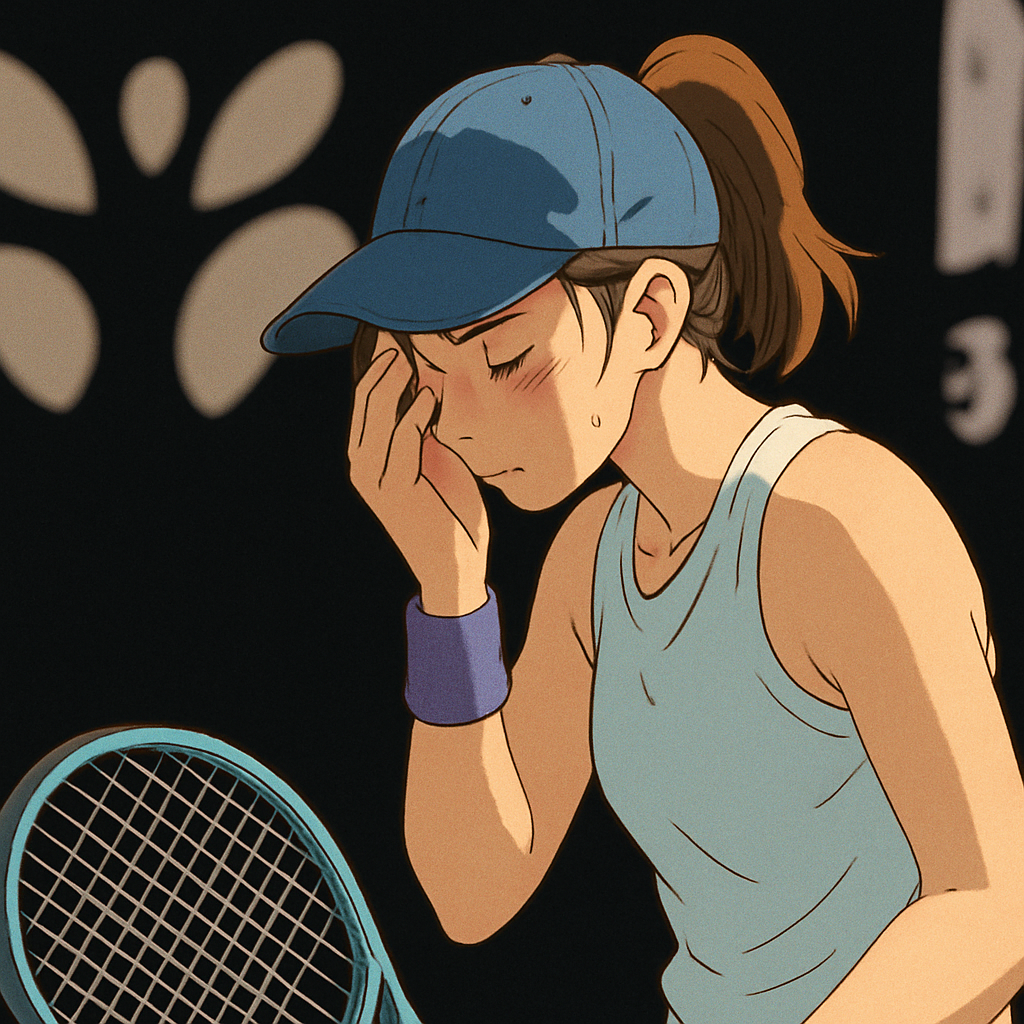
MELBOURNE — The dream of a historic, calendar-year Grand Slam was extinguished for Iga Swiatek before it could truly begin. In a stunning Australian Open quarter-final upset, the world No. 1 fell to the formidable power of Elena Rybakina, who secured a commanding 6-4, 6-4 victory on a sun-drenched Rod Laver Arena. Swiatek's bid to become only the fourth woman in the Open Era to hold all four major titles simultaneously was decisively halted by the 2022 Wimbledon champion.
The match was a masterclass in controlled aggression from Rybakina. From the first ball, the 6-foot Kazakhstani player imposed her game, unleashing thunderous serves and flat, penetrating groundstrokes that pushed Swiatek deep behind the baseline and rarely allowed her to settle into a rhythm. Swiatek, known for her relentless intensity and heavy topspin, found herself constantly on the defensive, unable to dictate play or find the angles that have dismantled so many opponents.
A Clash of Styles, A Clear Winner
This quarter-final was billed as a classic contrast in styles: Swiatek's relentless, spin-heavy consistency versus Rybakina's first-strike, power-based tennis. On this day, power reigned supreme. Rybakina's serve, one of the most potent weapons in the women's game, was the cornerstone of her victory. She fired 9 aces and won a staggering 83% of points behind her first serve, giving Swiatek no looks at break opportunities for the majority of the match.
Swiatek acknowledged the challenge in her post-match press conference, stating, "For sure I felt like I had the momentum going, and then she just blasted the ball and I sometimes couldn't do anything. That's what her game is. She's playing like that, so you have to be ready for that." The statistics painted a stark picture of Rybakina's dominance in key areas:
- Winners: Rybakina struck 24 clean winners to Swiatek's 15.
- Net Points Won: Rybakina was a perfect 7/7, showcasing confident forward movement.
- Break Points Saved: Rybakina saved the only break point she faced, while converting 2 of her 3 opportunities.
The Turning Points and Swiatek's Frustration
The first set was a tight affair until the crucial ninth game. With Swiatek serving at 4-4, Rybakina elevated her aggression, forcing errors and earning the first break of the match with a searing backhand return. She then coolly served out the set to love, sealing it with an unreturnable serve. The pattern repeated in the second set; after an early exchange of breaks, Rybakina broke Swiatek again at 3-3, a game that included a costly double fault from the Pole on break point.
Swiatek's frustration became visible as the match progressed. She was seen gesturing to her team, struggling to find solutions to the barrage coming from the other side of the net. Her usual fist-pumps were scarce, replaced by looks of exasperation. Rybakina, in contrast, maintained an ice-cool demeanor, her expression rarely changing as she methodically executed her game plan. "I was just focused on every point," Rybakina said later. "I knew I had to be aggressive from the first ball because Iga is a great mover and she defends really well."
The Weight of Expectation
While Swiatek dismissed the notion that the pursuit of a career Grand Slam added undue pressure, the occasion seemed to weigh on her performance. Coming into Melbourne, she was on a 16-match winning streak and had lost only one of her last 36 matches at the majors. The expectation was for her to cruise deep into the second week. Facing an opponent of Rybakina's caliber, however, requires peak execution, and Swiatek was slightly off her best. Her forehand, typically a weapon, produced uncharacteristic errors at critical moments.
Rybakina's Resurgence and Path Forward
For Rybakina, the victory marks a significant milestone and a statement of intent. Since her Wimbledon triumph, she has consistently proven she belongs at the very top of the game, reaching the final here last year and now defeating the world No. 1 in emphatic fashion. "I think it was a really good match from my side," she assessed. "I was solid and served well. I'm really happy with the performance today."
The win also avenges her loss to Swiatek in the quarter-finals of last year's French Open, a match played on Swiatek's favored clay. On the faster hard courts of Melbourne, Rybakina's game found its full destructive potential. She advances to the semi-finals, where she will be the favorite to reach a second consecutive Australian Open final, re-establishing herself as one of the most dangerous players on tour.
Conclusion: The Journey Continues
For Iga Swiatek, the defeat is a setback but far from a catastrophe. At just 22 years old, she has already amassed four Grand Slam titles and spent over 80 weeks at world No. 1. The career Grand Slam—winning all four majors—remains a clear and achievable goal. The Australian Open, the only major to elude her so far, will now become a focal point for future campaigns. "I know I'm going to have plenty of chances during the season to show my game," a reflective Swiatek said.
Ultimately, the match served as a powerful reminder of the depth and quality at the summit of women's tennis. On any given day, a player of Elena Rybakina's caliber can produce tennis that is virtually unplayable. Her victory not only ended a specific quest for Swiatek but also threw the tournament wide open, proving that in the modern game, supreme power, when harnessed with precision, can overcome even the most consistent and dominant forces. The baton of momentum has been passed, for now, but the rivalry between these two champions is sure to be a defining narrative for seasons to come.