
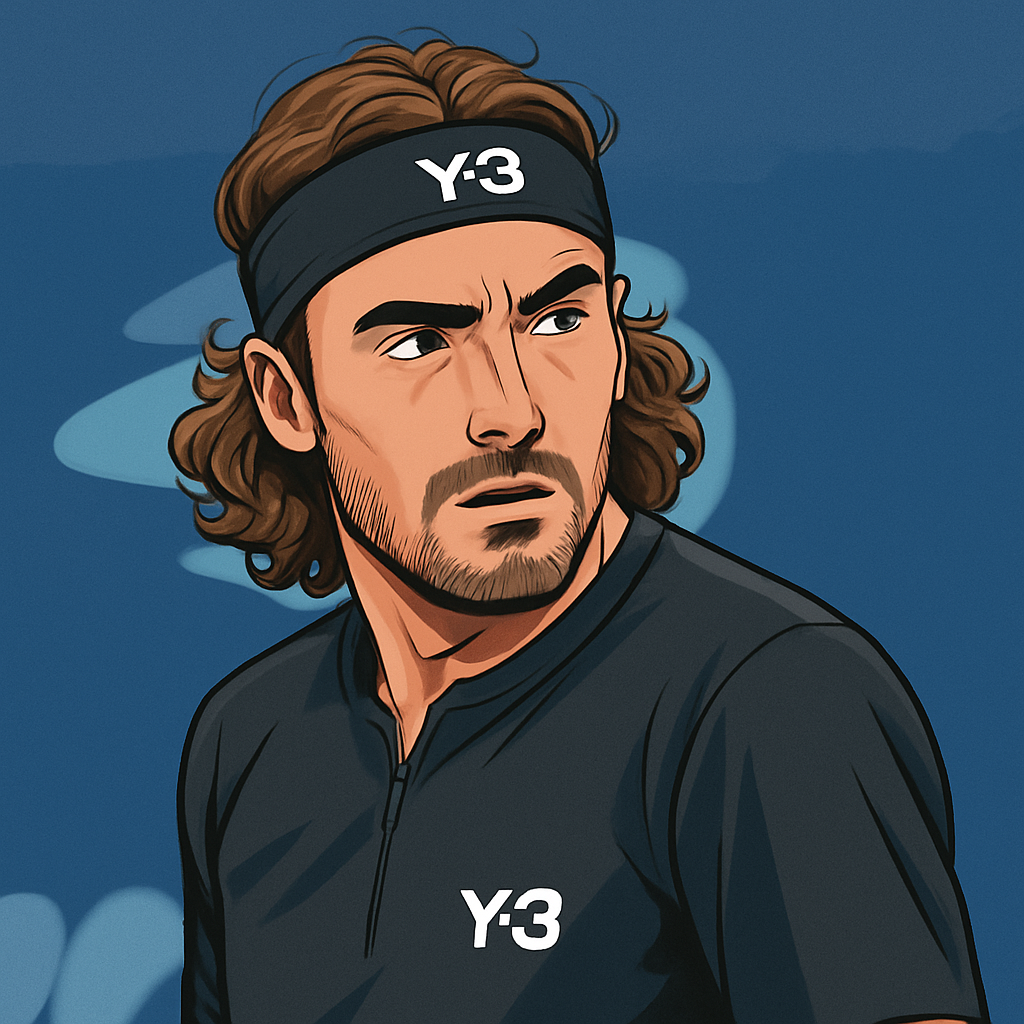
MELBOURNE — In a candid and revealing interview, Greek tennis star Stefanos Tsitsipas has lifted the lid on the atmosphere within the professional tennis locker room, criticizing what he perceives as a growing culture of arrogance and ego among some of his peers. The former World No. 3, known for his philosophical musings, suggested that the behavior of certain players is creating a toxic environment that strays from the sport's traditional values of respect and camaraderie.
Speaking to reporters ahead of his participation in a recent tournament, Tsitsipas did not name specific individuals but painted a picture of a changing dynamic on tour. "I see it in the locker room, I see it in the way people carry themselves," he stated. "There is a certain attitude, a belief that they are above others, that they don't need to acknowledge their fellow competitors. It's not everyone, of course, but it's becoming more noticeable. The ego is taking over."
The Disappearing Art of Respect
Tsitsipas, a two-time Grand Slam finalist at the Australian Open, emphasized that his comments stem from a deep love for the sport and a concern for its future culture. He contrasted the current climate with the environment he entered as a young professional, where established stars, despite their fierce competitiveness, maintained a baseline of mutual respect. "When I first came on tour, the top guys had a presence, but they also had humility. They would say hello, they would acknowledge you. Now, there are players who look straight through you, as if you don't exist. It's a very cold feeling," he explained.
The 25-year-old believes this shift is partly fueled by the immense financial rewards and social media fame available to modern athletes, which can inflate a player's sense of self-importance before they have achieved lasting greatness. "Success comes very fast now, and with it, a big head. Some players win one big tournament and their entire demeanor changes. They forget the journey, the grind, and the people around them. The locker room becomes a place of silent competition off the court as well, which is unhealthy."
A Breakdown in Locker Room Dynamics
The locker room, traditionally a sanctuary where players prepare and decompress, is where Tsitsipas observes the most telling behavior. He described scenes of players surrounded by large entourages, creating isolated bubbles, and a lack of the casual, friendly interactions that were once commonplace. "You have guys with headphones on, staring at their phones, completely closed off. There's no conversation about the game, about life, about anything. It's just individual islands. The sense of a touring group, a tennis family, is fading."
He pointed to specific behaviors that he finds particularly disrespectful, which include:
- A refusal to make eye contact or offer a simple greeting.
- Players blatantly discussing other competitors' weaknesses or games in a derogatory manner within earshot.
- An expectation of special treatment from tournament staff and ball kids, creating a hierarchical atmosphere.
- A lack of sportsmanship that extends beyond the match court into shared spaces.
"It's a trickle-down effect," Tsitsipas argued. "When the top players or the young stars act with this arrogance, it sets a tone. The younger players coming up see it and think that's how you're supposed to be to succeed. They mimic the attitude, not realizing they're mimicking the worst part."
The Response from the Tennis World
Tsitsipas's comments have sparked debate within the tennis community. Some veterans have quietly agreed with his assessment, noting a generational shift in comportment. Former player and now commentator Brad Gilbert tweeted, "Always interesting to hear current player perspectives. The locker room vibe is a real thing. Respect and gamesmanship used to be non-negotiable. Different times." Others, however, have defended the new generation, suggesting that increased pressure and media scrutiny justify a more insular, focused approach.
A few active players, when asked for their reaction, offered diplomatic responses. One top-20 player, speaking anonymously, said, "Everyone handles the pressure differently. Stefanos is entitled to his view. I try to be polite and focus on my own job. The tour is a big place with all kinds of personalities." This highlights the delicate nature of such public criticism within the close-knit tour ecosystem.
The Impact on Performance and Wellbeing
Beyond mere etiquette, Tsitsipas worries about the practical and psychological impact of a negative locker room environment. "Tennis is already an incredibly lonely and mentally taxing sport. You travel 11 months a year, you're away from family. The locker room and the player areas should be a small refuge, a place where you feel a sense of community with others who understand the struggle," he said.
He fears that the current atmosphere adds an unnecessary layer of stress. "If you feel isolated or disrespected in the one place you're supposed to be able to relax before a match, it affects your mindset. You carry that negativity onto the court. It becomes another opponent to fight." For Tsitsipas, who has been open about his own mental health challenges, fostering a supportive environment is crucial for the longevity and happiness of players.
A Call for a Cultural Reset
While not proposing formal rules, Tsitsipas issued a plea for self-awareness and a return to core values. He believes the responsibility lies with the players themselves, as well as with coaches and families who shape young athletes' attitudes. "We need to remember why we started playing. It was for the love of the game. We need to celebrate each other's successes more, offer a word of encouragement after a tough loss. It doesn't make you weak; it makes the sport stronger."
He pointed to figures like Roger Federer, Rafael Nadal, and even current World No. 1 Novak Djokovic as examples of players who, despite their legendary rivalries, have consistently shown respect for their opponents and the sport's traditions. "Look at the 'Big Three'. They fought like gladiators on court, but there was always a handshake, a kind word, a mutual understanding. That's the standard. We should be trying to live up to that, not tear it down."
In conclusion, Stefanos Tsitsipas's frank observations serve as a poignant reminder that professional tennis is more than just forehands and backhands. It is a human ecosystem, and its health depends on the conduct of its inhabitants. Whether his critique will inspire introspection and change remains to be seen, but it has undoubtedly ignited an important conversation about the soul of the modern game. "I just want the locker room to feel like a home again, not a battlefield of egos," he said, leaving a final thought for his peers to consider.