
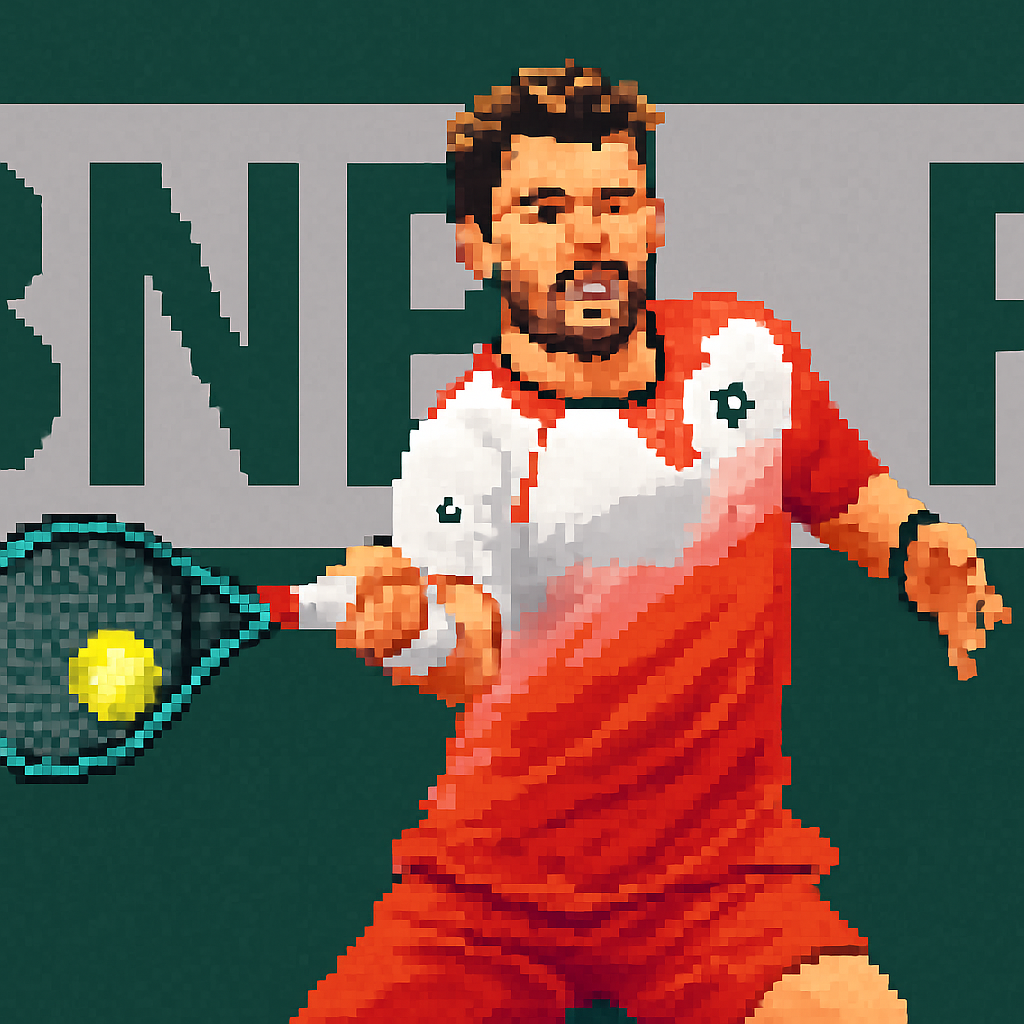
MELBOURNE — The tennis world was still processing the news of Stan Wawrinka’s planned retirement when the Swiss maestro, known for his powerful one-handed backhand and iron will, began to drop hints about a potential return. Just weeks after announcing his intention to hang up his racket at the end of the 2024 season, the three-time Grand Slam champion is already teasing a new chapter, suggesting he could be back on the court in a different capacity as soon as next year.
Wawrinka, who will turn 39 in March, made his retirement plans public in an emotional press conference at the Australian Open, stating that the 2024 campaign would be his last as a touring professional. The announcement prompted a wave of tributes from fans and fellow players, celebrating a career defined by resilience and spectacular victories over the sport's greatest champions. Yet, in a recent interview with Swiss media, Wawrinka introduced a fascinating caveat to his farewell tour, hinting at a swift return to the international stage.
The United Cup Captaincy: A New Role Beckons
The specific arena for Wawrinka’s potential comeback is the United Cup, the mixed-team competition that kicks off the ATP and WTA seasons. When asked about his future involvement in tennis, Wawrinka pointed directly to the event, which Switzerland is set to host a group stage of in 2025. "Maybe I'll be the captain of the Swiss team at the United Cup next year," he said with a characteristic grin, immediately sparking speculation. "We'll see. It's an idea. It would be a nice way to stay involved."
This suggestion is not as far-fetched as it might seem. The United Cup has embraced former stars in leadership roles, with legends like John McEnroe and David Witt captaining teams. For Switzerland, a nation with a rich tennis history currently in a transitional phase, Wawrinka’s presence would be a massive boost. His experience, competitive fire, and deep respect within the locker room could be invaluable in mentoring the next generation of Swiss talent, including players like Dominic Stricker and Leandro Riedi.
A Career Built on Defying Expectations
To understand why a Wawrinka comeback—even as a non-playing captain—feels so fitting, one must look at his career trajectory. For years, he operated in the shadow of his legendary compatriot, Roger Federer. Labeled a late bloomer, Wawrinka’s breakthrough at the highest level came after he turned 28, a testament to his relentless work ethic and self-belief. His career is a masterclass in peaking on the grandest stages, with his three major titles standing as monuments to his power and precision:
- 2014 Australian Open: Defeated Rafael Nadal in the final to win his first Grand Slam, announcing himself as a force.
- 2015 French Open: Overpowered Novak Djokovic in a stunning final, denying the Serb the career Grand Slam at that time.
- 2016 US Open: Beat Djokovic again in a final for his third major, cementing his "Big Three" slayer reputation.
These victories were punctuated by his now-iconic phrase, "Ever tried. Ever failed. No matter. Try Again. Fail again. Fail better," tattooed on his arm. It became a mantra for his career and resonates now as he contemplates this new venture. Retirement is not an end, but another attempt to contribute, to "fail better" in a different arena.
The Physical Toll and a Shifting Perspective
Wawrinka’s decision to retire stems primarily from the physical demands of the tour. Multiple knee surgeries and persistent foot issues have made the weekly grind of competition increasingly difficult. "My body is telling me it's time," he admitted in Melbourne. "The pain is constant, and to compete at the level I demand of myself is becoming too hard."
However, the role of a team captain presents a compelling alternative. It leverages his vast tactical knowledge and experience without subjecting his body to the punishing rigors of match play. It allows him to channel his famous fighting spirit into strategy, motivation, and support. For a player who has always thrived in Davis Cup (now Davis Cup Finals) atmospheres, representing his country from the sidelines could be a deeply satisfying culmination.
What Would a Captain Wawrinka Look Like?
Analysts and former players have been quick to speculate on Wawrinka’s potential style as a captain. Known for his quiet intensity and lead-by-example approach, he would likely be a captain who earns respect through his aura and resume rather than loud speeches. His key strengths would include:
- Big-Match Mentality: No one can better advise a young player on how to handle the pressure of a crucial rubber than a man who conquered the sport's giants in finals.
- Tactical Acumen: Wawrinka’s game was built on a clear plan: unleash his devastating backhand to break down opponents. This strategic mind would translate well to crafting team match-ups.
- Empathy for Struggle: Having battled injuries and self-doubt, he could uniquely support players through their own physical and mental challenges.
The Swiss Tennis Federation's Open Door
Reaction from Swiss tennis officials has been openly enthusiastic. The director of Swiss Tennis, Heinz Günthardt, a former player himself, stated they would be "honored" to have Wawrinka in any official capacity. "Stan is a legend of our sport and a national hero," Günthardt said. "His insight and passion would be an incredible asset for our players in a team competition like the United Cup. We have already had preliminary discussions."
This official welcome makes the prospect seem more like a matter of "when" than "if." The 2025 United Cup, with group stages in Switzerland, provides the perfect narrative backdrop for Captain Wawrinka to make his debut, offering home fans a chance to celebrate their hero in a new role immediately after his playing farewell.
A Legacy Still Being Written
Stan Wawrinka’s career has always been about rewriting his own story. From perennial top-20 player to Grand Slam champion, from Federer’s teammate to a Swiss icon in his own right. This tease of a captaincy comeback is perfectly in character. It suggests that for athletes of his caliber, retirement is not a full stop, but a semicolon; the competition simply changes form.
As he plays through his final tournaments—the French Open where he triumphed, Wimbledon where he seeks a deeper run, and potentially the Olympics—the conversation will increasingly shift from goodbye to what’s next. The image of Wawrinka, no longer wielding a racket but guiding his country’s next stars from the bench, is a powerful and fitting next act. It promises to extend the legacy of a player who never followed a conventional path, ensuring that his influence on Swiss and international tennis will continue long after his final match point.
In the end, Stan Wawrinka’s early tease of a comeback reminds us that for true competitors, the arena always calls. As he himself might reflect, this isn't about failing to stay away; it's about trying again, in a new way, to contribute to the sport he loves. The tennis world, having prepared to say farewell, now eagerly awaits the potential encore of Captain Stan.