
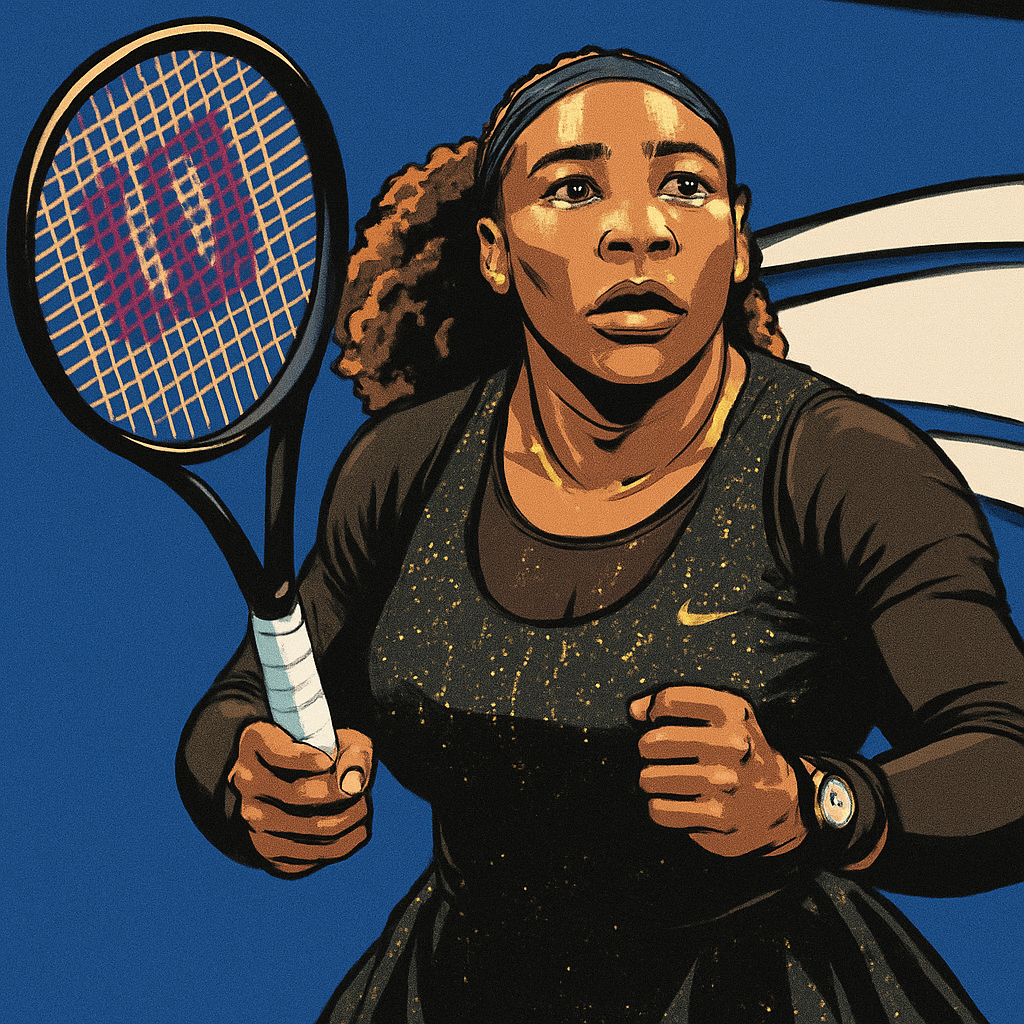
Tennis World — The sporting universe was sent into a frenzy on Tuesday when Serena Williams, the 23-time Grand Slam champion whose farewell at the 2022 U.S. Open was treated as a global cultural moment, broke her silence on swirling rumors of a potential return to professional tennis with a characteristically concise and powerful statement.
In a post on her official social media channels, Williams addressed the speculation head-on, writing: "I am not retired. I am focused on things other than tennis right now." The ten-word declaration, landing like a perfectly placed ace, immediately ignited debates, hopes, and a torrent of analysis across the tennis community and beyond.
The Catalyst for Speculation
Williams, who last competed professionally in a dramatic third-round loss to Ajla Tomljanović at Flushing Meadows nearly two years ago, has been increasingly visible in the tennis sphere. Her attendance at major tournaments, including this year's Indian Wells and the Australian Open, coupled with cryptic social media posts showing her training on court, fueled the fire. The speculation reached a fever pitch following her appearance at the 2024 ESPY Awards, where she presented and was celebrated, reminding everyone of her enduring athletic presence.
Furthermore, her participation in several exhibition matches, where she displayed flashes of her legendary power, suggested her competitive fire was far from extinguished. Most notably, she partnered with her sister Venus for a doubles match at the "The Net" exhibition in February, a event that left fans and pundits alike wondering if the "retirement" she had so poetically framed in a Vogue essay—choosing to evolve away from tennis—was perhaps more of a hiatus.
Decoding the 10-Word Statement
Williams’s statement is a masterclass in leaving the door wide open while managing expectations. By flatly stating "I am not retired," she categorically rejects the finality that the word "retirement" implies. This semantic distinction is crucial; it shifts her status from former champion to inactive champion. The second clause, "focused on things other than tennis right now," is equally significant. It acknowledges her current priorities—her venture capital firm, Serena Ventures, her family life, and her fashion pursuits—while the temporal qualifier "right now" leaves the future deliberately undefined.
Tennis insiders have parsed every syllable. Renowned coach Patrick Mouratoglou, who worked with Williams for a decade, commented, "Serena is the greatest competitor I have ever known. That fire doesn't just go away. Her statement tells us she hasn't closed the book, and in Serena's world, if the book isn't closed, anything is possible." The statement successfully accomplishes two things: it quells the immediate daily rumors while simultaneously launching a thousand new ones about a potential timeline for return.
The Road Since the 2022 U.S. Open
Since her emotional exit in New York, Williams has immersed herself in her off-court empire. Serena Ventures has been a resounding success, focusing on funding companies founded by women and people of color. She has also expanded her family, enjoying motherhood with her daughter Olympia. However, her physical presence at tournaments and continued training regimens indicate a maintained connection to the sport she dominated. Her fitness level, often showcased on social media, has remained at a peak that many argue could be competitive with sufficient match play.
The landscape of women's tennis has also evolved in her absence. A new generation of champions like Iga Świątek, Coco Gauff, and Aryna Sabalenka has solidified its hold at the top. Yet, the draw of a Serena Williams return transcends current rankings. As sports marketing expert Maya Singh noted, "The commercial and viewership impact would be unprecedented. Every tournament she entered would instantly become the main event, regardless of her seeding. She is the ultimate needle-mover."
What Would a Return Look Like?
Should Williams decide to mount a comeback, the path would be historic but fraught with challenges. Now 42, she would be returning to a tour that is deeper and more physically demanding than ever. She would likely need wild cards into major tournaments, as her protected ranking from her last event has long expired. The immediate questions from analysts and fans alike include:
- Motivation: Would she be chasing a record-tying 24th Grand Slam title, or simply the love of competition?
- Schedule: Would she follow a limited, targeted schedule akin to Roger Federer's later years or Rafael Nadal's current approach?
- Fitness: Could her body withstand the grueling best-of-three set matches on the WTA tour after a long layoff?
- Impact: How would her presence affect the dynamics of the locker room and the narrative of the women's game?
The most tantalizing possibility for many is a final, storybook run at Wimbledon, the scene of seven of her triumphs, or the U.S. Open, her home Grand Slam. The allure of going out entirely on her own terms—perhaps with a victory—is a powerful narrative. Former rival and commentator Chris Evert remarked, "Serena has rewritten the rules her entire career. If anyone can come back and be competitive after such a break, at her age, it's her. The statement tells us she's at least thinking about it."
The WTA and Fan Reaction
The Women's Tennis Association (WTA) has remained officially quiet, but sources suggest the tour would welcome her return with open arms. From a business perspective, her presence guarantees global headlines and soaring ticket sales. Fan reaction has been overwhelmingly euphoric, with social media flooded with messages of support and anticipation. The mere possibility has already rejuvenated interest in the upcoming hardcourt season leading to the U.S. Open.
However, Williams’s statement also serves as a reminder of her multifaceted identity. She is not lying in wait, solely fixated on a return. She is a business mogul, a mother, and a cultural icon. Tennis is a part of her, but not all of her. This balance is what makes her statement so authentic; she is not begging for attention or wild cards, but simply clarifying her status on her own terms.
Conclusion: The Ball is in Her Court
Serena Williams's ten-word retirement U-turn statement has masterfully reset the conversation. It has replaced definitive closure with thrilling possibility. By rejecting the "R-word," she has reclaimed control of her narrative and left the sporting world hanging on her next move. The statement is not an announcement of a comeback, but it is the essential prerequisite for one. It declares that Serena Williams's tennis story, contrary to popular belief, does not yet have an ending written in the history books.
For now, the world watches and waits. She remains focused on her ventures and her family, but the door to Centre Court, Arthur Ashe Stadium, and every other hallowed court she once ruled is now, unmistakably, unlocked. As always, the next chapter will be written when and if Serena Williams decides to pick up the pen—or in this case, the racket—once more.