
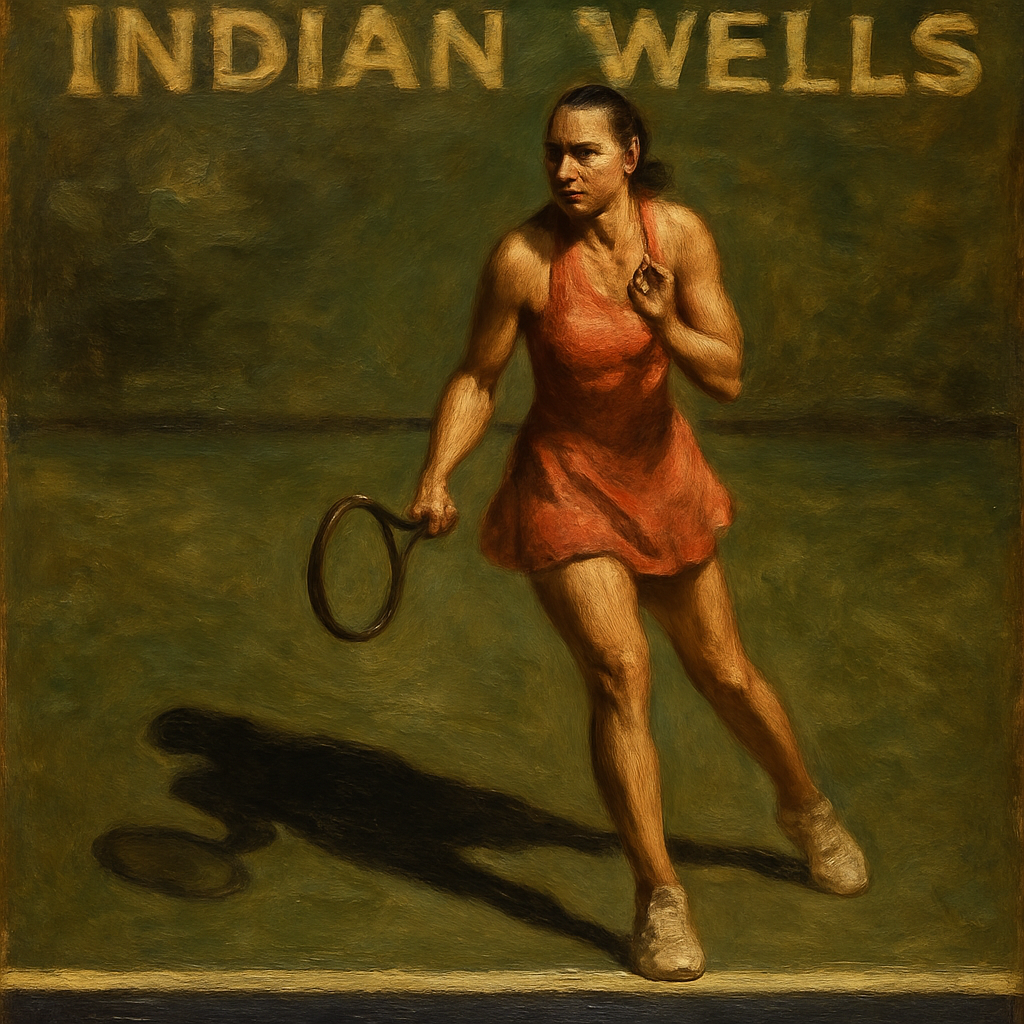
INDIAN WELLS — The BNP Paribas Open final on Sunday will feel like a scene from a recent tennis highlight reel, as world No. 2 Aryna Sabalenka and world No. 4 Elena Rybakina are set to clash for the championship. This marks their third final meeting in just four months, a testament to their burgeoning rivalry as two of the most formidable forces in women's tennis.
Sabalenka secured her spot in the title match with a commanding 6-2, 6-3 victory over American Coco Gauff in Saturday's first semifinal. In a display of power and precision, the reigning Australian Open champion neutralized Gauff's athleticism, breaking serve five times and firing 17 winners to just 10 unforced errors in a dominant 70-minute performance.
Later, under the lights of Stadium 1, Rybakina faced a sterner test against the unseeded but in-form Marta Kostyuk of Ukraine. The 2022 Wimbledon champion overcame a slow start and a determined opponent, ultimately prevailing 6-2, 3-6, 6-3. The match was a battle of attrition, with Rybakina's thunderous serve—she hit 12 aces—proving the decisive factor in the final set.
A Rivalry Forged in Finals
The Sabalenka-Rybakina rivalry has quickly become one of the most compelling narratives on the WTA Tour. Their clashes are characterized by a breathtaking display of raw power, with both women capable of hitting winners from any position on the court. Their recent history is a study in fine margins and dramatic momentum shifts.
Their first major final encounter came at the 2023 Australian Open, where Sabalenka triumphed in a three-set thriller to claim her maiden Grand Slam title. Just weeks later, they met again in the final of the prestigious BNP Paribas Open, with Rybakina exacting revenge in a tense, straight-sets victory. Sunday's final offers Sabalenka a chance to level the head-to-head in finals and reclaim the Indian Wells crown.
Reflecting on their rivalry, Sabalenka acknowledged the unique challenge Rybakina presents. "It's always a great battle against Elena," she said. "We push each other to be better. Every match is so close, and it always comes down to a few key moments. I'm ready for another fight."
Semifinal Breakdowns
Sabalenka's Statement Win
Sabalenka's semifinal was a masterclass in controlled aggression. Facing the US Open champion and a vocal home crowd, she immediately took control, breaking Gauff's serve in the opening game. Her game plan was clear and ruthlessly executed:
- Dominant Serving: She won 83% of points behind her first serve, giving Gauff no free looks.
- Relentless Return Pressure: She attacked Gauff's second serve, winning 12 of 18 points.
- Clinical Finishing: She converted 5 of her 7 break point opportunities.
Gauff, who had won their previous meeting at the US Open, was left searching for answers. "She played really well today. I think she was just more aggressive. When she's playing like that, it's tough to get a hold in the match," Gauff admitted in her post-match press conference.
Rybakina's Resilient Response
Rybakina's path was more complicated. Kostyuk, playing fearless tennis, matched Rybakina's power in extended baseline exchanges and took the second set. However, the composure of the 24-year-old Kazakhstani player shone through in the decider. She saved two break points at 2-2 and then broke Kostyuk in the next game, a pivotal shift she never relinquished.
Rybakina highlighted the mental aspect of her victory. "It was a difficult match. Marta is playing great, very aggressive. I just tried to stay focused on my serve and take my chances when they came in the third set. I'm happy I managed to turn it around," she stated.
The Stakes for Sunday's Final
Beyond the prestigious Indian Wells trophy and the $1.1 million winner's check, significant ranking points and psychological advantages are on the line. A victory would solidify Sabalenka's position at No. 2 and close the gap on Iga Świątek at the top. For Rybakina, a win would see her overtake Coco Gauff to reclaim the world No. 3 ranking.
The tactical battle is fascinating. Their games are built on similar pillars—devastating serves and first-strike groundstrokes—but with distinct nuances:
- Sabalenka's Weapon: Her double-fisted backhand, once a liability, is now a consistent and powerful shot, allowing her to attack from both wings.
- Rybakina's Edge: Her serve is arguably the best in the women's game, a shot that can deliver free points even on slower courts like Indian Wells.
- The X-Factor: Sabalenka's improved movement and defensive skills, which she showcased against Gauff, could be crucial in extending rallies.
Rybakina leads their overall head-to-head 5-3, but Sabalenka has won two of their three final meetings. The Belarusian acknowledged the need for a specific mindset. "I have to be ready for every point to be a battle. I can't let her serve dictate. I need to be aggressive on the return and take time away from her," Sabalenka outlined.
A Defining Early-Season Clash
This final represents more than just another title. It is a clash between the last two Wimbledon champions and the last two Australian Open champions, a meeting of the tour's premier power players at the peak of their games. Their rivalry is defining the early season, offering a potential preview of battles to come at the French Open, Wimbledon, and beyond.
As the tennis world turns its eyes to the California desert, the stage is set for a monumental conclusion to the "Fifth Grand Slam." Whether Sabalenka can avenge last year's final loss or Rybakina can continue her mastery at Indian Wells promises a spectacle of the highest quality. The only certainty is that thunderous groundstrokes and nerve-of-steel tennis will decide the 2024 BNP Paribas Open champion.