
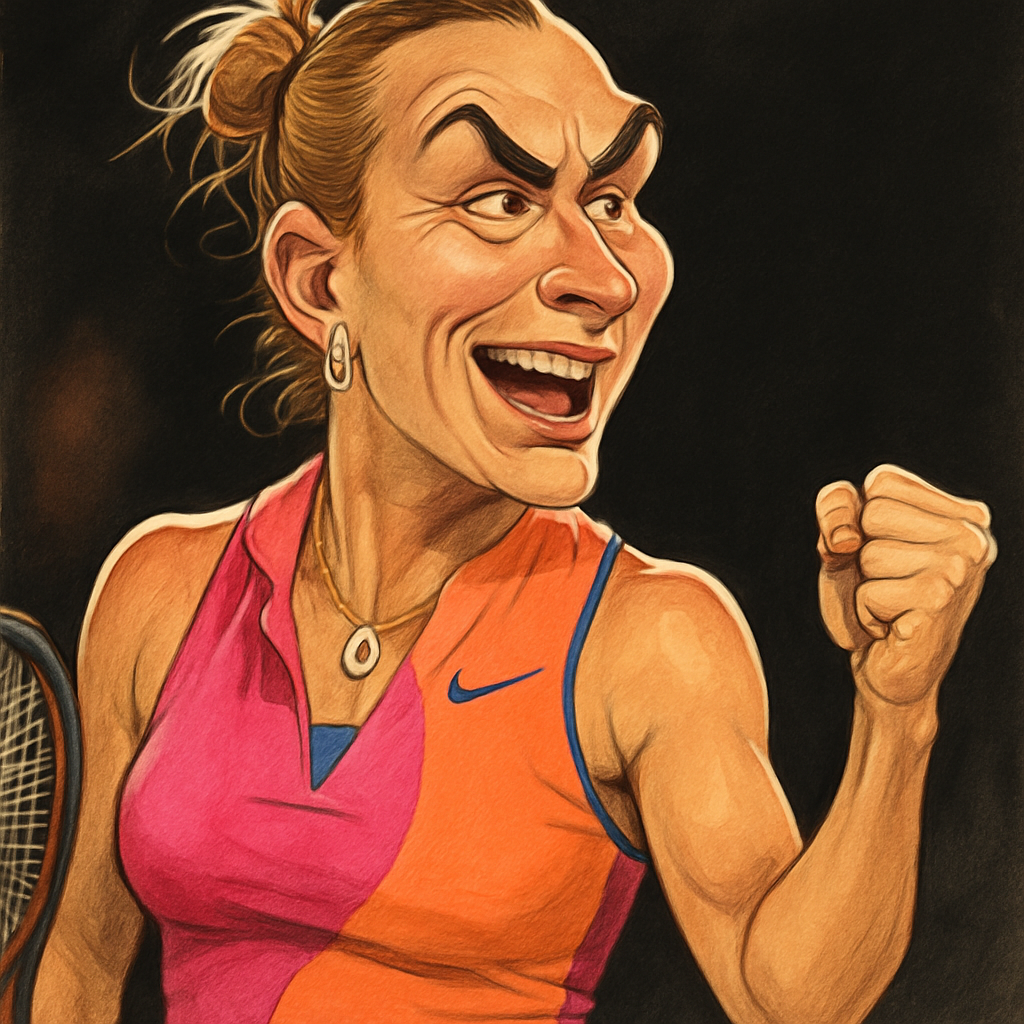
MELBOURNE — The stage is set for a thunderous showdown at the Australian Open. Aryna Sabalenka, the defending champion, produced a masterclass of controlled aggression to dismantle Ukrainian qualifier Dayana Yastremska 6-3, 6-4, while Elena Rybakina, the 2022 Wimbledon champion, ended the dream run of teenage sensation Zheng Qinwen 6-3, 6-2. The result is a final that promises a symphony of power, a clash of two of the most formidable ball-strikers in the women's game.
Sabalenka's Relentless March to the Final
Aryna Sabalenka has been the immovable object and the unstoppable force of this tournament. Not only has she not dropped a set on her path to the final, but she has also displayed a level of mental fortitude and tactical maturity that has elevated her game beyond pure power. Against Yastremska, another fearless hitter, Sabalenka’s serve was the impenetrable fortress. She faced zero break points, a staggering statistic that underscores her dominance. "I think I played great tennis today," Sabalenka stated post-match, her confidence palpable.
Her journey this fortnight has been a testament to her refined approach. Gone are the days of wild, unforced error-strewn matches. In their place is a player who dictates with her forehand, constructs points with purpose, and unleashes her devastating power at precisely the right moment. Her semi-final performance was a clinic in this new balance. She absorbed Yastremska’s early pace and systematically broke down her game, showcasing why she is the world No. 2 and the firm favorite to retain her title.
Rybakina: The Quiet Assassin
On the other side of the net stands Elena Rybakina, a player whose serene demeanor belies the hurricane force of her tennis. The Kazakhstani player, with her effortless, fluid power, has been equally dominant. Her 6-3, 6-2 victory over Zheng Qinwen was a display of experience and sheer firepower overwhelming youthful exuberance. Rybakina’s serve, one of the best in women's tennis, was again a key weapon, and her groundstrokes, particularly her cross-court backhand, were relentless.
Rybakina’s path to the final has been marked by impressive victories, including a commanding win over former world No. 1 Karolina Pliskova. She carries the confidence of a player who has triumphed on the grandest stage before, having won Wimbledon in 2022. "I'm super happy to be in another final," she said with characteristic calm. "The first one was in Wimbledon, now here. I'm just enjoying it so much."
A Rivalry Renewed on the Biggest Stage
This final is not a new matchup; it is the continuation of a compelling rivalry. Sabalenka and Rybakina have faced each other five times on tour, with Sabalenka holding a narrow 5-3 edge. However, their most significant encounter came right here in Melbourne Park last year, in the 2023 final. In a gripping three-set battle, Sabalenka emerged victorious 4-6, 6-3, 6-4 to claim her maiden Grand Slam title. That match was a brutal exchange of artillery, and Saturday’s final promises more of the same, but with higher stakes and both players in even more devastating form.
Their contrasting styles within the power framework make for fascinating viewing. Key elements to watch will include:
- The Serve: Both possess elite, match-defining serves.
- Return Position: Who can stand closer to the baseline to negate the other's power?
- Mental Fortitude: Handling the pressure of a major final.
What the Final Holds: Power vs. Precision
While both are categorized as big hitters, their methods differ. Sabalenka’s power is generated through immense physical strength and explosive rotation. Her game is built on intimidation and forward momentum. Rybakina’s power, in contrast, appears almost effortless. Her long levers and clean technique generate breathtaking pace with minimal visible strain, allowing her to maintain a remarkable consistency even under pressure.
The tactical battle will be intriguing. Sabalenka will look to use her powerful return and aggressive court positioning to rush Rybakina and prevent her from settling into a rhythm. Rybakina will aim to use her precise serve to set up short balls and dictate rallies with her first strike. The player who can better execute their game plan under the intense pressure of a Grand Slam final will lift the Daphne Akhurst Memorial Cup.
Sabalenka acknowledged the challenge ahead, showing respect for her opponent. "She's an incredible player. She plays really aggressive tennis, big serve. So it's going to be a great battle," Sabalenka said. Rybakina echoed the sentiment, recognizing the need for peak performance: "Of course, I know the result of last year. I don't want to think about it. It's just a different year. I'm going to try my best."
A Fitting Finale for a Stellar Fortnight
This final represents the pinnacle of the modern power game in women's tennis. It features the reigning champion, who has perfected her craft, against a former Wimbledon winner, who possesses one of the most complete and potent games on tour. Their clash guarantees a high-octane, high-quality spectacle with minimal margin for error. For fans of athletic, attacking tennis, it is a dream final.
Beyond the raw power, this match is a testament to resilience and evolution. Sabalenka has overcome well-documented serving woes to become one of the most reliable competitors in the sport. Rybakina has seamlessly transitioned from her Wimbledon triumph to establish herself as a constant threat at every major. Their stories of perseverance add a rich narrative layer to the impending fireworks on Rod Laver Arena.
As Melbourne Park prepares for the Saturday night finale, the anticipation is immense. The question is not whether we will see winners, but who will land the final, decisive blow. Will Aryna Sabalenka solidify her status as the new dominant force in women's tennis with a successful title defense? Or will Elena Rybakina add a second, vastly different Grand Slam crown to her collection, proving her versatility and champion's mentality? One thing is certain: the 2024 Australian Open women's final will be decided by the sheer, unadulterated force of will and weaponry.