
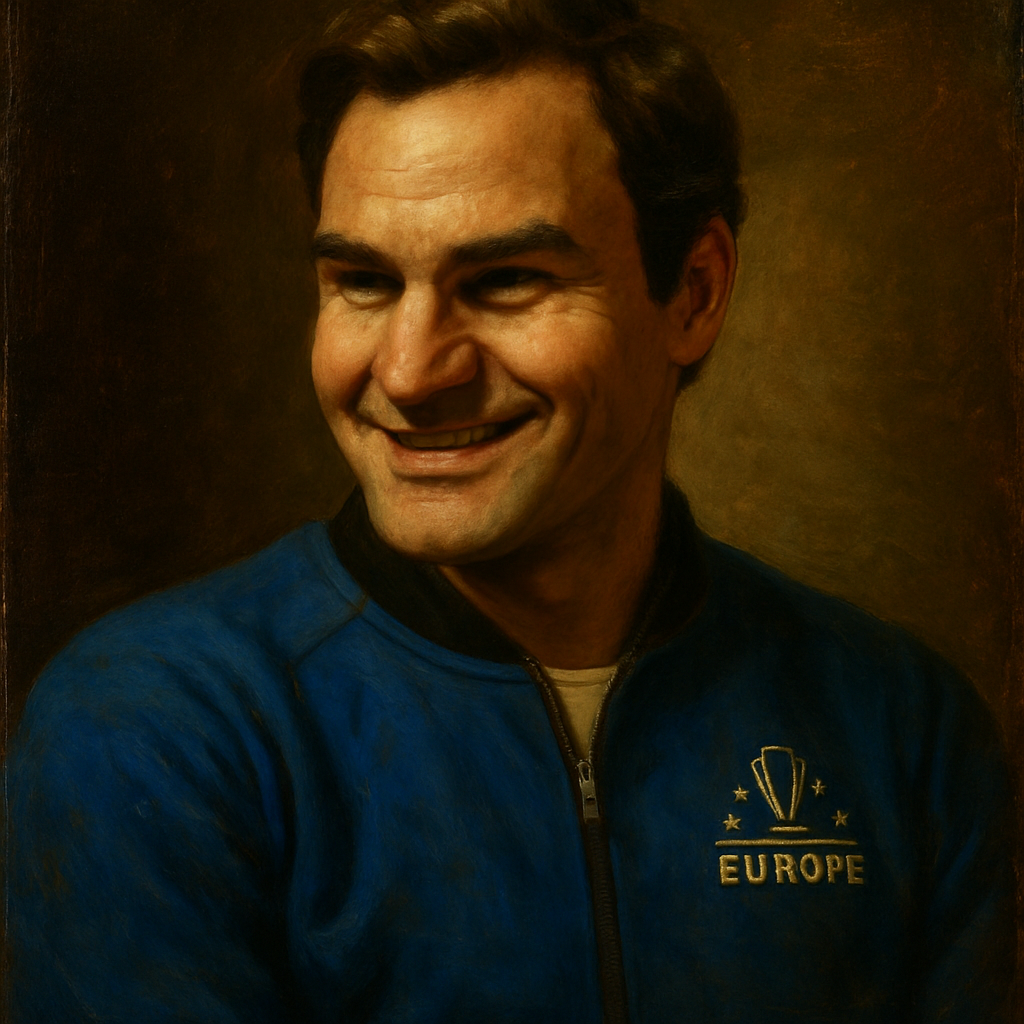
LAUSANNE — Behind the serene, almost regal composure that defined Roger Federer’s on-court persona for two decades lay a mischievous sense of humor, a side of the Swiss maestro rarely seen by the public. Now, a revealing anecdote from a close insider has shed light on one of Federer’s favorite—and most effective—pranks, deliberately deployed to get under the skin of his fiercest rivals.
The story, confirmed by a longtime member of Federer’s team to *The Tennis Insider*, involves a simple yet psychologically potent tactic during practice sessions at major tournaments. Federer, known for his impeccable timing and feel, would intentionally hit balls that landed just millimeters inside the baseline, a shot colloquially known as a “sitter” or a “gimme.” The catch? He would consistently call these balls “out.”
The Art of the Mind Game
“It was a calculated move, one hundred percent,” the insider explained, speaking on condition of anonymity. “Roger would be practicing with a top rival—think Novak [Djokovic], Rafa [Nadal], or Andy [Murray] in their prime. He’d drill a ball that clipped the very back of the line, the kind of shot you have to play. Then, with that completely straight face of his, he’d just say, ‘Ah, sorry, that was out.’”
The genius of the prank was in its subtlety and repetition. It wasn’t a one-off joke but a pattern. Federer, arguably the most respected figure in the sport, would make these calls with such conviction that his practice partner would often be left second-guessing their own perception. The insider noted, “He wasn’t doing it to cheat. He was doing it to plant a seed. He wanted to see their reaction, to see if he could disrupt their focus even in a practice environment.”
The reported reactions from his rivals were exactly what Federer might have hoped for. According to the source, certain players known for their intense, perfectionist demeanors would “go crazy.” They would stop the practice, walk to the other side of the net to check the mark, argue the call, or simply fume in frustration. This tiny breach of practice etiquette became a masterclass in psychological warfare.
Why This Prank Was So Effective
At the highest level of tennis, where margins are razor-thin, confidence in one’s own judgment is paramount. Federer’s prank directly attacked that foundation. By repeatedly challenging a player’s ability to judge a ball that was clearly in, he created a low-grade, persistent irritation. The insider broke down the psychological impact into a few key points:
- Erosion of Trust: It subtly undermined the implicit trust in a shared practice session.
- Doubt Induction: It made players question their own eyes and line-calling for the rest of the session.
- Emotional Energy Drain: It forced rivals to expend mental energy on frustration rather than tactical focus.
- The Federer Aura: Coming from him, the call carried weight, making it harder to dismiss outright.
“You have to remember,” the insider continued, “these guys are hyper-competitive. A practice session before a Slam semifinal is not a casual hit. It’s a reconnaissance mission. Roger understood that controlling the mental space, even there, could provide a tiny edge. Seeing an opponent flustered over a line call in practice told him something about their headspace going into the real match.”
The Ultimate Target: Perfectionists
While the prank was used on several rivals, the source suggested it was most effective against players with a particularly meticulous and fiery temperament. The description of rivals who would “go crazy” aligns closely with the known personalities of contemporaries like Novak Djokovic and Andy Murray, both famed for their relentless intensity and pursuit of perfection in every drill, every point, and every call.
“Andy would meticulously inspect the mark and have a five-minute debate about the physics of ball compression on the line,” the insider shared with a laugh. “Novak would get that look in his eye—the one that says, ‘I know what you’re doing, and I will now beat you twice as hard.’ It fueled them, but it also distracted them. That was Roger’s window.”
A Glimpse Behind the Curtain
This revelation peels back the curtain on the less-sanitized, human side of Federer’s rivalries. Publicly, they were defined by mutual respect and lofty speeches about pushing each other to greatness. Privately, they were still fiercely competitive alpha males seeking any legitimate advantage. Federer’s prank was a non-verbal way of asserting dominance, a reminder that even in a friendly practice, he was in control of the narrative.
It also reframes Federer’s legendary calm. While he was never one for overt outbursts or racket-smashing, his competitiveness manifested in these clever, cerebral games. He fought battles of inches and milliseconds not just with his forehand, but with his mind. The insider concluded, “People saw the smile and the elegance and thought he wasn’t a fighter in the same way. That’s wrong. He was a different kind of fighter. This prank was his version of a psychological jab.”
The Legacy of the Prank
As the story circulates among fans and former players, it adds a rich, cheeky layer to Federer’s legacy. It confirms what many suspected: that the effortless grace was underpinned by a sharp, competitive cunning. The prank never violated any rules—practice court line calls are inherently informal—but it masterfully exploited the unspoken tensions of the tour.
In the end, this anecdote is less about gamesmanship and more about understanding the complete portrait of a champion. Roger Federer wasn’t just a sublime artist with a racket; he was a grandmaster of the mental chessboard, capable of winning points before the match even began. His signature prank, now revealed, stands as a testament to the fact that in the rarefied air of the tennis elite, even a smile can be the subtlest of weapons.