
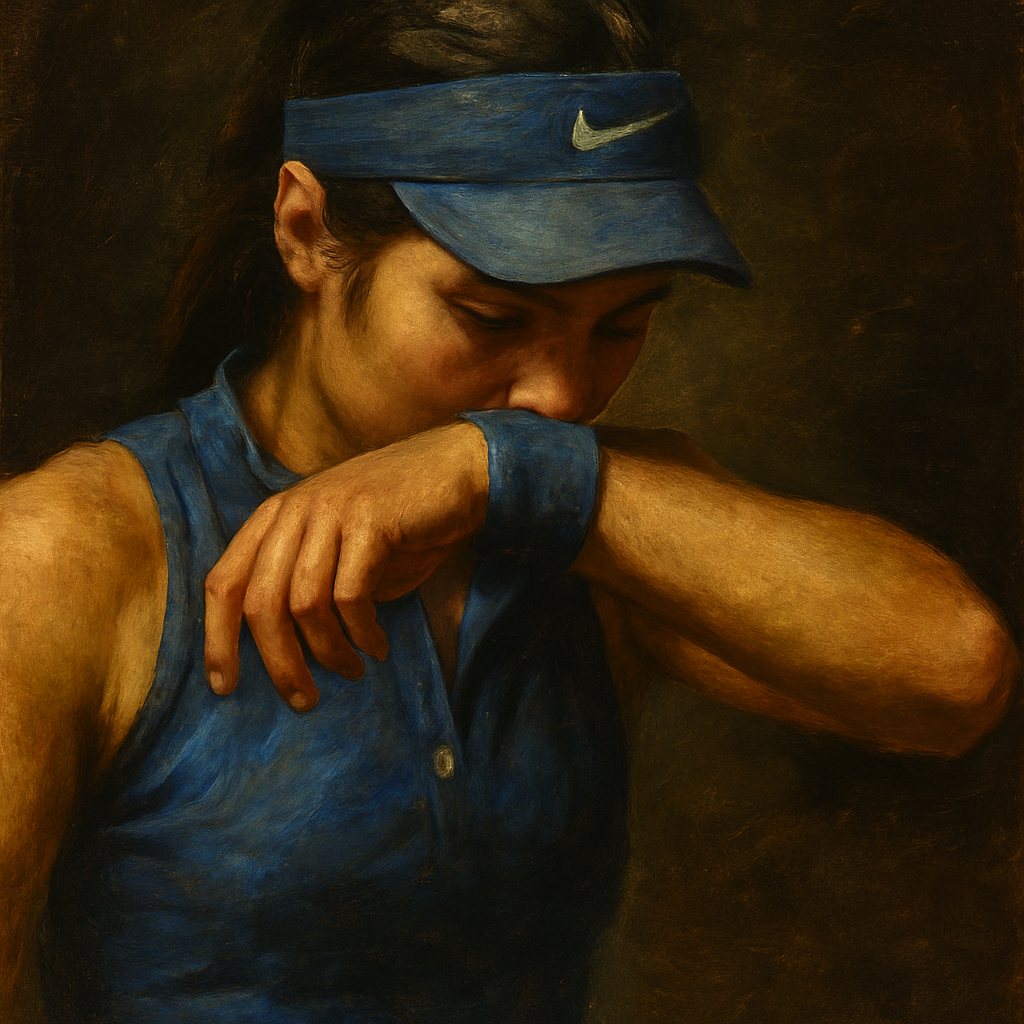
MELBOURNE — The narrative was supposed to be one of resurgence. Instead, Emma Raducanu’s 2024 Australian Open campaign ended with what former British number one Tim Henman described as “the most dispiriting performance I’ve seen from her in a Grand Slam.” A 6-4, 4-6, 6-4 second-round defeat to China’s Wang Yafan, a 29-year-old qualifier ranked 94th in the world, was not just an upset; it was a stark and sobering reality check.
Raducanu, the 2021 US Open champion whose fairytale run captivated the sporting world, arrived in Melbourne with cautious optimism. After eight months sidelined following surgeries on both wrists and an ankle, she had shown flashes of her blistering best in Auckland. Yet, against Wang, the old magic was conspicuously absent, replaced by unforced errors, tactical uncertainty, and a palpable struggle for rhythm. The question now is not just what went wrong on a blustery Melbourne afternoon, but where the 21-year-old Briton goes from here.
A Match of Missed Opportunities and Mounting Errors
The statistics from the match paint a damning picture. Raducanu committed a staggering 58 unforced errors to Wang’s 28. Her first serve percentage languished at 54%, and she won just 54% of points behind that first serve when she did land it. Most tellingly, she converted only three of her ten break point opportunities, while Wang capitalised on five of her nine. “It was a battle,” Raducanu admitted post-match. “I think I fought really hard. She just fought harder.”
The match ebbed and flowed, with Raducanu recovering from a break down to take the second set. In the decider, she broke Wang immediately, suggesting a shift in momentum. However, the brittleness that has occasionally plagued her game since her breakthrough resurfaced. A series of forehand errors handed the break straight back, and from 4-2 up, Wang won four consecutive games to seal the match. Analyst and former champion Mats Wilander noted, “Emma seems to lose concentration for two or three games, and at this level, that’s the set. That’s the match.”
The Physical and Psychological Hurdles
Beyond the technical flaws lies the broader context of Raducanu’s challenging two-year journey. Her 2023 season was decimated by surgery, and her current ranking of 296 means she no longer has automatic entry into major tournaments or top-tier WTA events. The lack of match sharpness after such a long layoff is a significant factor. While her movement and defensive skills were often brilliant, the consistency required to win three-set battles against seasoned opponents is built through relentless competition.
The psychological weight cannot be ignored either. The unique pressure of being a Grand Slam champion, coupled with intense global scrutiny and commercial demands, has created an environment unlike any faced by her peers. “There’s a lot of people out there that probably would like to see her fail,” observed Henman. “She’s got to block that out and focus on herself.” The search for a stable coaching setup continues, with this being her first major since splitting with Sebastian Sachs last May.
Key Areas for Immediate Improvement
For Raducanu and her team, the path forward requires a clear-eyed assessment. The immediate focus will likely be on:
- Building Robustness: The priority is staying healthy and accumulating matches, whether on the WTA Tour or at ITF level.
- First Serve Consistency: A reliable first serve is the foundation of any top player’s game and would immediately ease pressure.
- Point Construction: Reducing unforced errors by choosing the right shot at the right time, rather than forcing winners from difficult positions.
- Coaching Stability: Finding a long-term coaching partnership to provide technical and tactical continuity.
The Road Ahead: Patience and Perspective
Despite the disappointment, there were green shoots. Her fighting spirit in the second set was commendable, and her ability to produce stunning winners remains intact. The challenge is harnessing that talent consistently. Raducanu herself struck a philosophical note: “I’m just looking forward to putting more work in. I know that when the work starts to pile up, that’s when the results will come.”
Her schedule will now be dictated by her ranking. She will rely on wildcards for many main-draw events, a situation that brings its own pressure. The goal for the season is no longer about immediate Grand Slam contention, but about the gradual process of rebuilding. Former British Fed Cup captain Judy Murray offered a crucial reminder: “She’s 21. She’s had three operations. She’s missed a huge amount of time. This is like starting over.”
Conclusion: A Necessary Step Back?
Emma Raducanu’s Australian Open exit was undeniably a setback, a “most dispiriting” performance that laid bare the work still to be done. However, it may also prove to be a necessary recalibration. The stratospheric rise of 2021 created expectations that were perhaps unrealistic for a teenager navigating the sport’s toughest landscape. This defeat, painful as it is, strips away any lingering illusion of a quick return to the top.
The journey ahead is one of patience, persistence, and incremental progress. The talent that won a Grand Slam is not lost; it is merely dormant, awaiting the physical and competitive foundation to support it once more. For Raducanu, the road back begins not with headlines, but with the daily grind of practice, recovery, and match play. As she put it herself, “It’s going to take a lot of time. I’m just trusting that with more weeks on the tour, more weeks consistently training, that I’ll be able to make that progression.” The tennis world watches, hoping the next chapter of her story is one of resilience rewarded.