
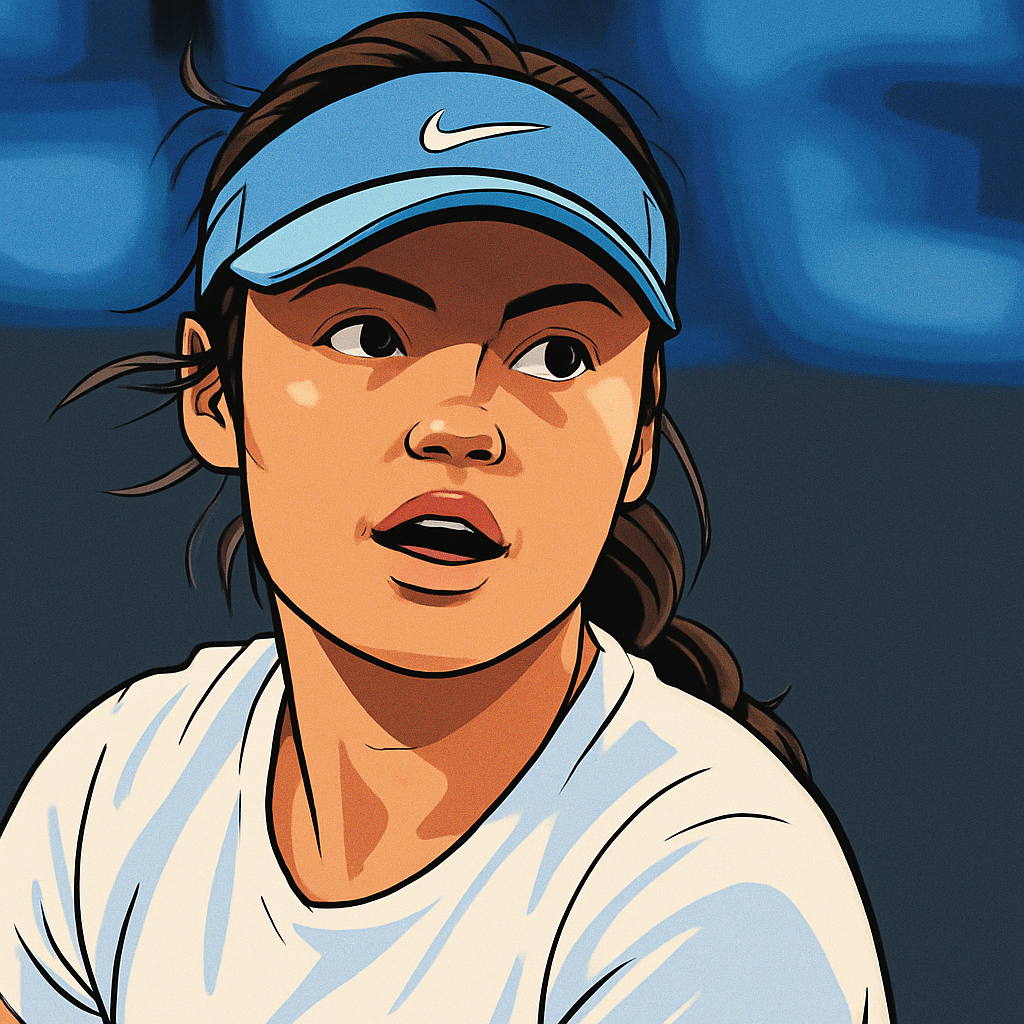
PERTH — Great Britain’s United Cup campaign began with a dramatic 2-1 victory over Japan in Perth on Tuesday, but the headline moment came not from a winning shot, but from a withdrawal. Emma Raducanu, set for a blockbuster comeback clash against former world No. 1 Naomi Osaka, pulled out of the match just hours before the scheduled start due to a sore left ankle.
The highly anticipated duel between the two Grand Slam champions, both returning from extended breaks and navigating comebacks from injury and motherhood respectively, was the marquee event of the Group E tie. Its cancellation cast a shadow over an otherwise successful day for the British team, who relied on strong performances from Cameron Norrie and a mixed doubles pairing to secure the win.
A Late Withdrawal and a Tactical Shift
News of Raducanu’s withdrawal broke shortly before the tie’s commencement. The 2021 US Open champion had been practicing in Perth and participated in the pre-tie press conference alongside Osaka, showing no outward signs of distress. However, the British camp confirmed the issue was related to her left ankle, the same joint that required surgery in 2023 and sidelined her for eight months.
British captain Tim Henman explained the decision, emphasizing caution so early in the season. "She felt a slight soreness in her ankle after practice yesterday," Henman stated. "Given the history, it’s a very smart decision to pull out. It’s just not worth the risk this early in the season."
This forced a last-minute reshuffle. World No. 58 Katie Boulter, originally slated for the second singles rubber, was promoted to face Osaka in the opening match. The change in opponent presented a unique challenge for Osaka, who later admitted the mental shift required. "I was definitely looking forward to playing Emma," Osaka said post-match. "It’s a bit unfortunate, but I hope she gets better soon."
Osaka's Winning Return and Norrie's Gritty Victory
Despite the altered circumstances, Naomi Osaka marked her official return to competitive tennis for Australia with a commanding 6-3, 6-3 victory over Boulter. Displaying flashes of the powerful, aggressive tennis that made her a four-time major winner, Osaka fired 10 aces and won 83% of her first-serve points.
The key factors in Osaka’s win included:
- Serve Dominance: Her first serve was a consistent weapon, keeping Boulter under constant pressure.
- Forehand Power: She dictated rallies with her heavy forehand, particularly on the ad court.
- Mental Resilience: She saved all three break points she faced, crucial in maintaining her momentum.
With Japan leading 1-0, the pressure fell on British No. 1 Cameron Norrie to keep the tie alive against Japan’s Kei Nishikori. In a tense, physical battle that lasted over two-and-a-half hours, Norrie prevailed 6-4, 6-7(6), 6-3. The match was a testament to Norrie’s fitness and determination, as he outlasted Nishikori in numerous extended baseline exchanges.
Nishikori, himself on a long comeback trail from injury, showed moments of his signature brilliant shot-making but was ultimately undone by unforced errors at critical moments in the third set. Norrie’s victory leveled the tie at 1-1, sending the decision to a mixed doubles rubber.
Doubles Decider Seals British Comeback
The final point of the tie rested on the mixed doubles pairing of Norrie and Boulter, who took on the Japanese duo of Osaka and Yoshihito Nishioka. The British pair, combining Norrie’s solidity from the baseline with Boulter’s aggressive net play, secured a 7-6(7), 6-4 victory to clinch the overall tie 2-1 for Great Britain.
The first-set tiebreak was a nail-biter, with the British team saving a set point before converting their own. In the second set, an early break was enough for Norrie and Boulter to close out the match. Captain Tim Henman praised the team’s adaptability, saying, "For Cam to back up a long singles match and for Katie to switch focus after her singles, it was a fantastic team effort."
Analysis: Caution Over Courage for Raducanu
Raducanu’s withdrawal, while disappointing for fans, underscores the meticulously cautious approach she and her team are taking with her comeback. After three surgeries in 2023 (on both wrists and her left ankle), the primary goal for the 21-year-old is building a sustainable foundation for the long term.
Pushing through minor discomfort in a high-intensity, season-opening team event against a hitter of Osaka’s caliber would have carried significant risk. The decision, though tough, signals a mature, long-term perspective that has sometimes been absent in the management of her young career.
For Osaka, the day was a positive step. A clean, straight-sets win against a competent top-60 player provides a confidence boost as she heads towards the Australian Open. However, the missed opportunity to test herself against Raducanu’s unique game and movement remains a footnote to her otherwise successful return.
What Comes Next for Both Camps
Great Britain’s victory puts them in a strong position in Group E. Their next tie is against hosts Australia, who boast Alex de Minaur and Ajla Tomljanovic. Raducanu’s status for that crucial match remains uncertain. Henman indicated she would be assessed daily, stating, "We’ll see how the ankle settles. We have a day of practice tomorrow and will make a decision then."
For Japan, the loss makes their final group match against the United States a must-win to keep quarter-final hopes alive. Osaka will likely face a sterner test against American Jessica Pegula, a current top-5 player, which will be a more revealing gauge of her current level.
The overarching narrative from Perth is one of promise tempered by prudence. Tennis fans were denied a dream match-up, but the rationale behind the withdrawal is sound. The United Cup, as a team event, also highlighted the importance of squad depth, with Boulter and Norrie stepping up admirably under pressure to secure a vital win for their nation.
While the sight of Raducanu and Osaka on opposite sides of the net remains a tantalizing prospect for the future, the opening day of the United Cup served as a reminder that in the grueling world of professional tennis, the long game often requires difficult, short-term decisions.