
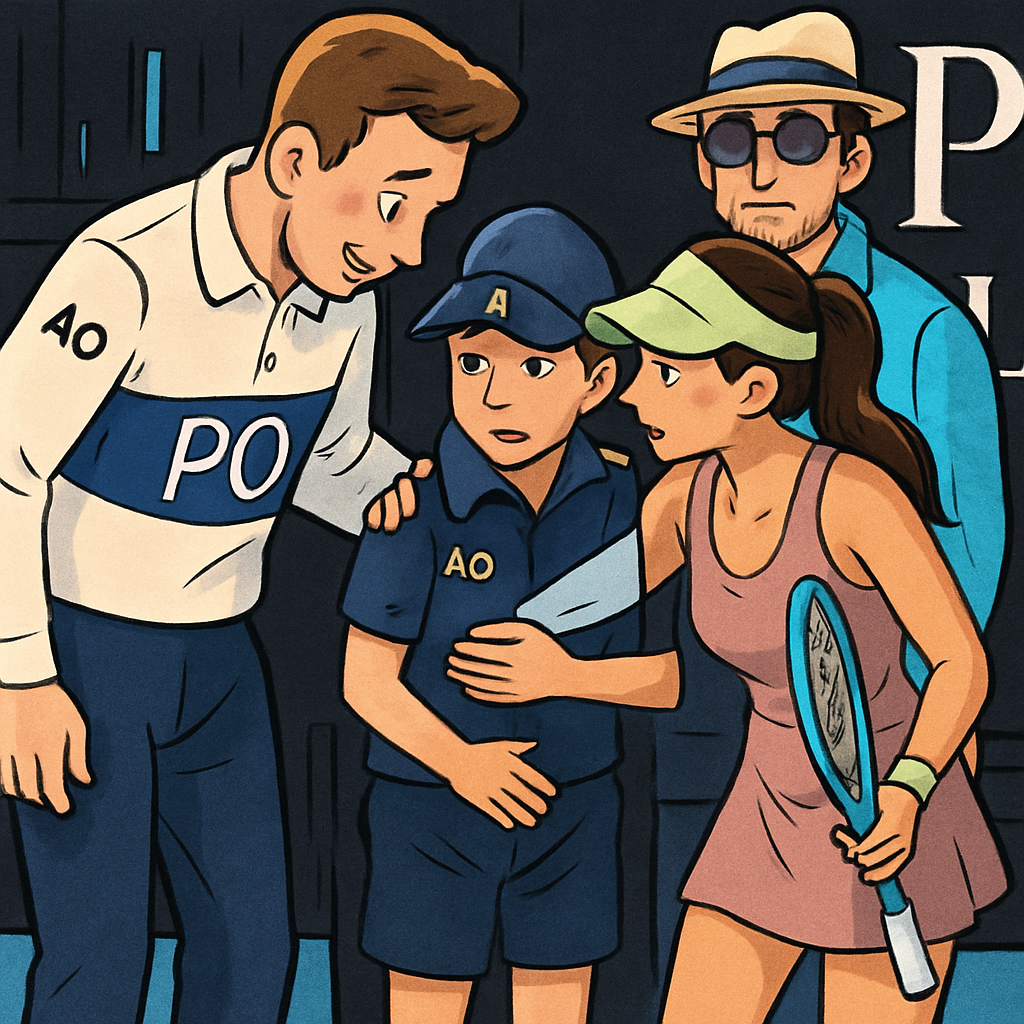
MELBOURNE — The 2026 Australian Open opened with its customary blend of blistering serves, thunderous groundstrokes, and high-stakes drama. Yet, on day one at Melbourne Park, a moment of profound humanity on an outer court captured the world's attention, transcending the scoreline and reminding everyone of the shared vulnerability that connects us all. Turkish player Zeynep Sonmez, ranked 120th in the world, became an unlikely hero when she rushed to the aid of a ball girl who collapsed during their first-round match.
A Sudden Collapse on Court 17
The incident occurred during the second set of Sonmez's match against France's Clara Burel on Court 17. As players traded shots in the Australian summer heat, a ball girl stationed near the net post suddenly swayed and fell to the ground, losing consciousness. The chair umpire immediately called for medical assistance, but it was Sonmez who acted first. Without a moment's hesitation, the 24-year-old dropped her racket, sprinted across the court, and knelt beside the distressed teenager.
Sonmez, who has basic first-aid training, quickly assessed the situation. She ensured the girl was in a safe position, checked her breathing, and began fanning her with her own hand to provide air circulation while speaking to her in calm, reassuring tones. Within moments, tournament medical staff arrived with a stretcher and took over care. The girl, whose identity has not been released due to privacy protocols, regained consciousness shortly after and was transported to the on-site medical center for evaluation. She was reported to be stable and recovering, having fainted likely due to a combination of the heat and standing for an extended period.
"It Was Just Instinct": Sonmez Reacts
In her post-match press conference, a visibly emotional Sonmez downplayed her actions, emphasizing that her response was automatic. "You don't think in that moment," she said. "You just see a person in need, a young girl, and you go. It was just instinct. Tennis is our job, but we are all human beings first." She expressed relief that the girl was okay and requested that well-wishers respect her privacy.
Sonmez's opponent, Clara Burel, also praised the response. "It was very scary to see. Zeynep was so quick and so calm. Everyone on court was worried. The most important thing is that the ball girl is safe," Burel stated. The match was suspended for approximately 25 minutes before resuming, with Sonmez going on to win in three sets, 4-6, 6-4, 6-2.
The Role and Welfare of Ball Crew
The incident sparked immediate conversation about the welfare of the hundreds of ball kids and court personnel who are essential to the operation of a Grand Slam. The Australian Open employs over 380 ball kids annually, selected through a rigorous process. Their duties require intense concentration, physical stamina, and long hours on court, often in extreme heat. Tournament director Craig Tiley addressed the incident in a statement, affirming the event's commitment to their safety:
"The health and safety of everyone at the Australian Open, especially our ball crew who do an incredible job, is our absolute priority. We have comprehensive medical support on standby at all courts, and all our ball kids undergo extensive training which includes heat and hydration awareness. We are grateful for the swift response of our medical team and for Zeynep's compassionate actions today. The young person involved is receiving the best possible care and support."
The tournament's protocols for ball crew welfare are considered among the best in the world, but the event is no stranger to extreme conditions. The Australian Open has a well-defined Extreme Heat Policy (EHP) that can suspend play for competitors. This policy, however, does not directly apply to ball kids and line judges, whose schedules are managed through shorter rotations, mandatory breaks, and constant access to water and cooling stations. Key measures in place include:
- Structured Rotations: Ball crews work in short shifts, typically no longer than one hour on court before a mandatory break.
- Hydration Mandates: Crews are required to drink water before, during, and after their shifts, with supervisors monitoring intake.
- Cooling Zones: Designated air-conditioned areas are provided for breaks, equipped with electrolyte drinks and snacks.
- Comprehensive Training: Pre-tournament training includes recognizing signs of heat stress and dehydration in themselves and others.
A History of Player Compassion
While dramatic, instances of players aiding court personnel are not unprecedented in tennis, a sport that often showcases sportsmanship. The act underscores the close-knit, if temporary, community formed on court during a match. Notable past examples include:
- At the 2023 US Open, Carlos Alcaraz repeatedly checked on a visibly unwell ball person during a night match, prompting a medical timeout for the individual.
- During the 2020 Australian Open, a ball boy slipped and fell; Nick Kyrgios immediately rushed over to help him up and ensured he was unhurt before continuing play.
- In a memorable 2017 incident in Madrid, ball kid fainted in the stands; Rafael Nadal, upon seeing the commotion from the court, paused his practice to call for medical help.
Widespread Acclaim and the Bigger Picture
Sonmez's act of kindness resonated globally, trending on social media and drawing praise from fellow players, fans, and sports commentators. The WTA released a statement commending her "exceptional sportsmanship and quick thinking." Beyond the immediate praise, the event has reignited important discussions about duty of care in professional sports, extending beyond the athletes to the often-unsung workforce that makes major events possible. It serves as a potent reminder that the spectacle of sport is built on the well-being of every individual present, from the top seed on Rod Laver Arena to the newest ball kid on an outer court. As the 2026 Australian Open continues, the image of a player prioritizing a person over a point will stand as one of its most defining and heartening moments.