
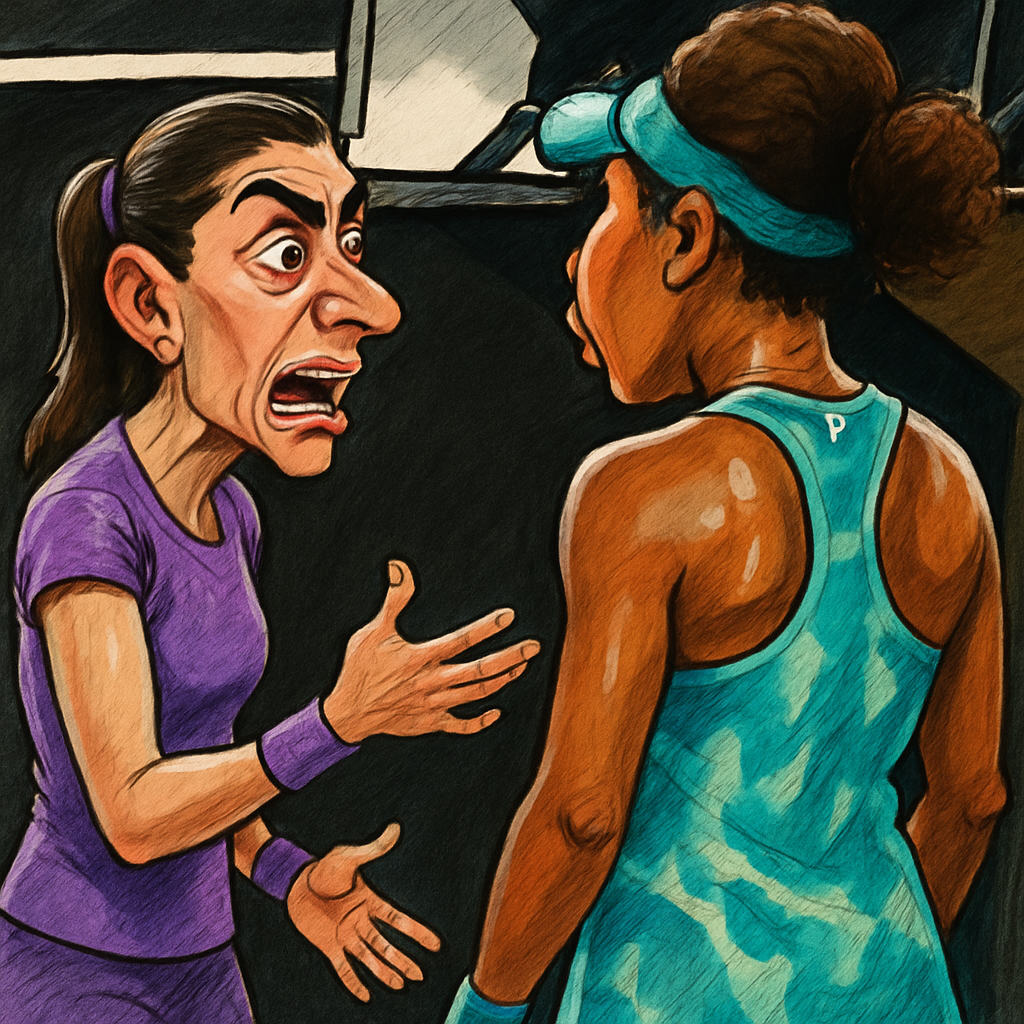
MELBOURNE — The Australian Open is known for its scorching heat and fiery on-court battles, but a post-match handshake at Melbourne Park generated a different kind of chill. Following her second-round victory over Romania's Sorana Cirstea, former world No. 1 Naomi Osaka found herself at the center of a social media storm, prompting a public apology for what she perceived as her own "disrespectful" behavior during the match.
A Frosty Exchange Sparks Online Debate
The incident occurred after Osaka, playing in her first Grand Slam since becoming a mother, secured a hard-fought 3-6, 6-4, 7-5 win. As the players met at the net, Cirstea offered a notably brief and cold handshake, avoiding eye contact before quickly gathering her belongings. The moment was captured by broadcast cameras and swiftly dissected online, with many fans criticizing Cirstea for poor sportsmanship. However, Osaka, a four-time major champion known for her introspection, took to social media later that evening to flip the narrative entirely.
In a candid post on X (formerly Twitter), Osaka wrote: "I also want to give my apologies to Sorana because I wasn't really sure how to act at the end of the match because the match was really tough and I just felt really emotional and I feel like maybe I wasn't as respectful as I could have been, so I want to apologize for that." She clarified that Cirstea had been nothing but kind in their previous interactions, stating, "She's always been really nice to me."
The On-Court Tension That Led to the Moment
To understand the apology, one must look at the match's pivotal and tense final game. Serving for the match at 6-5, Osaka faced immense pressure. The game stretched to seven deuces, lasting nearly 15 minutes and featuring multiple match points saved and squandered. During this high-stress sequence, Osaka was visibly frustrated, often turning her back to the court between points, taking deep breaths, and appearing to be in her own world—a common coping mechanism for the player.
It was this behavior that Osaka later reflected on as potentially disrespectful to her opponent's rhythm and focus. In her post-match press conference, before her public apology, she had already hinted at her internal conflict, saying, "I just felt a little bit unprofessional because I was doing whatever I needed to do to win, but I feel like in a way I was maybe a bit distracting, so I'm not really sure."
A Pattern of Empathy and Self-Reflection
This incident is not an isolated moment of hyper-sensitivity from Osaka; it aligns with her well-documented empathy and tendency to shoulder blame. Throughout her career, she has frequently:
- Apologized to opponents after wins she felt were not at her best standard.
- Publicly taken responsibility for on-court disputes.
- Advocated for mental health and kindness in sports.
Her apology to Cirstea, therefore, was less about the handshake itself and more about her own conduct during the crucible of competition. She was apologizing for the perceived sin of being inwardly focused and emotionally raw, potentially at the expense of her opponent's experience. This level of self-awareness, while praised by many, also sparked debate about the pressures and expectations placed on athletes, particularly women, to manage their emotions "perfectly."
Cirstea's Response and the Broader Context
Sorana Cirstea, a seasoned veteran on tour, did not publicly address the handshake or the apology directly. However, her immediate post-match comments to the press focused on her own disappointment in letting the match slip away, particularly after holding a 4-2 lead in the deciding set. "I had my chances," Cirstea stated. "I think I played quite well. She played better in the important moments."
The frosty handshake can likely be interpreted within this context of fresh sporting disappointment rather than any deep-seated personal issue with Osaka. In the high-stakes environment of a Grand Slam, a gut-wrenching loss after a nearly three-hour battle can understandably lead to a terse exchange at the net. The incident highlights how a single, emotionally charged moment is magnified and interpreted globally, often detached from the immediate feelings of the athletes involved.
A Lesson in Sportsmanship and Perception
What makes this story compelling is not a feud, but a profound act of personal accountability. While the world initially saw Cirstea as the "culprit" of a poor handshake, Osaka reframed the event, looking inward and holding herself to a remarkably high standard of conduct. This act did several things:
- It defused any potential narrative of animosity between the players.
- It demonstrated a mature perspective on the holistic experience of competition.
- It shifted the conversation from blame to empathy and self-reflection.
Tennis, with its enforced proximity and ritualized civility like the post-match handshake, is a petri dish for such human drama. The Osaka-Cirstea episode serves as a modern case study in how sportsmanship is evolving. It's no longer just about the ritual itself, but about the intentionality and respect shown throughout the entire contest. Osaka's apology, whether one feels it was necessary or not, underscored her commitment to that deeper principle.
In the end, the story concluded not with escalating tension, but with grace. Osaka moved forward in the tournament, carrying the lesson with her, while Cirstea's moment of frustration was understood within the context of competition. The episode was a reminder that beneath the elite athleticism and global spectacle, tennis players are human beings navigating intense pressure, public scrutiny, and their own moral compasses. Naomi Osaka, once again, chose to lead with vulnerability and accountability, offering an apology that respected her opponent even in victory.