
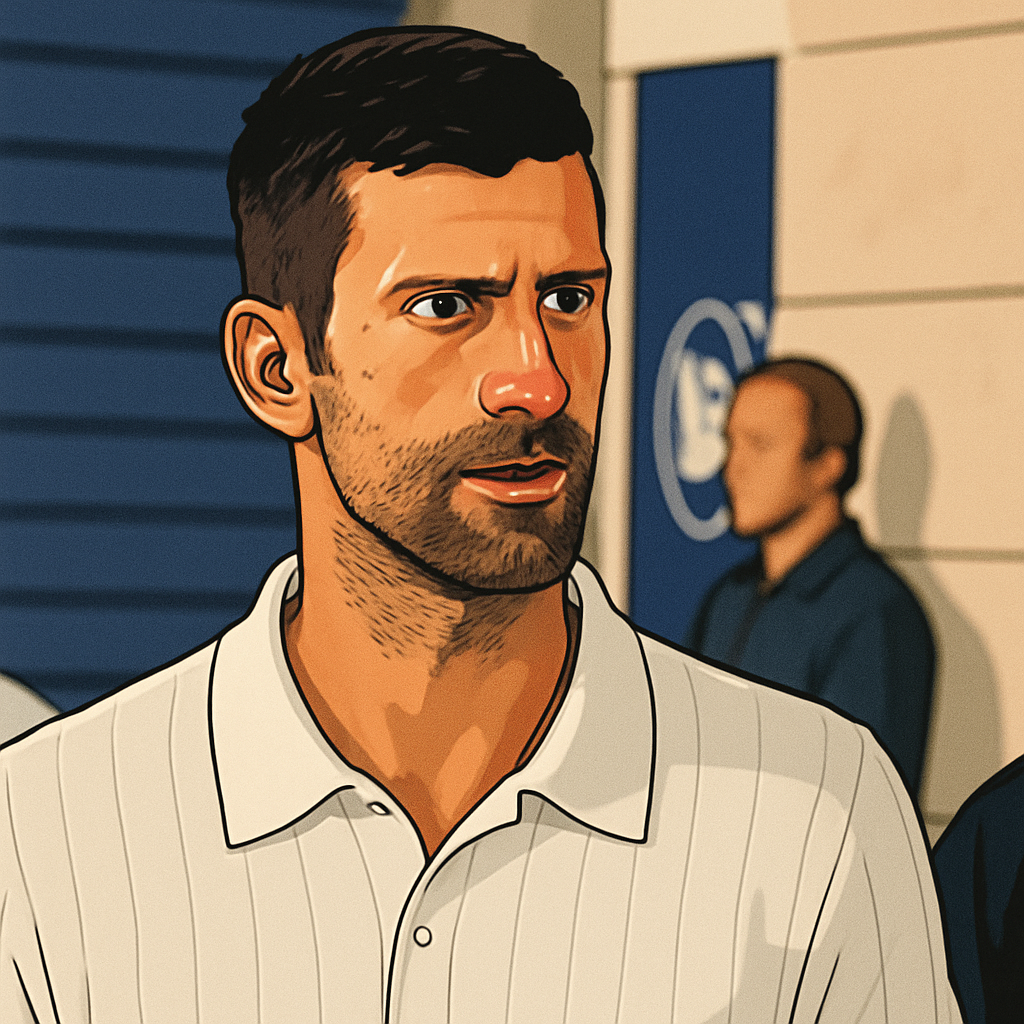
MELBOURNE — As the tennis world converges on Melbourne Park for the 2025 Australian Open, a familiar, dominant figure will once again be the center of attention. Novak Djokovic, the 10-time champion and undisputed king of Rod Laver Arena, arrives not just as the favorite, but as a 38-year-old marvel defying the conventional timeline of an elite athlete. Yet, this year, a subtle undercurrent of suspicion and poignant reflection accompanies his quest for an unprecedented 11th title, sparked by his own recent hints about the finish line of his legendary career.
The Retirement Hint That Echoed
The speculation began in earnest during the ATP Finals in Turin last November. After a grueling season that saw him add two more Grand Slam titles to his record-extending tally, Djokovic offered a rare glimpse into his post-tennis thoughts. In a press conference, he was asked about his future motivation. His response was measured, profound, and instantly dissected by fans and pundits alike: "I'm aware that I'm not going to play forever. I'm trying to enjoy every moment on the court, because I know that the countdown has begun."
The phrase "the countdown has begun" reverberated through the tennis community. For a player whose entire brand is built on an almost superhuman focus on the present and the next trophy, this acknowledgment of a finite timeline felt significant. It wasn't a retirement announcement, but it was a stark departure from his usual "one tournament at a time" mantra. This introspection has led to a palpable suspicion: is the 2025 Australian Open the beginning of a carefully orchestrated farewell tour for the greatest of all time?
The Physical Toll at 38
Djokovic's 2024 season, while triumphant in its major hauls, was punctuated by uncharacteristic physical vulnerabilities. A knee injury forced him to withdraw before the French Open quarterfinals and undergo surgery. Later in the year, a shoulder issue hampered his play. While he has always managed his body with monk-like discipline, the recovery cycles are undeniably longer at 38. The wear and tear of two decades on tour is a factor he can no longer ignore. As he prepared for Melbourne, his training block was reportedly focused not on adding new weapons, but on "maximizing longevity and managing load."
This shift in training philosophy is telling. His team, led by coach Goran Ivanišević and fitness guru Marco Panichi, is now publicly discussing the "maintenance phase" of his career. The goals are different. The suspicion among observers is that Djokovic is meticulously planning his exit, wanting to leave on his own terms—hopefully still at the pinnacle—rather than being forced out by a declining body or results. The Australian Open, a tournament he has owned, presents the perfect stage to either reaffirm his dominance or signal a changing of the guard.
A Season of Unfinished Business?
Despite the retirement whispers, Djokovic's immediate goals remain crystal clear and historically monumental. He is laser-focused on a few key records that would cement an already untouchable legacy:
- An 11th Australian Open Title: Extending his own male record and moving further ahead of Rafael Nadal's 14 French Opens as the most titles at a single major.
- A 25th Grand Slam: Putting even more distance between himself and the chasing pack.
- Olympic Gold in Paris: The one major prize that has eluded him, which he has called a "primary goal" for 2024.
This checklist is what fuels the competing narrative: that Djokovic is not winding down, but building towards one final, historic crescendo across 2024 and 2025. The retirement hints, in this view, are not a sign of imminent departure, but a psychological tool—a way to heighten his own appreciation and sharpen his legendary focus for one last monumental push.
The Voices from the Locker Room
Fellow players have noticed the shift in Djokovic's demeanor. Young rivals like Jannik Sinner and Carlos Alcaraz speak of him with a new layer of reverence, acknowledging they are competing against a living legend in his final chapters. Veteran Andy Murray, who has navigated his own prolonged farewell, offered a poignant perspective: "When someone like Novak starts talking about the end, you listen. It changes the dynamic. Every match against him now feels like you're facing history."
This sentiment is shared by analysts. Tennis legend Jim Courier noted in a recent broadcast, "There's a different energy around Novak. He's always played with a chip on his shoulder, with something to prove. Now, I sense he's playing with a sense of gratitude, and perhaps, a desire to curate the final memories of his career. That can be an incredibly powerful motivator, or it can be a distraction. With Novak, I'd bet on the former."
The suspicion about his plans is also fueled by his off-court activities. His founding of the Professional Tennis Players Association (PTPA), his investment in biotech firms focused on longevity, and his deepening involvement in various business ventures all paint the picture of a man constructing a detailed and ambitious life after tennis. The pieces of the post-career puzzle are actively being assembled.
The Melbourne Park Crucible
All these narratives will be tested under the blazing Melbourne sun. The Australian Open has been Djokovic's fortress. His level of play here often sets the tone for his entire year. A dominant, title-winning run would instantly quash retirement talk and reassert his supremacy. A hard-fought loss in the final might be framed as a heroic effort by an aging champion. However, an early exit, particularly if accompanied by signs of physical struggle, would amplify the "countdown" narrative exponentially. Every grimace, every extended changeover, and every post-match interview will be scrutinized for subtext.
As he steps onto the court for his first-round match, Novak Djokovic carries the weight of history and the whispers of the future. The suspicion raised by his own words has added a rich, emotional layer to this Australian Open. Is this the start of a long goodbye, or simply another chapter in an endless story of domination? Only Djokovic knows for certain. But for the first time, the tennis world is watching him not just to see if he can win, but to see if he will choose to leave. In his own words from Turin, he perhaps offered the clearest clue: "When I feel that the competitive flame is no longer the brightest light inside me, I'll know it's time. That day is closer than it was yesterday, but I cannot tell you when it will come." For now, the flame still burns, and all eyes are on Melbourne to see how brightly.