
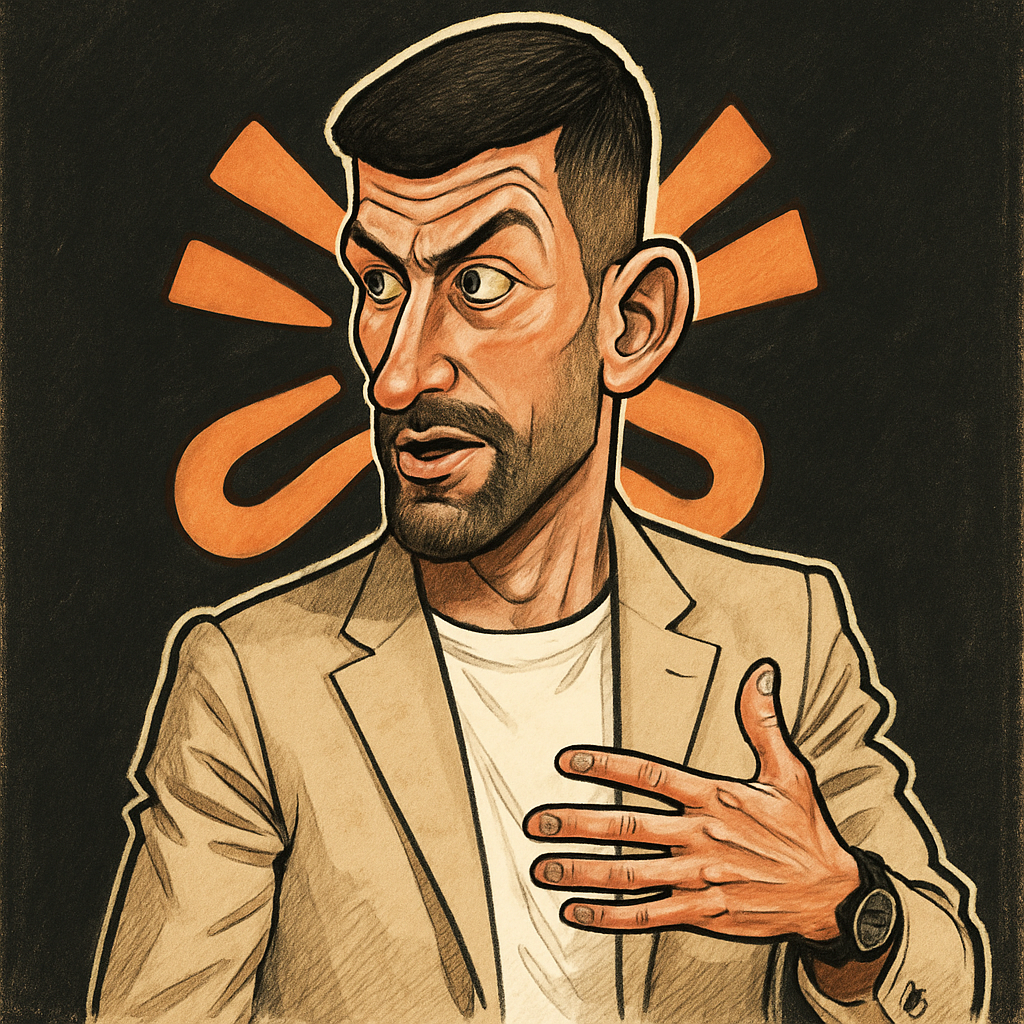
LAUSANNE — In the rarefied air of global sports summits, where diplomacy and platitudes often reign, Novak Djokovic delivered a masterclass in grace under fire. The 24-time Grand Slam champion, appearing at the prestigious World Sports Summit in Lausanne, Switzerland, this week, found himself the subject of a public, on-stage mockery by two commentators. His reaction, however, revealed far more about his character than any pre-written speech ever could.
The incident occurred during a panel discussion titled "The Mind of a Champion," where Djokovic was being interviewed about his mental fortitude and career longevity. As the session transitioned, two commentators from the host broadcaster took to the stage for a light-hearted segment. What followed was a skit where one impersonated Djokovic’s famous, intense pre-service bouncing routine, while the other narrated in a mocking tone, exaggerating his mannerisms and poking fun at his meticulous on-court habits.
A Moment of Public Vulnerability
The arena fell into an uneasy silence. Attendees, including other sporting legends and federation heads, watched awkwardly as the skit played out directly in front of its subject. All eyes turned to Djokovic, who was seated just meters away. The expectation, perhaps, was for a strained smile or a diplomatic nod. Instead, the camera captured a spectrum of raw, unfiltered emotion crossing the Serbian’s face. There was a flash of surprise, a moment of clear discomfort, and then a settling into a composed, observant stillness.
When the commentators finished and the host attempted to awkwardly segue back to the interview, Djokovic paused. He took a deliberate breath, leaned into the microphone, and said with a measured tone, "Well, it's interesting to see how others see you. I guess the bouncing has worked okay for 24 Slams." The comment drew nervous laughter and then immediate, sustained applause from the audience, who recognized the perfect blend of wit and subtle rebuke. He had defended himself without aggression, acknowledged the jest without endorsing it, and re-centered the conversation on his unparalleled achievements.
Beyond the Joke: A Pattern of Scrutiny
This incident did not occur in a vacuum. Throughout his career, Djokovic has occupied a complex space in the tennis pantheon. Often positioned as the outsider to the Roger Federer-Rafael Nadal rivalry that captured the public’s early 21st-century affection, his demeanor and intensity have sometimes been misinterpreted. Where Federer’s artistry was celebrated and Nadal’s passion was adored, Djokovic’s surgical precision and emotional expressiveness have, at times, been framed differently by certain media quarters.
The on-stage mockery tapped into a lingering, unfair narrative. The panel’s theme was mental strength, yet the skit focused on superficial quirks. As one sports psychologist in attendance later noted, "They were laughing at the armor, not engaging with the warrior inside. Novak’s response was to quietly remind everyone of the battles that armor has won." The moment highlighted a persistent double standard Djokovic has navigated, where his actions are more critically scrutinized than those of his peers.
The Core of Djokovic's Resilience
What the commentators’ skit failed to grasp is that every mannerism they mocked is a calculated component of Djokovic’s success. His routine is not a quirk; it is a ritual. His intensity is not an affectation; it is the engine of his dominance. In choosing to ridicule these elements, they inadvertently underscored the very discipline they meant to diminish. Djokovic’s career is built on a foundation of turning perceived weaknesses into strengths and converting criticism into fuel.
His reaction at the Summit was a live-action demonstration of this principle. He processed the public slight in real-time and channeled it into a response that was:
- Assertive, not aggressive: He immediately reclaimed his narrative by referencing his Grand Slam tally.
- Humble, yet proud: The phrasing "worked okay" was understated, allowing the staggering number "24" to speak for itself.
- Disarming: By eliciting applause, he transformed a moment of potential conflict into one of connection with the audience.
This poise is the hallmark of a champion who has evolved. The Djokovic of a decade ago might have internalized the slight differently. The Djokovic of today, a husband, father, and elder statesman of the sport, demonstrated a maturity that commands a different kind of respect—one earned not just through victory, but through dignity.
The Aftermath and Broader Reception
Social media and the tennis world reacted swiftly. The clip of the incident went viral, with the overwhelming consensus siding with Djokovic. Fans and fellow athletes praised his class. Former player and analyst Brad Gilbert posted on X, "Never understood trying to belittle the greats. Novak handled that with way more grace than it deserved. Champion’s response." The commentators and the summit organizers have not issued a public statement, though sources indicate the segment was not part of the planned run-of-show.
More importantly, the event continued. Djokovic, having deftly navigated the awkwardness, proceeded to give a profound and insightful interview. He spoke about the importance of mindfulness, the challenges of maintaining motivation after achieving everything, and his hopes for the future of tennis. The disruption, rather than derailing his message, ultimately amplified it. It provided a visceral, real-time case study of the very mental resilience he was there to discuss.
Conclusion: Colors Finally Seen Clearly
The World Sports Summit intended to explore the mind of a champion. It ended up revealing his heart. In a single, unscripted moment, Novak Djokovic showed his true colors: not the villain a minority of critics sometimes paint him to be, but a figure of immense composure, intelligence, and resilient grace. He was presented with a choice—to bristle, to withdraw, or to engage with wit and principle. He chose the latter.
This incident serves as a powerful metaphor for his career. He has spent years being analyzed, criticized, and even caricatured, all while assembling the most statistically dominant career in the history of men’s tennis. His response in Lausanne was a quiet, definitive statement. It said that he sees the mockery, understands the narrative, but remains utterly unshaken by it. His legacy is not written by commentators on a stage; it is etched in silverware and record books. And as he demonstrated, his greatest strength may not be his elastic defense or his flawless backhand, but his unwavering, dignified sense of self.