
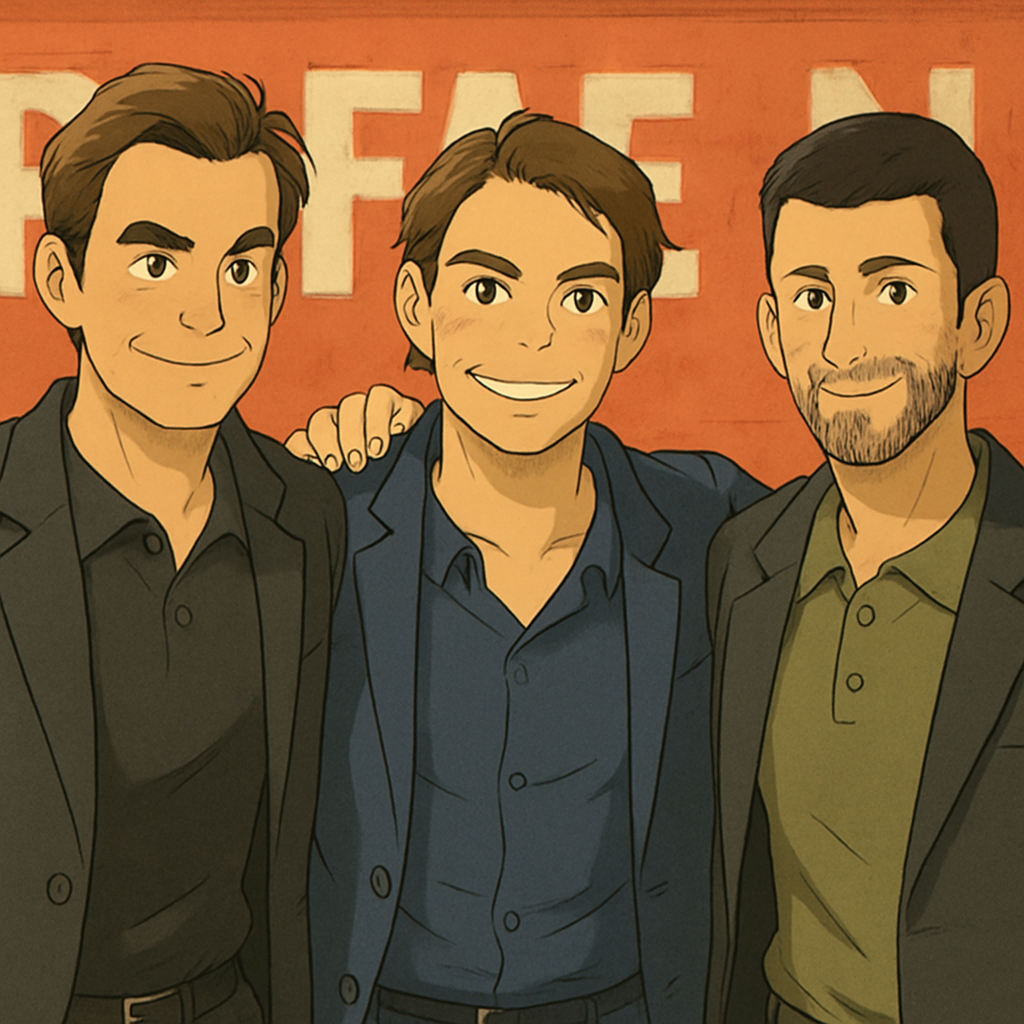
PARIS — In the rarefied air of men's tennis, where the debate over the Greatest Of All Time (GOAT) has become a global sporting obsession, Novak Djokovic has often been cast as the relentless outsider chasing the universal adoration bestowed upon Roger Federer and Rafael Nadal. Yet, in a recent and remarkably candid interview, the 24-time Grand Slam champion has drawn a definitive line in the clay, not with a boast about his statistical supremacy, but with a perspective some are calling a stark revelation of his true, and perhaps disrespectful, colours.
The Unwinnable Debate
For years, the tennis world has been engrossed in a three-way tug-of-war for the soul of the sport's history. The elegant artistry of Federer, the brutal, unyielding passion of Nadal, and the machine-like perfection of Djokovic have provided the narrative backbone for a golden era. With Djokovic now holding the clear lead in major titles, the numbers seem to have spoken. However, the Serb insists the conversation is futile. "I don't want to be part of that debate," Djokovic stated, dismissing the very discussion that defines his career for many fans and pundits.
His reasoning cuts to the heart of his unique position within the trio. He explained that the narrative was set in stone long before his own dominance became undeniable. "The majority of the people, especially the ones that are following tennis, they already created a mindset or an opinion in their head who is the GOAT for them... For me, I don't want to be part of that." This isn't a new stance for Djokovic, but the firmness and the context of his latest comments have given them renewed weight, suggesting a man who has grown weary of trying to win a popularity contest he believes was rigged from the start.
A "Disrespectful" Undertone?
Where Djokovic's view has sparked controversy is in his characterization of the fan and media dynamic. He elaborated, "It's a debate that is just hanging in the air for people who like to speculate or write or make a story out of it." This framing, reducing the epic rivalry and its significance to mere media fodder, has been interpreted by some sections of the tennis community as dismissive of the legacies of Federer and Nadal. Critics argue that by refusing to engage, he is indirectly devaluing the very competition that propelled him to greatness.
A prominent tennis analyst, speaking on condition of anonymity, suggested this is the core of the Djokovic paradox. "Novak craves the respect that Roger and Rafa receive organically, but his actions and words sometimes come across as transactional. By calling the GOAT debate a media creation, he disrespects the emotional investment millions have made in this rivalry for two decades." This perception has been a constant shadow over his achievements, a narrative he has been unable to shake despite his unparalleled resume.
Defining Greatness Beyond Trophies
Djokovic, however, is not simply dismissing his rivals. Instead, he is attempting to redefine the parameters of the conversation. For him, greatness is a personal journey, not a comparative exercise. He has consistently pointed to his unique path—growing up in war-torn Serbia, without the state-of-the-art academies that nurtured his rivals—as a critical component of his story.
In the same interview, he laid out what he believes truly matters:
- Resilience and Overcoming Adversity: His journey from a bombed-out Belgrade to the pinnacle of a global sport.
- Mental Fortitude: His ability to perform under extreme pressure, particularly in record-breaking major finals.
- Longevity and Versatility: His success across all surfaces and his dominance across multiple generations of players.
This focus on his own narrative is seen by his supporters not as disrespect, but as a necessary act of self-preservation. They argue that he has spent too long being measured against a Federer-Nadal dichotomy that never included a place for him. A longtime coach on tour noted, "Federer and Nadal had their epic rivalry. Novak crashed that party. He wasn't invited, and some fans have never forgiven him for it. His refusal to play the GOAT game is his way of saying he doesn't need their invitation anymore."
The Federer-Nadal Brotherhood
Complicating Djokovic's position is the unique and widely celebrated bond between Federer and Nadal. Their rivalry was fierce but always tempered by a profound, public mutual respect. Their tearful farewell at the Laver Cup in 2022, with Nadal visibly emotional as Federer retired, cemented their status as a beloved duo. Djokovic, by contrast, has always existed slightly outside this circle of camaraderie.
His recent comments can be seen as an acknowledgment of this reality. He isn't trying to break into that brotherhood; he is asserting that his legacy exists on a parallel, equally valid track. "I have my own journey, my own destiny," he said, a statement that resonates with a quiet defiance. He is building his own pantheon, one based on cold, hard data and an indomitable will, rather than seeking a seat at a pre-arranged table.
Conclusion: The Champion's Solitude
In the final analysis, Novak Djokovic's refusal to engage in the GOAT debate is a multifaceted stance. Is it disrespectful to the storied careers of Federer and Nadal? To some, yes, as it challenges the sentimental narrative that has long governed the sport. But for Djokovic, it is perhaps the ultimate sign of self-respect. He has surpassed every objective metric, yet the subjective hearts of many fans remain with his rivals.
By stepping away from the debate, he is not conceding defeat. He is, instead, declaring the contest itself beneath him. He is forcing the world to evaluate him on his own terms—not as the third wheel in the Federer-Nadal era, but as the defining champion of his own. In doing so, he shows his true colours: not those of a disrespectful rival, but those of a singular, perhaps lonely, champion who has finally decided that his record, not public opinion, will have the final say.