
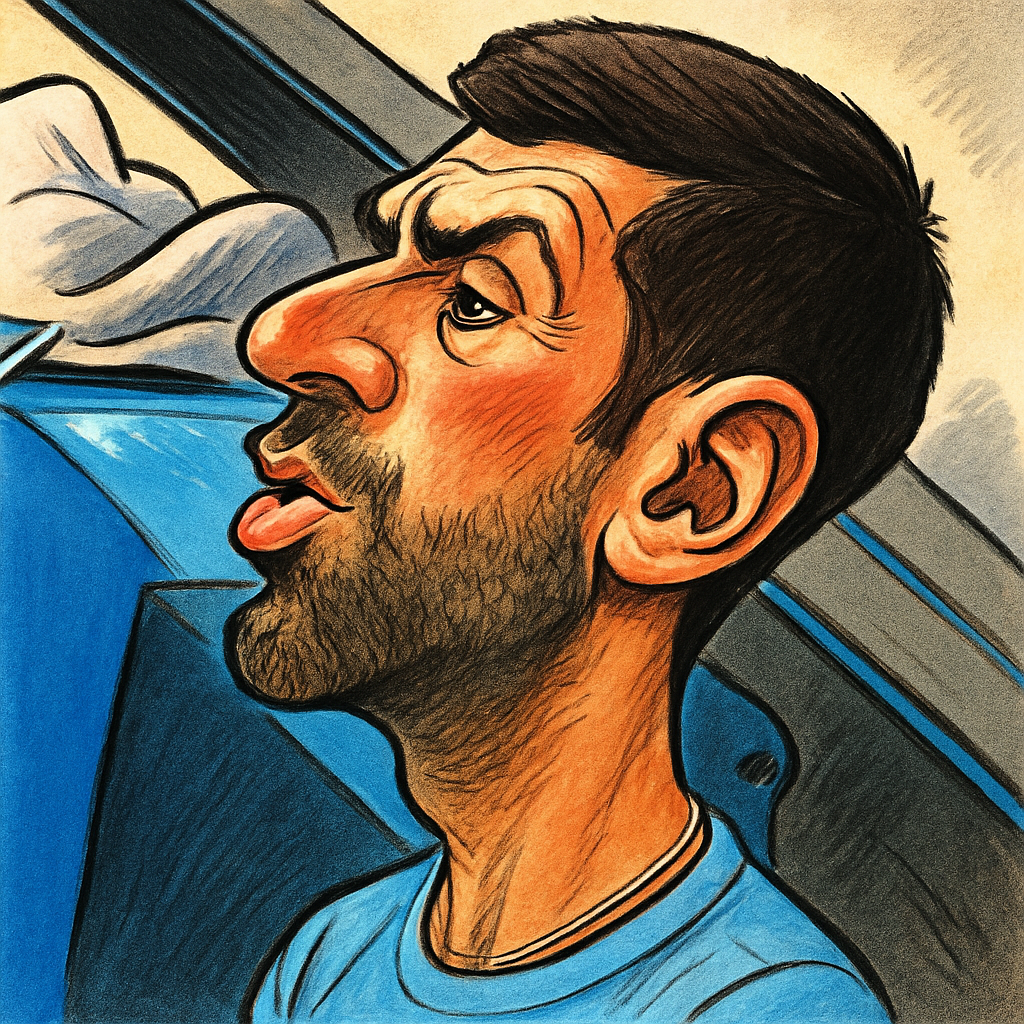
MONTE CARLO — In a stunning revelation that bridges the worlds of tennis and football, Novak Djokovic has disclosed a private request from global soccer icon Lionel Messi that he ultimately turned down. The chance encounter, which Djokovic described as a "beautiful moment," occurred in the players' lounge at the 2023 French Open, where Messi was a guest of honor. The Serbian tennis legend shared the story on the ATP Tennis Radio Podcast, providing a rare glimpse into a private interaction between two of history's greatest athletes.
Djokovic, a record 24-time Grand Slam champion, explained that the meeting was brief but meaningful. Messi, fresh off leading Argentina to World Cup glory in Qatar and newly signed with Inter Miami, was in Paris to soak in the Roland Garros atmosphere. "It was just after one of my matches, and we crossed paths," Djokovic recalled. "He was there with his family, his wife and kids. We greeted each other, exchanged a few words of mutual admiration. It was really special." The conversation, however, took an unexpected turn when Messi made a personal appeal to the tennis star.
The Request: A Swap for Antonela's Sake
The core of Messi's request centered not on sports, but on family. Djokovic revealed that Messi asked him for a signed tennis racket. This wasn't for himself or for a museum, but for his wife, Antonela Roccuzzo. "He said, 'My wife is a huge fan of yours. She would love it if I could bring her a racket signed by you,'" Djokovic recounted. For most, fulfilling a simple autograph request from Lionel Messi would be an automatic honor. Yet, Djokovic found himself in a difficult position and made the surprising decision to decline.
The reason for his refusal was rooted in a deeply held personal principle. Djokovic is famously meticulous about his equipment, treating his tennis rackets not merely as tools, but as extensions of his game that require specific weight, balance, and feel. "I travel with a limited number of rackets for a tournament, each one perfectly matched and strung for the specific conditions," he explained. Giving one away, even after a match, could potentially disrupt his carefully calibrated preparation for the next round.
A Principle of Preparation
Djokovic's refusal underscores the extreme professionalism and superstition that often define elite athletes. He described his rackets as being in a constant state of readiness, almost like a surgeon's instruments. To part with one mid-tournament was, in his mind, an unacceptable risk. "It's a matter of principle and routine for me," he stated. "I never give away a racket during a competition. It's a rule I have followed throughout my career."
He was quick to clarify, however, that his rejection was not a dismissal of Messi's request. He felt immense respect for the footballer and was acutely aware of the awkwardness of the situation. "I felt terrible saying no to him, honestly," Djokovic admitted. "Here is Lionel Messi, arguably the greatest footballer ever, asking me for something for his wife, and I have to decline." He emphasized that he would have happily obliged under any other circumstance—after the tournament concluded, or if he had a separate, non-tournament racket available.
The Aftermath and Mutual Respect
Despite the initial refusal, the interaction ended on a note of profound mutual respect. Djokovic assured Messi he would send a signed racket to him immediately after the French Open concluded. True to his word, a racket was dispatched to Miami. "We exchanged a few messages afterward, and he was very understanding and gracious about it," Djokovic said. The story highlights the unique pressures and peculiar rituals that even the most celebrated athletes maintain, pressures that outsiders—even fellow sporting legends—might not fully comprehend.
The anecdote also reveals the human side of these global icons. The request was not for a trophy or a jersey swap, but a spousal favor, a gesture of love from one husband to his wife. Djokovic's internal conflict—between his rigid professional code and his desire to honor a peer—paints a relatable picture. The key elements that made this moment so unique include:
- The Setting: A spontaneous meeting in the bowels of a Grand Slam, away from cameras and fanfare.
- The Nature of the Ask: A personal, family-oriented request, not a corporate or promotional one.
- The Conflict: A clash between sporting principle and personal courtesy.
- The Resolution: A delayed fulfillment that preserved both the principle and the relationship.
A Lesson in Professionalism
For Djokovic, the story serves as a perfect illustration of the sacrifices and strict disciplines required to operate at the pinnacle of sport for nearly two decades. "At this level, the margins are so small," he reflected. "Everything matters—your sleep, your food, your mindset, and yes, even the feel of your racket. You cannot compromise, not even for a moment, and certainly not during a major." His decision, while perhaps surprising to fans, was a non-negotiable part of the routine that has delivered him historic success.
The incident has sparked lively debate among sports fans. Some applaud Djokovic's unwavering commitment to his craft, seeing it as the hallmark of a true champion. Others playfully chide him for turning down "The GOAT." Messi's own legendary focus and routine-driven career, however, suggest he likely understood Djokovic's position more than anyone. As Djokovic put it, "I think he, of all people, knows what it takes to be the best and the routines you need to protect."
Conclusion: A Racket Eventually Delivered
In the end, Antonela Roccuzzo did receive her prized souvenir. The signed Djokovic racket now resides with the Messi family, a tangible symbol of a fascinating crossover between two sporting dynasties. The story, far from being one of rudeness, is a testament to the intense, sometimes isolating, focus required to achieve historic greatness. It shows that even in a moment of star-struck admiration, Djokovic's primary allegiance is to his sport and his process. He concluded, "It was an honor that he asked. And I am glad we found a way for his wife to get the racket. But in that moment, my job was still to win the tournament." True to form, Djokovic would go on to win that 2023 French Open, capturing a record 23rd men's Grand Slam singles title—perhaps with every one of his precious rackets perfectly accounted for.