
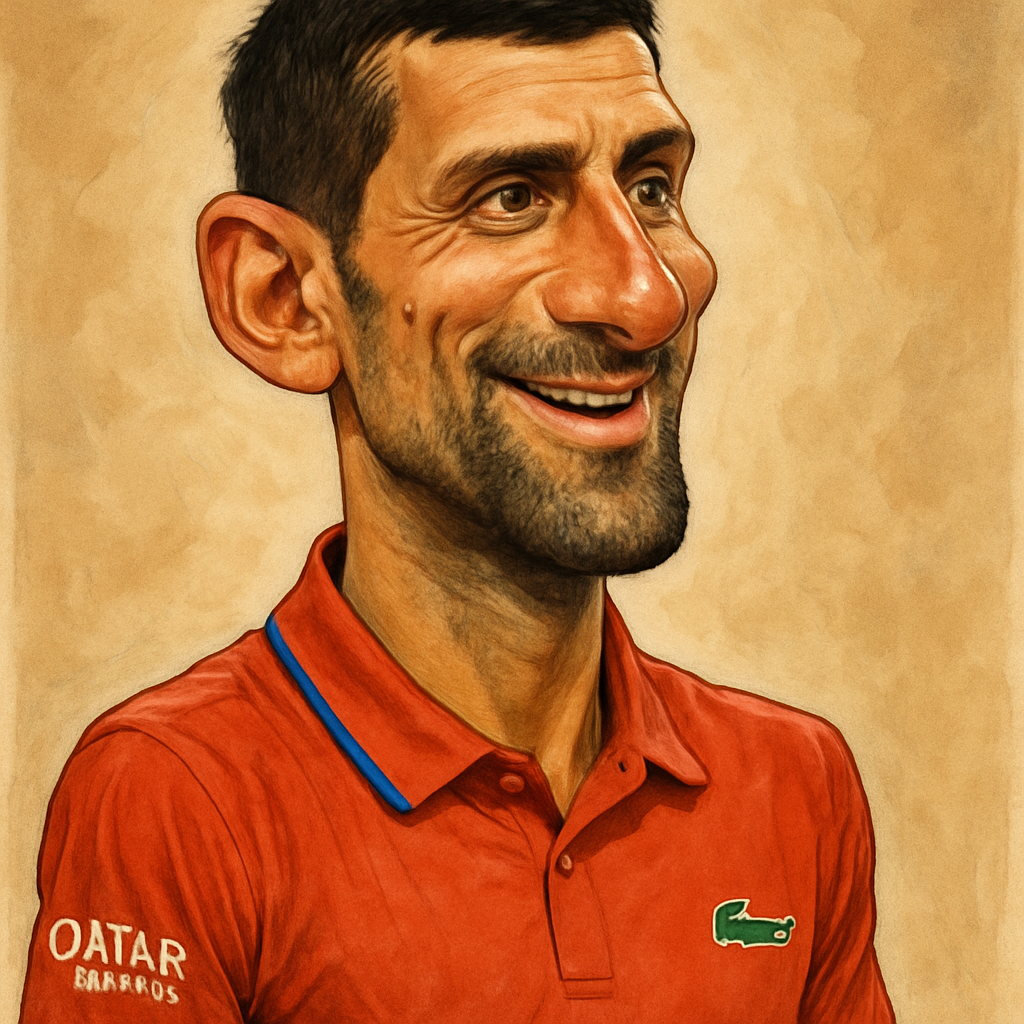
MELBOURNE — In a move that has sent shockwaves through the tennis world just weeks before the start of the Australian Open, Novak Djokovic has stepped down from his role as President of the Professional Tennis Players Association (PTPA), an organization he co-founded with Vasek Pospisil in 2020. The abrupt resignation, confirmed by a statement from the PTPA, has been labeled by many insiders as "a bad look" for the sport's dominant figure.
The PTPA's statement, released on December 31st, 2024, was notably brief, stating Djokovic had "decided to step down from his position" and would be succeeded by co-founder Pospisil. It thanked the 24-time Grand Slam champion for his "vision, dedication, and leadership." The timing, however, has raised eyebrows, coming as players converge on Melbourne and the tennis establishment prepares for its first major of the year.
A Sudden Exit Before a Critical Period
The PTPA was launched with the bold mission of being an independent, player-only body focused exclusively on protecting and advancing the rights and interests of professional tennis players. It positioned itself as a more aggressive alternative to the traditional player councils within the ATP and WTA tours. Djokovic's stature as the world's top player was its cornerstone, lending it immediate credibility and a powerful voice.
His resignation, therefore, is seen as a significant blow to the organization's momentum and perceived influence. Critics argue that stepping away at the dawn of the season—a time when player unity and representation in discussions with tournament organizers are paramount—undermines the very cause he championed. As one veteran agent, speaking on condition of anonymity, told Reuters, "It's a terrible optic. You build this thing up as the players' true voice, and then you walk away right before the biggest conversations happen."
Mounting Pressures and Conflicting Interests
Analysts point to several potential factors behind Djokovic's decision. The Serbian star has faced increasing scrutiny and pressure from the tennis establishment since the PTPA's inception. His involvement has sometimes been framed as a disruptive force, creating a rift within the player ranks. Furthermore, Djokovic's own legendary career is in its latter stages; at 36, his focus is understandably narrowing to maximizing his performance and chasing further historic milestones.
The logistical and diplomatic burden of leading a nascent union while maintaining supremacy on the court may have simply become untenable. There is also speculation about strategic disagreements within the PTPA's executive committee regarding the organization's direction. In its statement, the PTPA sought to project stability, asserting, "The PTPA is positioned for continued growth and remains dedicated to its mission."
The PTPA's Stated Goals and Key Battles
Since its launch, the PTPA has advocated for a greater share of tournament revenue for players, improved pension plans, and more robust healthcare and travel support. It has also pushed for greater transparency in the sport's governance. Key areas of focus have included:
- Increasing prize money distribution, particularly for early-round losers and lower-ranked players.
- Establishing a formal voice in the sport's commercial and scheduling decisions.
- Creating independent injury and healthcare protocols for athletes.
Without Djokovic's day-to-day leadership, the question now is whether the PTPA can maintain its pressure on these fronts. The organization has recently expanded its "Player Board" to include prominent names like Ons Jabeur and John Isner, suggesting an effort to build a broader leadership base beyond its founders.
Reaction from the Tennis World and Players
The reaction from fellow players has been mixed. Some have expressed disappointment, seeing Djokovic's exit as a setback for collective bargaining power. Others, who were always skeptical of the PTPA's need or methods, view it as an inevitable consolidation. The ATP Tour, which has often been at odds with the PTPA's separate model, has remained officially silent on the development.
Noted tennis commentator and former player Brad Gilbert summarized the prevailing sentiment on social media, posting, "Novak resigning from PTPA head right before AO is major tennis news. That org needed his star power desperately. Wonder what truly prompted the timing. Makes you think the real power battles behind the scenes are fiercer than we know."
The resignation also fuels ongoing narratives about Djokovic's complex relationship with the tennis ecosystem. While universally respected for his on-court achievements, his willingness to challenge institutional norms—from the PTPA to his stance on COVID-19 vaccinations—has consistently placed him at the center of controversy.
What This Means for the Australian Open and Beyond
As Djokovic arrives in Melbourne to pursue an unprecedented 11th Australian Open title and a 25th Grand Slam, the shadow of his political departure will linger. He will undoubtedly face a barrage of questions in pre-tournament press conferences, potentially creating an unwanted distraction from his tennis. How he handles these inquiries will be closely watched.
For the PTPA, the immediate future is about proving its resilience. Under Pospisil's leadership, it must demonstrate that it is an institution, not a project reliant on a single individual. Its ability to secure tangible gains for players in the coming year, particularly in negotiations surrounding the future structure of the tennis calendar, will be the ultimate test of its viability.
The long-term impact on Djokovic's legacy is also at stake. He staked a significant part of his off-court reputation on the PTPA's success. Walking away before its goals are realized could be seen as abandoning a cause he asked hundreds of players to believe in. As one column in The Guardian noted, "Founding a union is one thing. Seeing through the gritty, long-term work of building it is another."
Conclusion: A Pivotal Moment for Player Power
Novak Djokovic's resignation from the PTPA presidency is more than an administrative change; it is a pivotal moment for the movement he helped ignite. The "bad look" stems from the perception of quitting at a critical juncture, leaving his fellow players to wonder about the strength of the foundation he laid. While his reasons may be valid and personal, the timing undeniably weakens the organization's position as the tennis world gathers for its annual summit in Melbourne.
The coming months will reveal whether the PTPA can evolve beyond its charismatic founder or if it will fade without his direct involvement. For Djokovic, the focus now sharply returns to the court, where he seeks to further cement his status as the greatest of all time. Yet, the story of his off-court leadership ambition appears to have reached a premature and, for many, disappointing conclusion, casting a complex shadow over his arrival at the 2025 Australian Open.