
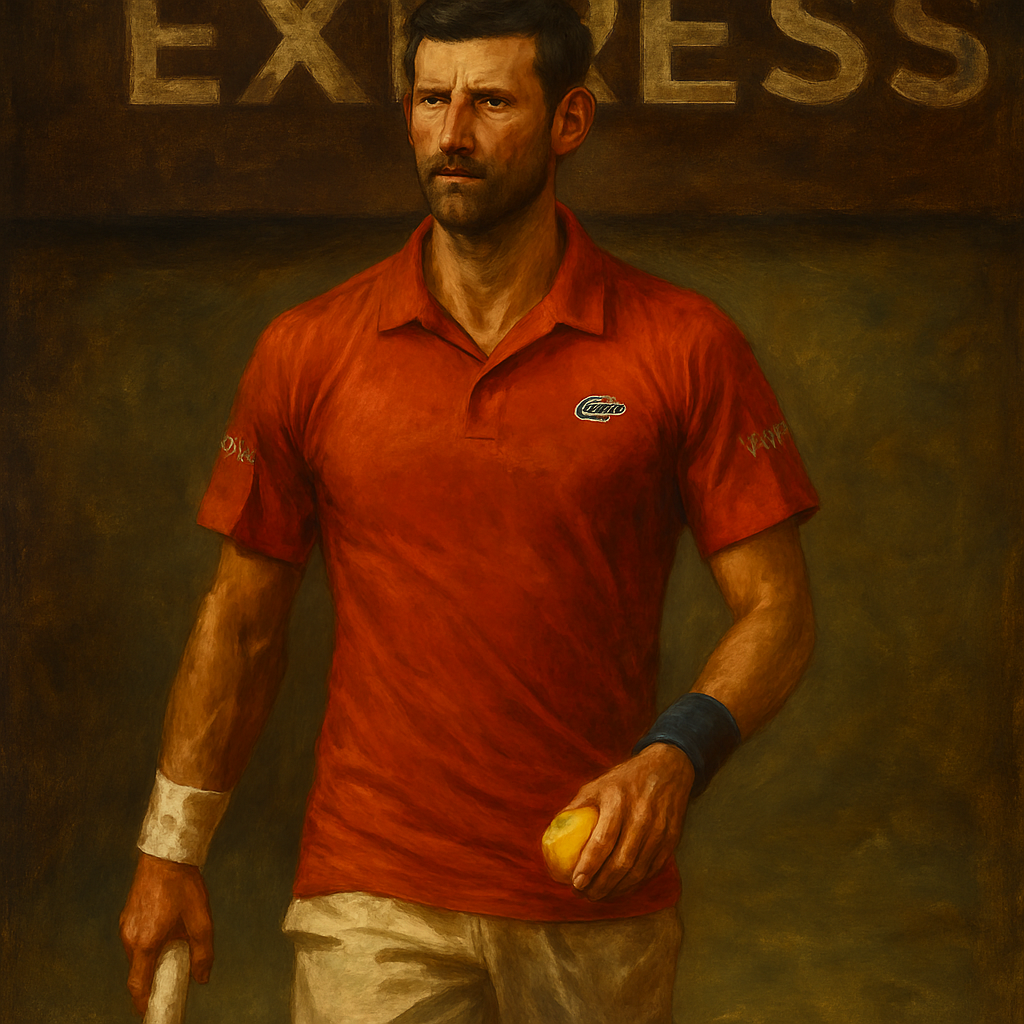
MONTE CARLO — In a sport often dominated by discussions of the "Big Three" and their historic rivalries, it takes a unique perspective to identify the unsung heroes of the tennis world. Novak Djokovic, the record-breaking Serbian champion, recently offered exactly that, naming the player he believes is the most underrated and "very underappreciated" competitor of his generation and beyond.
During a candid interview on the ATP Tennis Radio Podcast, the 24-time Grand Slam champion was asked which player, in his extensive experience, deserved more recognition for their abilities and achievements. Without hesitation, Djokovic pointed to French stalwart Gaël Monfils. He elaborated, "I would say Gaël Monfils, for me, is probably the most underrated player ever."
This is a significant statement coming from a player who has faced the very best across two decades. Djokovic didn't just offer a name; he provided a heartfelt justification, highlighting Monfils's unique skill set, longevity, and the sheer joy he brings to the sport. He emphasized that Monfils's contributions extend beyond his trophy cabinet, making him a vital and enduring figure on the ATP Tour.
A Career of Spectacle and Substance
Gaël Monfils, known for his incredible athleticism, elastic flexibility, and penchant for the spectacular, has been a professional since 2004. While he has never reached a Grand Slam final, his career is a testament to remarkable consistency and entertainment. Djokovic was quick to remind listeners of Monfils's tangible successes, which are often overshadowed by his highlight-reel style of play.
Djokovic stated, "People I think forget that he was top 10, he was top 5 in the world. He has won I think 12 ATP titles, he has been around for 20 years." The statistics bear this out. Monfils peaked at World No. 6, has claimed 12 ATP singles titles, and reached two major semifinals at the French Open and the US Open.
His longevity is particularly staggering. Monfils is one of only three players, alongside Djokovic and Rafael Nadal, to have finished in the ATP's year-end top 100 for 18 consecutive years since 2005. This is a feat of sustained excellence and physical resilience that Djokovic clearly holds in the highest regard.
The "Showman" Label and Its Double-Edged Sword
A central theme in Djokovic's argument is that Monfils's reputation as a spectacular "showman" has, paradoxically, worked against him in terms of being taken seriously as a top-tier competitor. The Serbian argued that the Frenchman's incredible speed, power, and ability to hit unbelievable winners from defensive positions are often dismissed as mere entertainment rather than recognized as elite skills.
Djokovic explained, "Because he's such a showman and such an entertainer, and he loves to get the crowd involved and bring a lot of entertainment value to the fans, people I think overlook that." He believes the tennis world has been guilty of taking Monfils for granted, failing to fully appreciate the technical proficiency and tactical intelligence required to execute such a physically demanding and unique style of play for two decades.
This perspective challenges the conventional narrative. While fans and pundits often marvel at his acrobatics, they simultaneously question his focus or commitment when results don't follow. Djokovic's comments reframe Monfils's career, suggesting that his showmanship is not a distraction from his talent, but an integral and celebrated part of it.
Djokovic's Personal Admiration
The mutual respect between the two veterans is palpable. Djokovic holds a dominant 19-0 head-to-head record against Monfils, the most perfect record against a single opponent in the Open Era. Yet, this lopsided statistic does not diminish Djokovic's admiration. He has frequently spoken about the unique challenges Monfils presents, citing his unpredictability and power.
Beyond the statistics, Djokovic praised Monfils's character and his role in the sport's ecosystem. "He's a very nice guy, very positive person," Djokovic said. "I think he's very much needed in our sport. You know, his charisma, his approach to tennis and life in general, I think is very refreshing."
This highlights an often-overlooked aspect of a successful tennis tour: the need for diverse personalities. Monfils's joyful, flamboyant presence provides a crucial counterbalance to the intense, stoic demeanors often associated with the top of the game. He brings in casual fans and creates memorable moments that transcend the final score.
A Legacy Beyond Trophies
So, what constitutes an "underrated" career? Djokovic's definition seems to be one where public perception, often shaped by a lack of the very biggest titles, fails to align with the actual quality, longevity, and impact of a player. By this metric, Monfils is a perfect candidate. His career achievements are substantial by any measure except the nearly impossible standard set by the Big Three.
Consider the key pillars of Monfils's career that Djokovic implicitly highlighted:
- Longevity: Two decades as a top-100 and frequently top-20 player.
- Consistency: 12 ATP titles and 31 finals across all surfaces.
- Elite Peak: A career-high ranking of World No. 6, proving he could compete with the best.
- Global Appeal: A fan-favorite in every tournament, boosting the sport's profile.
- Resilience: Multiple comebacks from serious injuries, most recently in his late 30s.
- Unique Skill Set: Arguably the greatest pure athlete the sport has ever seen.
This list paints a picture of a Hall-of-Fame-caliber career, yet one that is rarely discussed in those terms. Djokovic's comments serve as a powerful correction to that oversight, coming from a peer who has witnessed his evolution firsthand.
A Resurgence and a Vindication
In a twist of fate that seems to vindicate Djokovic's praise, the 37-year-old Monfils is currently in the midst of a remarkable resurgence in 2024. He recently won the title in Stockholm, becoming the oldest ATP champion in over four years. His passion for the game remains undimmed, and his performances continue to defy the conventional aging curve of a professional tennis player.
This late-career success adds weight to Djokovic's argument. It demonstrates that Monfils's talent was never a fleeting phenomenon but a deep and enduring quality. His ability to comeback, entertain, and win titles decades after he first emerged on tour is the very definition of an underappreciated champion.
Djokovic concluded his thoughts by reiterating his central point, leaving no room for ambiguity: "I think he's very underappreciated for everything he brings on and off the court, and his brand, his style of tennis, his charisma." In an era obsessed with counting Grand Slams, Djokovic’s recognition of Monfils is a welcome reminder that a player's value to the sport is multifaceted.
It is a testament from one legend to another, affirming that while trophies define a career's peak, impact, longevity, and joy define its soul. In the eyes of the greatest of all time, Gaël Monfils possesses these qualities in abundance, finally earning him the distinguished, if unofficial, title of the most underrated player ever.