
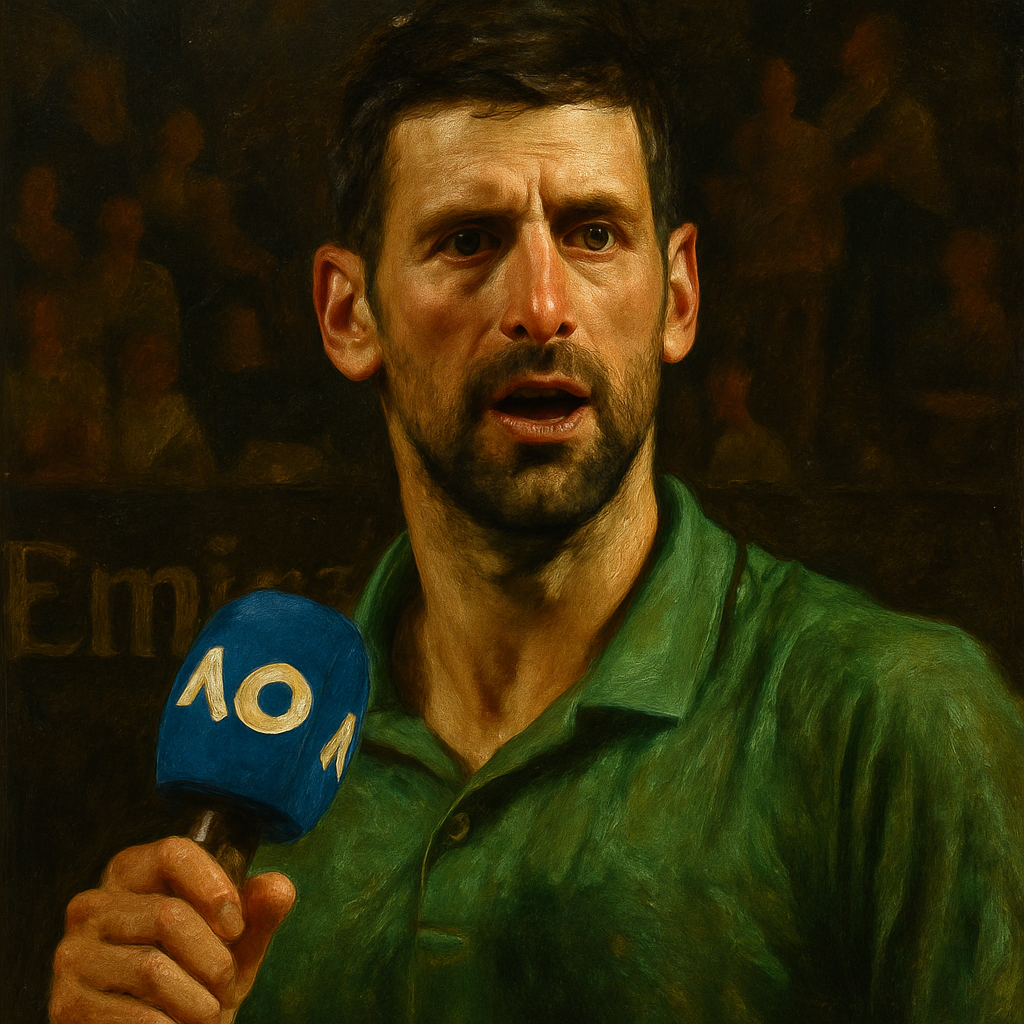
MELBOURNE — In a moment that transcended the typical post-match interview, Novak Djokovic, fresh from a commanding Australian Open semi-final victory, used his platform to champion a cause close to his heart and correct a historical record. Following his straight-sets win over Jannik Sinner, the 24-time Grand Slam champion turned the conversation toward the financial struggles of lower-ranked players and firmly addressed a question about his supposed "rivalry" with the absent Rafael Nadal.
A Champion's Advocacy for the Rank-and-File
While the tennis world was buzzing about his impending tenth final at Melbourne Park, Djokovic pivoted the narrative. He expressed his belief that the first-week exits of top stars like Nadal and world number one Carlos Alcaraz should not negatively impact tournament revenue or, more importantly, the prize money distribution. "I think it's important to talk about the prize money," Djokovic stated emphatically. "I've heard through the grapevine that the Australian Open is making more money this year than last year. I don't know if that's true or not... but if that is the case, I, of course, would encourage the CEO of Tennis Australia and the people in charge of the finances to give more money to the players."
This is not a new stance for Djokovic, who has long served as the president of the ATP Player Council and been a vocal advocate for increasing the share of tournament revenue that goes to the athletes, particularly those outside the top 100. He argued that the financial health of the sport depends on a robust foundation. "We have to be mindful of those players who are ranked 250, 350 in the world, and trying to make a breakthrough," he said.
Djokovic outlined the stark economic realities that many professional players face, which often go unnoticed by the public focused on the multi-million dollar earnings of stars. His advocacy highlights a critical structural issue in tennis:
- The immense costs of travel, coaching, and physiotherapy for a full season on tour.
- The fact that many players ranked outside the top 100 operate at a financial loss.
Correcting the Record: The Djokovic-Nadal Narrative
Perhaps the most pointed moment of the press conference came when a journalist referenced the "big three" and asked about the missed opportunity for another chapter in his storied rivalry with Rafael Nadal, who was injured this year. Djokovic interrupted politely but firmly to set the record straight. "And big four, please," he interjected with a smile. "Don't forget Andy Murray, please. Show him respect. He's a legend of our sport."
This was more than a simple correction; it was a public defense of Andy Murray's legacy at a time when the Brit, battling injuries and a ranking slide, has been the subject of questions about his retirement. Djokovic expanded, "He's one of the most important players that ever played the game. Him, Roger [Federer], and Rafa are the 'big three'—or 'big four'—of our sport." The comment served as a powerful endorsement from one all-time great to another, reinforcing Murray's rightful place in the pantheon despite his different Grand Slam tally.
The Rivalry That Defines an Era
Only then did Djokovic address the question about Nadal. He acknowledged the special nature of their matchups but placed the current tournament context first. "Of course, [not playing Nadal] is a disappointment for the tournament and for the fans," he conceded. "But my rivalry with him has been one of the greatest the sport has ever seen. We've pushed each other to the limit every time we've played." He quickly added, however, that his focus was squarely on the final and the challenge posed by the next generation, exemplified by Jannik Sinner and Daniil Medvedev.
The Business of Grand Slam Tennis
Djokovic's comments on prize money tap into an ongoing and complex debate in professional tennis. Grand Slams are operated by their national federations and are independent of the ATP and WTA tours, though they collaborate on the calendar. Their revenue streams—from broadcasting rights, sponsorships, and ticket sales—are colossal. The Australian Open, for instance, reported a record AUD 500 million in revenue for the 2023 event. Djokovic's argument is that a larger portion of this growing pie should filter down to ensure the tour's competitive depth and sustainability.
The 2024 Australian Open total prize money pool is a record AUD 86.5 million, a 13% increase from 2023. While the winners will take home AUD 3.15 million, the increases for early-round losers are particularly significant, directly addressing the concerns Djokovic raised:
- First-round losers now receive AUD 120,000, a 20% year-on-year increase.
- Qualifying players who lose in the first round get AUD 31,250, a 20% jump.
Tennis Australia CEO Craig Tiley, responding to Djokovic's comments, acknowledged the champion's advocacy. "Novak is a great leader and always looks out for his fellow players. We have a long history of leading the way in increasing prize money, particularly for the early rounds, and we're proud of the record pool this year," Tiley stated. He emphasized that revenue is reinvested not only into the player purse but also into growing the sport at the grassroots level across Australia and the Asia-Pacific region.
The Dual Role of a Sporting Icon
The press conference showcased the dual dimensions of Novak Djokovic at this stage of his career: the relentless competitor focused on a 25th major, and the elder statesman conscious of his influence and responsibility to the sport's ecosystem. His willingness to steer the conversation toward systemic issues, even at his own moment of triumph, underscores a legacy that extends beyond titles. Similarly, his unsolicited defense of Andy Murray revealed a deep respect for the shared journey and battles of his peers.
This incident is part of a pattern for Djokovic, who has consistently used his post-match interviews at majors not just to discuss tactics, but to voice opinions on player rights, the creation of the Professional Tennis Players Association (PTPA), and the overall direction of the sport's governance. He operates as a de facto spokesperson, leveraging his unparalleled platform to apply pressure on tournament organizers and governing bodies.
In an era where athletes are often criticized for sticking to scripted answers, Djokovic's directness was refreshing and consequential. He transformed a routine media session into a forum for substantive discussion, challenging the financial status quo and correcting a narrative that he felt diminished a fellow champion's achievements. It was a masterclass in using access and influence, proving that his impact on tennis is measured not only in trophies but in the conversations he shapes and the precedents he challenges from the winner's podium.