
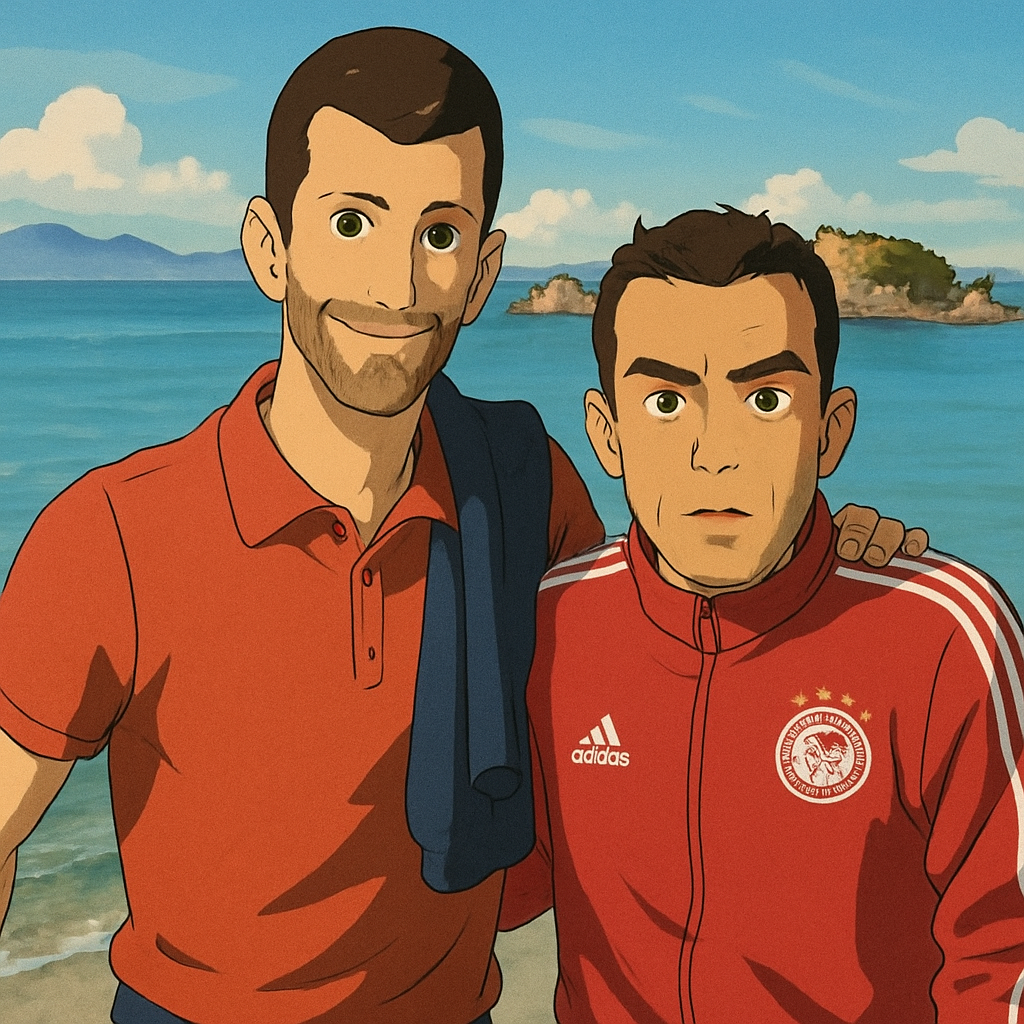
MONTE CARLO — In the rarefied world of elite sports, chance encounters between global superstars are not uncommon. Yet, a recent meeting at the Monte Carlo Country Club during the Rolex Monte-Carlo Masters served up a particularly poignant slice of footballing nostalgia, as tennis legend Novak Djokovic crossed paths with a figure many fans had long since forgotten: former Manchester City forward Nery Castillo.
The image, shared widely on social media, showed a beaming Djokovic posing with a man sporting a drastically new look—a thick, greying beard and a mature, relaxed demeanor. To the untrained eye, he could have been any affluent tennis enthusiast. But for those who remember the dizzying summer of 2007, he was the Mexican prodigy whose £8.5 million move to Shakhtar Donetsk and subsequent loan to Manchester City briefly set the football world alight.
The Meteoric Rise and the "Next Big Thing" Hype
Nery Castillo's story is one of unfulfilled potential and a cautionary tale about the weight of expectation. Born in San Luis Potosí, Mexico, he was whisked away to Uruguay as a child before joining the famed youth academy of Greek giants Olympiacos at just 15. His explosive pace, dazzling dribbling, and eye for the spectacular made him an instant fan favorite in Piraeus. By his early twenties, he was a full Mexican international and the subject of intense transfer speculation.
The hype reached a fever pitch at the 2007 Copa América in Venezuela. Castillo announced himself on the global stage with a breathtaking, curling goal from outside the box against Brazil in the group stage, a strike that was instantly dubbed "the goal of the tournament." He followed it up with another stunning free-kick against Ecuador. Overnight, he became one of the most sought-after commodities in football.
His subsequent move was a complex saga. Ukrainian club Shakhtar Donetsk, backed by billionaire Rinat Akhmetov, secured his signature for a then-record fee for a Mexican player. However, in a twist designed to circumvent Premier League work permit regulations, he was immediately loaned to the ambitious, Thaksin Shinawatra-owned Manchester City for the 2007-08 season. The football world watched, eager to see if the hype would translate to the physicality of the English game.
A Flicker of Brilliance and a Rapid Fade at City
Castillo's City career began with a bang. He made his debut as a substitute in a derby against Manchester United and scored a sensational free-kick, announcing his arrival in the most dramatic fashion possible. For a fleeting moment, it seemed the Premier League had found its next superstar. Former City manager Sven-Göran Eriksson, who signed him, recalled his unique talent, stating, "He had incredible skill and could do things with the ball that surprised everyone. For a short time, he was magical."
Yet, the magic proved ephemeral. The initial spark was followed by a struggle for consistency, fitness, and adaptation. The key factors in his rapid decline at the top level include:
- Physical Demands: The relentless pace and physicality of the Premier League exposed his slight frame. He struggled with the intensity of training and matches.
- Positional Uncertainty: Deployed on the wing or as a second striker, he often found himself isolated or unable to influence games for sustained periods.
- Injuries: Niggling injuries began to hamper his progress, preventing him from building any momentum or rhythm.
- Managerial Change: The sacking of Sven-Göran Eriksson and the arrival of Mark Hughes in the summer of 2008 saw him fall out of favor quickly.
After just seven appearances and that one iconic goal for City, his loan was terminated in January 2008. He returned to Shakhtar but failed to settle, embarking on a nomadic journey that included spells at Dnipro Dnipropetrovsk (on loan), Chicago Fire in MLS, Larissa in Greece, Rayo Vallecano in Spain, and León back in Mexico. By his early 30s, his career at the highest level was effectively over.
Life After Football: The Drastic New Look
The man who bumped into Djokovic in Monte Carlo is a world away from the clean-shaven, wiry youngster who terrorized Brazil's defense in 2007. Now 39, Castillo has embraced a life of leisure and business, largely away from the public spotlight. Residing in Europe, he is often seen at high-profile sporting and social events, enjoying the fruits of his early career. The greying beard and calm presence speak of a man at peace with his past, no longer carrying the burden of being the "next big thing."
In rare interviews, he has reflected philosophically on his career. "I lived my dream, I played at the highest level, and I scored goals people still remember," he once said. "Maybe it could have been longer at the very top, but I have no big regrets. Football gave me everything. Now I enjoy my family, my friends, and watching the game as a fan." His encounter with Djokovic—a 24-time Grand Slam champion defined by longevity and mental fortitude—creates a fascinating contrast between two very different athletic trajectories.
A Moment of Sporting Symmetry
The photograph of Djokovic and Castillo is more than a mere celebrity snapshot. It is a convergence of two sporting narratives: one of sustained, historic dominance and the other of brilliant, fleeting promise. For football fans of a certain age, it was a jarring reminder of a talent that burned too bright and too fast. For Djokovic, it was likely a pleasant meeting with a fellow professional athlete from a different arena.
The image quickly circulated on fan forums and social media, with many expressing surprise at Castillo's transformed appearance and fondly recalling his moment of derby-day magic. It sparked a wave of "whatever happened to..." articles, pulling the name Nery Castillo back from the fringes of football memory. As one fan aptly commented online, "That goal against United is etched in my brain forever. Shame we never saw more of it. Good to see him looking happy and healthy."
In the end, the chance meeting in Monte Carlo served as a perfect bookend. It connected the present-day icon, Djokovic, with a ghost of football's recent past, a player whose career serves as a reminder that in sports, prodigious talent is only one part of a complex equation for lasting success. Nery Castillo's name may not be etched in record books, but for one summer and one stunning free-kick, he owned the imagination of the football world, a fact not even time or a drastic new look can erase.