
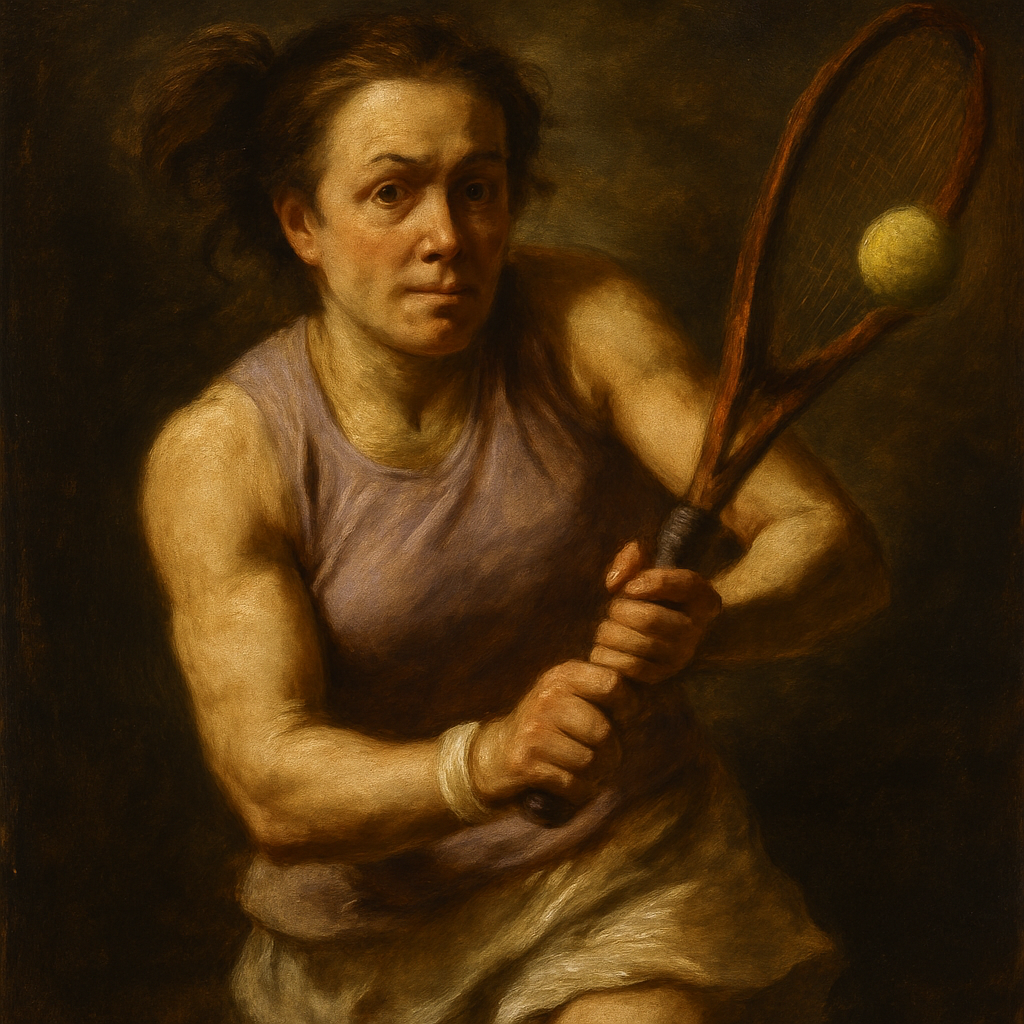
MELBOURNE — For Daria Kasatkina, the walk onto Rod Laver Arena this Australian Open will feel profoundly different. The 26-year-old tennis star, once a top-10 mainstay, will step onto the blue plexicushion not as a visitor from Russia, but as a newly minted Australian, representing the nation she now calls home.
In a heartfelt and revealing interview ahead of the season's first Grand Slam, Kasatkina spoke of the immense relief and newfound freedom she has experienced since her citizenship ceremony in December. "I can finally breathe," she said, a weight visibly lifted from her shoulders. "For the first time in a long time, I feel a sense of peace and belonging when I travel to a tournament."
A Journey Forged in Uncertainty
Kasatkina's path to Australian citizenship was neither swift nor straightforward. Born in Tolyatti, Russia, she has been one of the WTA Tour's most vocal critics of the war in Ukraine and an advocate for LGBTQ+ rights, positions that made her future in her homeland increasingly untenable. In 2022, she publicly called the war a "nightmare," a brave stance that came with significant personal and professional risk.
The geopolitical tensions cast a long shadow over her career. Like all Russian and Belarusian players, she was forced to compete as a neutral athlete, without her national flag or anthem. While she continued to perform, reaching the French Open semifinals in 2022, the constant questions and the emotional toll of representing a nation whose actions she condemned became a heavy burden. "It was a period of immense internal conflict," she admitted.
Finding a New Home Down Under
Kasatkina's connection to Australia deepened through her relationship with former Olympic ice dancer and Australian native, Natalia Zabiiako. The couple made Melbourne their training base, finding solace and a supportive community in the city's vibrant tennis culture. The decision to apply for citizenship was a natural, yet monumental, step toward aligning her passport with her principles and her personal life.
The official ceremony, held in a Melbourne suburb, was an emotional pinnacle. "Holding that certificate, singing the national anthem... it was one of the most meaningful moments of my life," Kasatkina recalled. "It wasn't about rejecting where I was born, but about fully embracing where I choose to live and who I choose to be."
This shift has tangible competitive implications. Kasatkina is now eligible for Tennis Australia's Pro Tour Support Program, granting access to funding, coaching support, and wildcards into domestic tournaments. More importantly, it alters her psychological landscape on court.
The Weight Lifted, The Game Freed
Players and pundits often speak of the mental game in tennis, but rarely is the geopolitical pressure so directly intertwined with performance. Kasatkina describes the past two years as playing with a "constant static" in her mind—a noise of external controversy that diluted her focus. Now, that static has ceased.
"When you are running for a drop shot, or facing a break point, your mind needs to be clear," she explained. "Before, there was always another layer, a sadness or anxiety, sitting there. Now, it's just me, the ball, and the court. It's pure."
This clarity is already showing in her preseason form. Her coach, Flavio Cipolla, noted a marked difference in her on-court demeanor and training intensity. "Dasha has always been a fierce competitor, but now there's a lightness to her fight. She's playing free," he observed.
Navigating a Complex New Reality
The transition is not without its complexities. Kasatkina will likely face Russian and Belarusian opponents on tour, including close friends. The WTA's neutral athlete policy remains in effect for those players, a constant reminder of the ongoing conflict. Furthermore, her change of nationality means she is no longer eligible to represent Russia in the Olympics or Billie Jean King Cup.
When asked about these sacrifices, Kasatkina is resolute. "My values and my peace of mind are not negotiable. I sleep well at night. That is worth more than any flag next to my name on a scoreboard."
Her new status also makes her a pivotal figure in Australian tennis. As a top-30 player with Grand Slam semifinal experience, she brings immediate credibility and depth to the national roster, which is spearheaded by world No.1 Ash Barty's successor, Ajla Tomljanović, and a crop of promising young talents.
What This Means for Australian Tennis
Kasatkina's arrival provides a significant boost to the local scene:
- Enhanced Depth: She becomes an immediate contender for the Australian Billie Jean King Cup team.
- Mentorship Potential: Her experience at the highest level is invaluable for younger players.
- Global Profile: Her story and playing style attract international attention to the Australian tour.
- Fan Connection: Her openness and journey resonate deeply with Australian sports fans.
A New Chapter Begins at Melbourne Park
As the 2024 Australian Open gets underway, all eyes will be on how the "New Australian" performs under the weight of expectation—a weight she insists feels lighter than the one she carried before. Drawn in a competitive section, her first-round match will be a test of both skill and newfound serenity.
For Kasatkina, the outcome of any single match is now part of a larger narrative. "This is the start of my second career, in a way," she reflected. "The first was about achieving rankings and results. This one is about playing for a country that supports me as I am, and playing the game I love with a free heart."
In a sport where margins are razor-thin, the psychological advantage of "finally breathing" could be Kasatkina's most powerful weapon. Her journey from Tolyatti to Melbourne is more than a change of address; it is a testament to the pursuit of authenticity, both on and off the court. As she serves to open her Australian Open campaign, she does so not just for points, but for a profound and hard-won peace.