
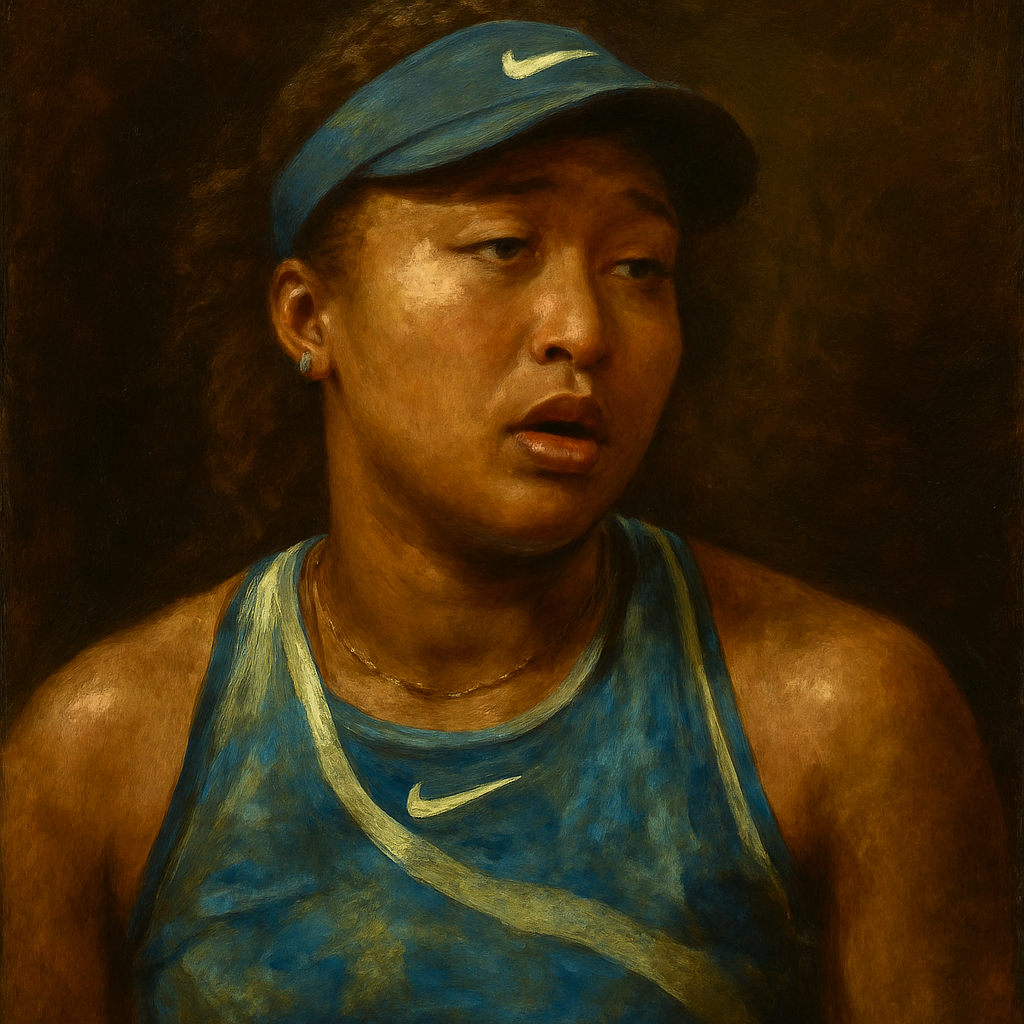
MELBOURNE — In a bizarre and unprecedented scene at the Australian Open, a highly anticipated third-round match between four-time Grand Slam champion Naomi Osaka and rising star Emma Raducanu was suspended for over 20 minutes on Saturday after both players refused to continue play, citing a dangerous and persistent technical fault with the electronic net system.
The incident occurred with Osaka leading 4-3 in the first set on Rod Laver Arena. Following a point, the LED strip lights embedded in the top of the net—a standard feature for enhanced visibility on broadcast—began to flicker erratically and emit a loud, high-pitched buzzing sound. Osaka immediately approached the chair umpire, Alison Hughes, to complain, pointing repeatedly at the net. "It's a distraction, and the sound is really sharp. I can't concentrate," Osaka was heard saying.
After a brief inspection by a tournament technician failed to resolve the issue, play resumed. However, on the very next point, the malfunction recurred, this time accompanied by a visible spark at the net post. Osaka, visibly shaken, walked to her chair, placed her racket down, and stated firmly, "I'm not playing until this is fixed. It's not safe." In a show of solidarity and shared concern, Raducanu concurred, telling the umpire she also felt uncomfortable continuing.
A Standoff on Center Court
What followed was a tense standoff between the players and tournament officials. The chair umpire and Grand Slam supervisor Wayne McKewen attempted to persuade the athletes to continue while engineers worked on the problem. However, both Osaka and Raducanu remained resolute, refusing to even warm up or practice serves. The packed stadium, initially confused, began to murmur with growing unease as the delay stretched past ten minutes. Social media lit up with clips of the malfunctioning net, with fans and pundits alike expressing shock at the unusual protest.
The core of the players' argument centered on safety and the integrity of competition. In a joint statement released through the WTA after the match, they outlined their primary concerns:
- Physical Safety: The audible spark and electrical buzzing posed a potential, albeit small, risk of electric shock.
- Visual Hazard: The erratic, strobing lights were a significant visual distraction.
- Competitive Fairness: A major distraction at the net directly impacts service returns and net play.
Tournament Officials Scramble for a Solution
With two of the sport's biggest stars in a deadlock, tournament director Craig Tiley was summoned to the court. After a lengthy discussion with the players, engineers, and the match officials, a decision was made to completely power down and disable the LED net system for the remainder of the match. Technicians manually removed a section of the LED strip to ensure it could not reactivate. This process took nearly 25 minutes, during which time the players sat under umbrellas, receiving advice from their coaches and occasional cheers of support from the crowd.
Tiley later addressed the media, acknowledging the seriousness of the situation. "The safety of our players is our absolute paramount concern. While our technical systems are rigorously tested, this was a highly unusual and specific fault that we had not encountered before. We respect the decision of Naomi and Emma to bring this to our attention so forcefully, and we took immediate action to resolve it to their satisfaction before continuing."
The Aftermath and Match Conclusion
When play finally resumed, the dynamic of the match had undeniably shifted. Osaka, perhaps channeling her frustration, came out with aggressive precision, breaking Raducanu's serve immediately to claim the first set 6-4. However, the lengthy delay and emotional toll of the standoff seemed to affect her rhythm in the second set. Raducanu, demonstrating remarkable composure for a 21-year-old in such strange circumstances, raised her level, leveraging her exceptional defensive skills to force errors and take the set 6-4.
The decider was a tense affair, with both women showing signs of fatigue from the extended stoppage. Ultimately, Osaka's powerful groundstrokes and experience in major moments proved decisive. She secured a crucial break at 3-2 and held her nerve to close out the match 6-4, 4-6, 6-3. The customary handshake and net exchange at the end felt particularly poignant, given the shared ordeal over the net itself.
Reactions and Broader Implications
In her post-match press conference, Osaka expanded on her decision to halt play. "It wasn't about gamesmanship. It was a principle. We're out here putting our bodies on the line, and when something doesn't feel right, especially with electricity and sparks, you have to listen to that instinct. I'm glad Emma felt the same way. It felt like we stood together for something important today beyond just the match."
Raducanu echoed this sentiment, praising Osaka's leadership. "Naomi was absolutely right. It was a joint decision. In that moment, you have to advocate for yourself. The tour is always telling us to speak up, and that's what we did. It's a bit surreal that it happened, but I think it sets a good example." The incident has sparked a wider conversation in tennis circles about player agency and the sometimes-blurry line between acceptable conditions and legitimate safety concerns.
Tennis analysts have noted that while players often complain about conditions—from wind to sun to squeaky chairs—a unified refusal to play by two opponents is exceptionally rare. The Australian Open has confirmed a full review of all LED net systems on site and stated that the manufacturer is investigating the specific fault. For now, the tournament continues, but the image of two champion players, side-by-side in defiance of a malfunctioning piece of technology, will be one of the most enduring moments of this year's event.