
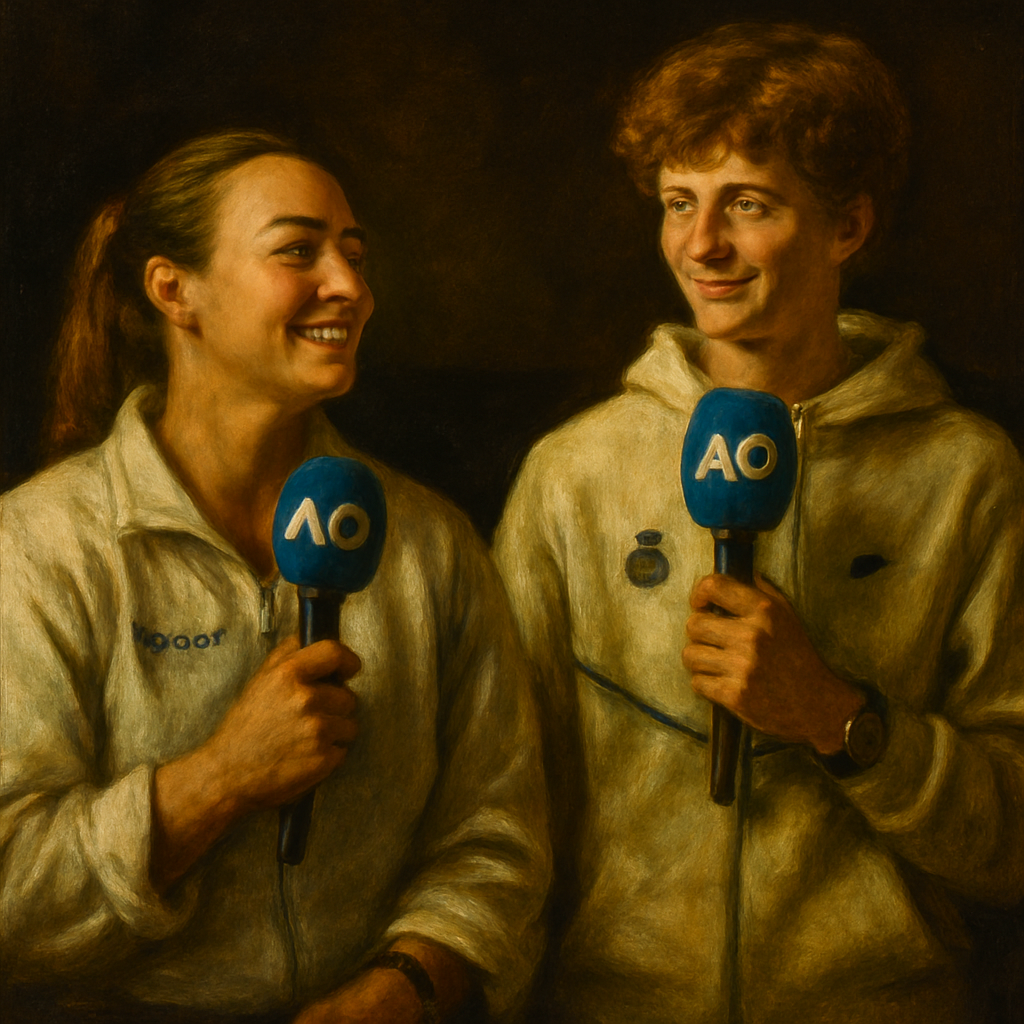
As the tennis world turns its gaze towards the clay of Roland-Garros, a familiar tension simmers beneath the surface of Grand Slam anticipation. Beyond the baseline battles and quest for glory, a persistent conflict over economics and governance continues to pit the sport's biggest stars against its most powerful institutions. The question, echoing through player councils and press conferences, remains stark: are the top-10 stars being reasonable in their demands for more money and a bigger say in how the majors are run?
The Grand Slam Goldmine: A Perennial Dispute
The financial scale of Grand Slam tournaments is staggering. The 2023 US Open, for instance, distributed a record $65 million in total player compensation, with singles champions earning $3 million each. While these figures are often highlighted, players, led by their associations—the ATP and WTA—argue the revenue share is disproportionately low. Historically, Grand Slams have operated as independent entities, not part of the regular tour structure, and have resisted formalizing a revenue-sharing model similar to major North American team sports, where players receive roughly 50% of related revenues. "We are the product," is a frequent and pointed refrain from top players.
The majors counter that their expenses far exceed those of a standard tour event. They fund massive infrastructure, security, and year-round operations for just two-week tournaments. They also point to consistent annual prize money increases. However, players note that these increases often come as a reactive response to pressure rather than from a transparent, collaborative partnership. The pandemic-era player relief funds, while welcomed, further highlighted the financial vulnerability of players outside the very top echelon, fueling the argument for a more sustainable ecosystem funded by the sport's richest events.
The Governance Gap: Seeking a Seat at the Table
The call for a "bigger say" extends beyond prize money. Players express frustration at being excluded from key decisions that directly impact their professional lives and the sport's presentation. This includes, but is not limited to:
- Scheduling and conditions: Late-night match finishes, particularly at the US Open and Australian Open, have been a major point of contention. Players argue for more influence over the daily schedule to protect health and performance quality.
- Surface consistency and ball choices: The shift from the soft, high-bouncing balls of one major to the fast, light balls of another is often cited as a cause of injury. Players seek standardization or a collaborative selection process.
- Expansion and format changes: Rumblings about potential further expansions of draws or changes to match formats (like best-of-three versus best-of-five sets) are met with concern when players feel they are merely informed, not consulted.
Novak Djokovic, as a former president of the ATP Player Council, has been particularly vocal. He has repeatedly called for the formation of a "players' union" or a more formalized association with real bargaining power to negotiate with Grand Slams and the ITF as a collective entity, not as disparate tours.
The PTPA: A New Force in the Conversation
The formation of the Professional Tennis Players Association (PTPA), co-founded by Djokovic and Vasek Pospisil, is the most concrete manifestation of this drive for a stronger voice. Positioned as a complementary association focused solely on player advocacy (not organizing tournaments), the PTPA aims to give players a unified platform. While its long-term impact is still unfolding, its very existence pressures the traditional structures. Grand Slams, accustomed to negotiating with the ATP and WTA, now face an additional, player-centric body demanding transparency and a seat at the table for issues like revenue distribution and data rights.
The Counter-Argument: Are the Stars Out of Touch?
Critics, including some former players and tournament organizers, question the reasonableness of the stars' demands. They argue that the unique, history-driven model of the Slams—where national federations reinvest profits into grassroots tennis development globally—is worth preserving. The concern is that funneling a significantly larger share to the already-wealthy top players could undermine the sport's development pipeline.
Furthermore, there is a perception of hypocrisy. While advocating for the collective, top stars command and receive enormous appearance fees for non-Slam events and lucrative private exhibition tours, like the recent "6 Kings Slam" in Saudi Arabia. This leads to questions about their commitment to the broader tour structure they seek to reform. As one anonymous tournament director recently noted in the press, "It's hard to hear lectures on ecosystem sustainability from someone who just skipped a Masters 1000 for a multi-million dollar payday in an exhibition."
The majors also emphasize their contributions. The Australian Open's "AO Start-Ups" program and the US Open's facility investments in New York City parks are cited as examples of how revenue benefits the sport at large. Their stance is that their model supports a wider constituency than just the current player pool.
Finding Common Ground: A Path Forward
The standoff is not without potential solutions. Dialogue has increased, albeit slowly. The key likely lies in a more formalized partnership agreement. This could involve:
- A fixed, transparent revenue percentage allocated to player compensation, with agreed-upon benchmarks for annual increases tied to tournament revenue growth.
- The establishment of joint player-tournament committees with binding consultation rights on specific operational issues like scheduling, balls, and on-site player conditions.
- A greater emphasis on increasing prize money for early-round losers and qualifiers, a cause many top stars support to strengthen the tour's middle and lower ranks.
The recent multi-year strategic partnership between the ATP and WTA, combining commercial forces for the tour events, may also shift the balance of power, giving the tours a stronger collective front when dealing with the Slams.
Conclusion: A Necessary Reckoning
Are the top-10 stars being reasonable? Their core argument—that the athletes who draw the crowds and generate the billions in media rights and sponsorship deserve a fairer share and meaningful consultation—is fundamentally sound and mirrors evolutions in other global sports. The modern athlete is an empowered stakeholder, not just a participant.
However, reasonableness must be a two-way street. The players' case is strongest when they advocate holistically for the sport's health, including its developmental foundations, and when they engage consistently with the entire tour ecosystem. The Grand Slams, for their part, must modernize their governance to acknowledge that collaboration with players is not a concession, but a necessity for the sport's long-term vitality. As another Grand Slam season dawns, the unresolved tension remains the biggest match being played off the court. Its outcome will define tennis's future far more than any single championship result.