
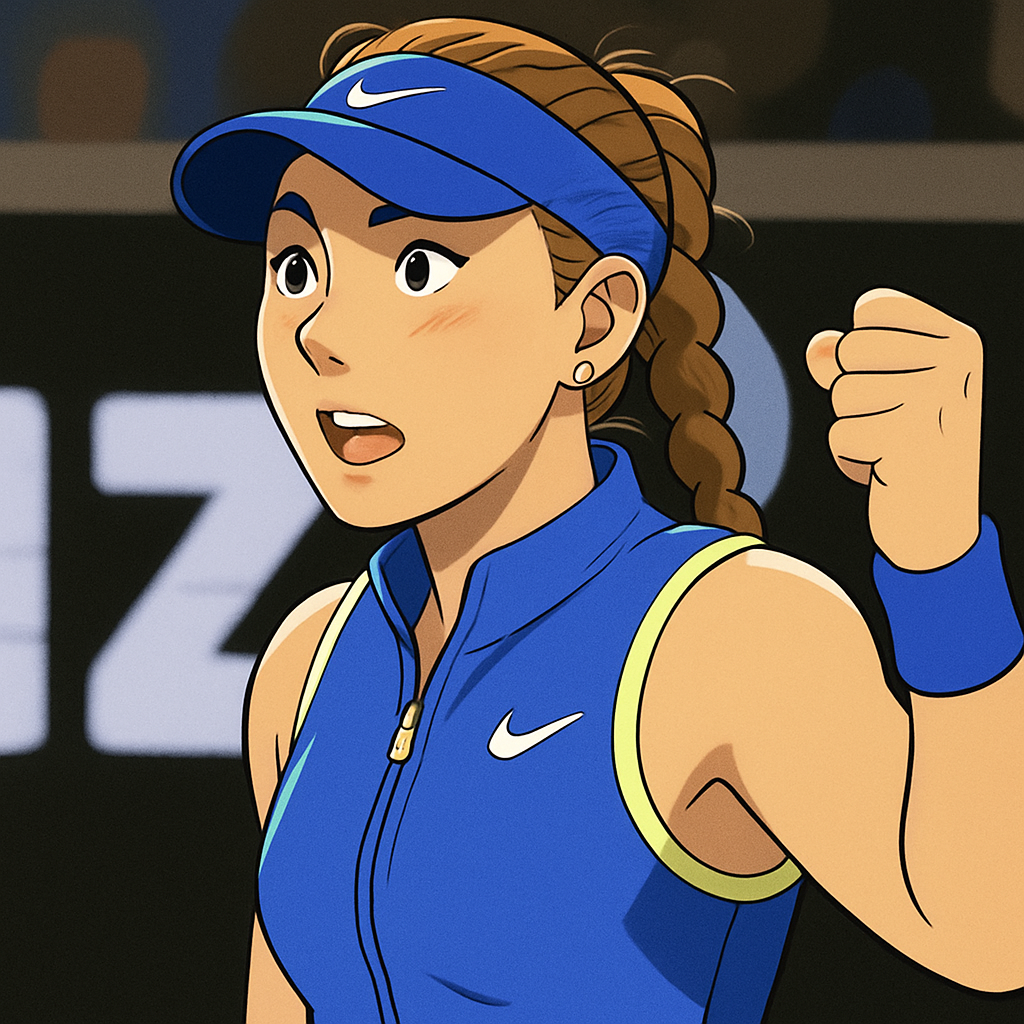
MELBOURNE — As the 2026 Australian Open heats up, a familiar narrative continues to swirl around the sport’s top Russian-born talents: the question of nationality. In an era where several of her compatriots have switched federations, 19-year-old phenom Mirra Andreeva has made her stance unequivocally clear. Following a commanding straight-sets victory to secure her spot in the tournament's third round, Andreeva addressed the topic head-on, reaffirming her commitment to representing Russia despite the ongoing complexities of international competition.
A Firm Stance Amidst a Trend of Defections
The landscape of women’s tennis has seen a notable shift in recent years, with a number of Russian players opting to change their sporting nationality. This trend, often cited as a strategic move to circumvent the neutral athlete status imposed by the ATP, WTA, and ITF following the 2022 invasion of Ukraine, has seen stars like Daria Saville (formerly Gavrilova) play for Australia for years, and more recently, Natela Dzalamidze switch to Georgia. The most high-profile case remains that of Elena Rybakina, the 2022 Wimbledon champion who has represented Kazakhstan since 2018.
Against this backdrop, Andreeva’s resolve stands out. When asked in her post-match press conference if she had ever considered a similar path, her response was definitive. "No, never," she stated. "I am Russian. This is where I was born, this is where I learned to play tennis, and this is who I am. My dream was always to win for my country."
Navigating the Neutral Status
Since March 2022, Russian and Belarusian athletes have been barred from competing under their national flags, anthems, or emblems at most major tournaments, including the Grand Slams. They compete as "Neutral Athletes" or under the designation "AIN" (Individual Neutral Athletes). This policy, while allowing participation, creates a distinct psychological and professional environment. For Andreeva, who burst onto the scene as a 16-year-old at the 2023 Madrid Open, her entire professional career has unfolded under these conditions.
The psychological weight of this status should not be underestimated. Players cannot represent their nation in team events like the Billie Jean King Cup, and their official profiles on tournament sites lack national identifiers. Andreeva acknowledges the strangeness but focuses on her craft. "Of course, it is a strange feeling," she admitted. "You see the flag next to everyone else's name, but not yours. But when I step on the court, I am not thinking about the letters next to my name. I am thinking about the ball, the point, the match."
The Practical Realities
Competing as a neutral athlete presents several logistical and symbolic challenges:
• No National Representation: Players cannot participate in the Olympics or BJK Cup under their flag, a significant sacrifice for any athlete.
• Sponsorship Complications: Commercial deals with state-affiliated or sanctioned Russian companies are prohibited.
• Constant Scrutiny: Any perceived support for the war can lead to immediate disqualification and investigation.
• Fan Interaction: The neutral status can create a complex dynamic with fans both supporting and opposing their presence.
Despite these hurdles, Andreeva’s trajectory has been meteoric. Her current run at Melbourne Park, building on a sensational semifinal appearance at Wimbledon last year, proves her elite status is no fluke. Her game—a blend of preternatural calm, tactical intelligence, and fierce competitive spirit—transcends politics. "Tennis is my language," she has often said. "It is how I communicate with the world."
The Contrast with Fellow Prodigies
Andreeva’s stance offers a sharp contrast to some of her generational peers. Diana Shnaider, another rising Russian star, has pursued collegiate tennis in the United States at NC State, a path that often leads to speculation about future allegiances. Meanwhile, the men’s tour has seen players like Alexander Shevchenko change to represent Kazakhstan. The reasons for defection are multifaceted, ranging from personal family connections and financial incentives to a desire for a clearer path to Olympic qualification and freedom from geopolitical baggage.
Tennis analysts note that Andreeva’s decision is both a personal commitment and a potential long-term gamble. "Mirra is making a statement of profound loyalty," noted former champion and commentator Jim Courier. "She is betting on a future where the restrictions are lifted and she can once again wear the Russian colors at a Wimbledon final or an Olympic Games. It’s a bet on history and identity, versus the immediate practical benefits of switching."
Looking Ahead at Melbourne and Beyond
As Andreeva prepares for her third-round match, the focus, in her mind, must remain squarely on tennis. Her powerful baseline game and improved serve have made her a nightmare for opponents on Melbourne’s hard courts. The crowd at Rod Laver Arena, known for embracing youthful talent, has warmly received her, a testament to her engaging personality and scintillating play.
The broader question of how long the neutral athlete policy will remain is unresolved. With the war ongoing, the tennis governing bodies have shown no sign of altering their stance. This means Andreeva’s career, for the foreseeable future, will continue in this unique limbo. Yet, her clarity of purpose seems to be a source of strength rather than distraction. "I know who I am playing for," she concluded firmly. "I play for my family, my coaches, the people who believed in me from the start in Russia, and for myself. The flag is in my heart."
In an often-fragmented sporting landscape, Mirra Andreeva’s unwavering sense of self is as striking as her backhand down the line. As she advances deeper into the draw at the 2026 Australian Open, she carries not just the hopes of a future Grand Slam title, but the weight of a principled decision that defines her not only as a player, but as a person. Her journey is a compelling subplot in modern sports, a story of talent, geopolitics, and resolute identity playing out on the game’s biggest stages.