
PARIS — The raw, unfiltered emotions of professional tennis were on full display on Court Suzanne-Lenglen as 17-year-old sensation Mirra Andreeva, having fought valiantly from the brink of defeat, ultimately succumbed to a resurgent Amanda Anisimova in a dramatic second-round clash at the French Open. The 6-7(5), 6-4, 6-1 scoreline tells a story of shifting momentum, but it was the poignant aftermath that captured hearts worldwide, as a tearful Andreeva was met with a remarkable act of sportsmanship from her victorious opponent.
A Clash of Generations and Comebacks
This Roland Garros encounter was a fascinating narrative woven from two distinct threads. On one side was Mirra Andreeva, the teenage prodigy from Russia who has taken the tennis world by storm with her preternatural calm and tactical maturity. Seeded 38th, she arrived in Paris fresh from a semifinal run in Madrid and was widely seen as a dark horse capable of a deep fortnight. Standing across the net was Amanda Anisimova, the American once hailed as the sport's next big thing. After stepping away from the tour in mid-2023 for mental health reasons, her return at the start of this season has been a slow, steady climb back. Unseeded and ranked World No. 228, this was her first major since her hiatus, a testament to her courage and determination.
The Emotional Rollercoaster of the Match
The match began as a tactical battle, with Andreeva's consistency and clever angles pitted against Anisimova's trademark explosive power, particularly off the forehand wing. Andreeva claimed a tight first set in a tiebreak, showcasing the resilience that belies her years. The second set saw Anisimova find her range, her groundstrokes beginning to penetrate the court with greater authority to level the match. The decisive moment came early in the third set. With Andreeva serving at 1-1, 40-15, a series of uncharacteristic errors and a surge of relentless pressure from Anisimova resulted in a crucial break of serve. From there, the American's confidence soared while Andreeva's frustration visibly mounted.
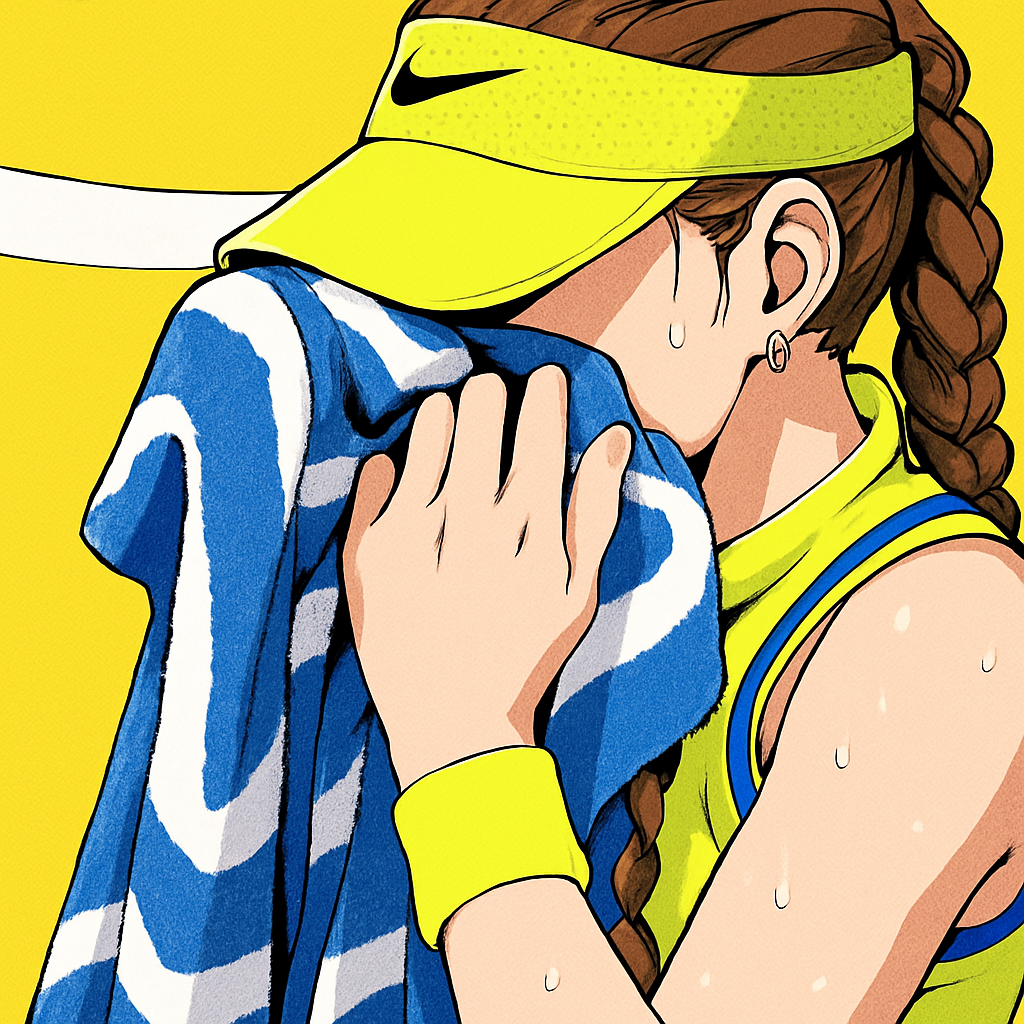
As Anisimova raced to a 5-1 lead, the weight of the moment overwhelmed the young Russian. During the changeover, she buried her face in her towel, her shoulders shaking with sobs. The dream of a Parisian run was slipping away, and the emotional toll was immense. She managed to compose herself to finish the match, but upon the final Anisimova winner, the tears flowed freely once more. She quickly packed her bag, her face a mask of devastation.
Anisimova's Moment of True Colours
What happened next transcended the typical post-match net cord handshake. Instead of celebrating immediately, Amanda Anisimova’s expression shifted from elation to one of immediate concern. She walked purposefully to Andreeva's bench, knelt down, and placed a comforting hand on the distraught teenager. For nearly a full minute, she spoke softly to Andreeva, offering words of consolation and encouragement. It was a gesture of profound empathy, one athlete who has faced immense personal struggles reaching out to another in a moment of very public pain.
In her post-match press conference, Anisimova explained her actions with poignant clarity:
"I just told her that she's an amazing player and she's going to be in this sport for a long time and going to fight for many more Grand Slams. I just told her to keep going... I know how it feels. I've been through many moments like this."
This act of kindness did not go unnoticed. Tennis legends and fans flooded social media with praise for Anisimova's character. Martina Navratilova called it "the definition of class." The moment highlighted a critical, often overlooked aspect of the sport:
- Empathy in Competition: The ability to fiercely compete for over two hours, yet instantly recognize and soothe an opponent's human struggle.
- Shared Experience: Anisimova, who lost her father and coach suddenly in 2019 and has been open about her mental health battles, uniquely understood the pressure Andreeva faces.
- Mentorship: A 22-year-old offering guidance to a 17-year-old, bridging the gap between "veteran" and "prodigy."
Andreeva's Heartbreak and Perspective
For Mirra Andreeva, the tears were a mixture of immediate disappointment and the frustration of a missed opportunity. She had led in the final set before the momentum irrevocably swung. In her own press conference, red-eyed but composed, she was analytical about her performance but also touched by Anisimova's gesture.
"I was just disappointed with myself, with the way I played... But what Amanda did, it was really nice. I didn't expect it. In that moment, you feel very bad, and such words help a lot."
Andreeva's emotional reaction, while heartbreaking, is also a reminder of her youth and the immense expectations she carries. She possesses a champion's game, but moments like these are part of forging a champion's mentality. The tennis world has often marveled at her stoicism; this vulnerability revealed the passionate competitor beneath, a player who cares deeply. As she noted,
"I will learn from this. Next time, maybe I will handle my emotions a bit better in the important moments."
A Victory Beyond the Scoreboard
While Amanda Anisimova advanced to the third round with a significant victory for her ranking and confidence, her win was about far more than tennis. It marked a triumphant return to the Grand Slam stage on her own terms, played with the powerful, free-swinging style that made her a star. But more indelibly, it re-introduced her to the world as a athlete of immense grace and emotional intelligence. Her journey back is not just about forehand winners, but about rediscovering her joy for the game and extending the compassion she likely needed in her own darkest times.
Conclusion: The Real Winner Was Sport Itself
The story of this French Open second-round match will not be archived solely for its statistics. It will be remembered for the powerful human connection that followed the final point. In an era often dominated by rivalries and raw competitiveness, Amanda Anisimova provided a masterclass in sportsmanship. She showed that victory can be handled with humility and that acknowledging a fallen opponent's pain does not diminish one's own achievement—it elevates it. For Mirra Andreeva, the tears will dry, and the lessons from this loss will be absorbed. She leaves Paris with a heavier heart but also with the memory of a kindness that exemplifies the best of the tennis community. In the end, while Anisimova moves forward in the draw, the true champion of the day was the spirit of the sport itself, reminding us all that even in individual competition, no one is truly alone.