
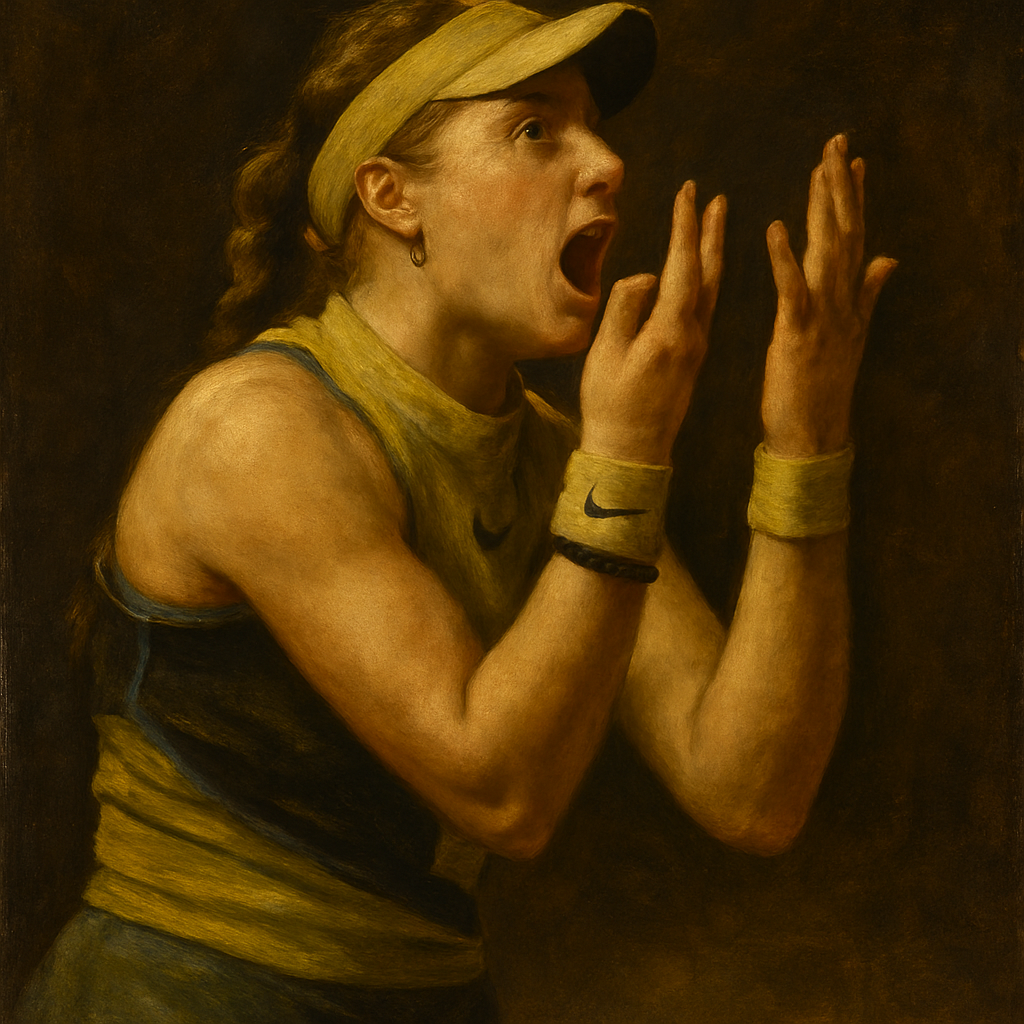
MELBOURNE — The Australian Open, renowned for its boisterous and passionate crowds, witnessed a moment of stark controversy on Day 11 as 16-year-old Russian phenom Mirra Andreeva was met with a chorus of boos following her straight-sets quarterfinal loss to ninth seed Barbora Krejcikova. The jeers erupted not from poor play, but from the teenager’s decision to head straight down the players' tunnel without acknowledging the Rod Laver Arena spectators, a breach of tennis etiquette that left fans fuming and sparked a heated debate across the tennis world.
A Stunning Run Cut Short
Andreeva’s journey to the last eight was the story of the tournament’s first week. The world No. 47, playing in only her second main-draw appearance at Melbourne Park, displayed a breathtaking blend of tactical maturity and fearless shot-making. Her stunning comeback from 5-1 down in the third set to defeat sixth seed Ons Jabeur in the second round announced her as a genuine title dark horse. Victories over Diane Parry and France’s Diane Parry solidified her status, making her the youngest woman to reach the Australian Open quarterfinals since Martina Hingis in 1997.
However, her fairytale run came to an abrupt halt against the 2021 French Open champion, Barbora Krejcikova. The Czech veteran’s experience and variety proved too much on the day, as she navigated a tricky wind and a determined opponent to secure a 6-3, 6-2 victory. The match concluded with Andreeva netting a forehand, after which she swiftly packed her bag, offered a perfunctory wave in the general direction of her opponent’s chair, and made a beeline for the exit.
The Boos Ring Out
It was this immediate departure, bypassing the traditional post-match court-side interview and fan acknowledgment, that ignited the crowd’s ire. A wave of boos and whistles cascaded down from the stands as Andreeva disappeared from view. The reaction was immediate and visceral, catching the broadcast team and Krejcikova off guard. Veteran commentator Jim Courier noted the unusual scene, stating, "That’s a rare sound here at the Australian Open, a chorus of boos for a departing player."
Social media erupted in real-time, with fans and pundits divided. Many condemned the teenager’s actions as disrespectful to the paying audience who had supported her throughout her run. Others rushed to her defense, citing her youth and the raw emotion of a crushing defeat in a major quarterfinal. The incident overshadowed Krejcikova’s impressive achievement of reaching her first Australian Open semifinal.
Understanding the Reaction
The strong fan reaction stems from deeply ingrained traditions and expectations in tennis, particularly at Grand Slam level. The Australian Open crowd is known for its enthusiastic and often forgiving nature, but it also values the reciprocal relationship between athlete and spectator. Key expectations that were perceived as breached include:
- The On-Court Interview: A staple of Slam play, it allows fans to share in the player’s immediate emotions.
- The Acknowledgment: A wave, clap, or bow to all sides of the stadium is a standard sign of respect.
- The Context: Andreeva had won the crowd over with her charismatic and expressive play earlier in the tournament.
Tennis journalist Ben Rothenberg captured the sentiment of many, tweeting, "The boos for Andreeva are harsh, but understandable. The fans here have adored her all week, and she just gave them nothing on the way out. This is a entertainment business, and that relationship matters." The feeling was one of a contract broken—the fans provide energy and support, and in return, they expect a basic acknowledgment of their presence.
A Pattern of Frustration?
For some observers, the incident was not entirely isolated. Andreeva, for all her brilliance, has shown flashes of temperament on court, including audible self-criticism and frustrated gestures. In her fourth-round match, she received a code violation for an audible obscenity. This context led some to view the tunnel walk-off as part of a pattern of struggling to manage disappointment, rather than a singular act of disrespect. Her long-time coach, former French Open finalist Conchita Martínez, has often spoken publicly about working on Andreeva’s emotional resilience alongside her game.
The Defense: Youth and Emotion
A significant contingent, including several former players, advocated for perspective. They pointed to Andreeva’s age and the monumental pressure of the moment. At 16, a Grand Slam quarterfinal represents a career-highlight, and the devastation of losing can be overwhelming. Former world No. 1 Andy Roddick came to her defense on social media, posting, "She’s 16. Cut her a break. The last thing she’s thinking about after that loss is protocol. Emotions are raw. It happens."
This viewpoint argues that the demand for professionalism, while valid, must be tempered with humanity. The expectation for a teenager to compartmentalize such profound disappointment and perform the duties of a seasoned veteran is, in this view, unreasonable. Andreeva’s agent later clarified that the player was "extremely emotional and needed a moment to herself," and that there was no intentional slight meant toward the fans.
The Aftermath and Moving Forward
The storm of controversy continued into the following day. Andreeva did not hold a press conference immediately after the match, but she did address the incident briefly in a post on her official Telegram channel. She wrote, "I want to apologize to the fans who were disappointed by my quick exit yesterday. I was very upset with my performance and needed to process the emotions alone. I love playing in front of the Australian crowd and am grateful for their support."
The response was a mix of acceptance and continued criticism. For many, the apology was a mature step that helped defuse the situation. For others, it remained a lesson in the uncompromising expectations of professional sport at the highest level. The WTA rulebook does not mandate post-match fan interaction, but the incident highlights the unwritten codes that govern the sport’s relationship with its audience.
Ultimately, the episode serves as a poignant chapter in the rapid education of a teenage superstar. Mirra Andreeva’s extraordinary talent guarantees she will have many more moments on tennis’s biggest stages. The boos at Rod Laver Arena will likely become a footnote, but the lesson in the complex, high-stakes theater of professional tennis—where brilliance on the court must often be matched by composure off it—will undoubtedly remain. As she continues her ascent, balancing that prodigious talent with the professional expectations of the tour will be as crucial to her development as any stroke in her arsenal.