
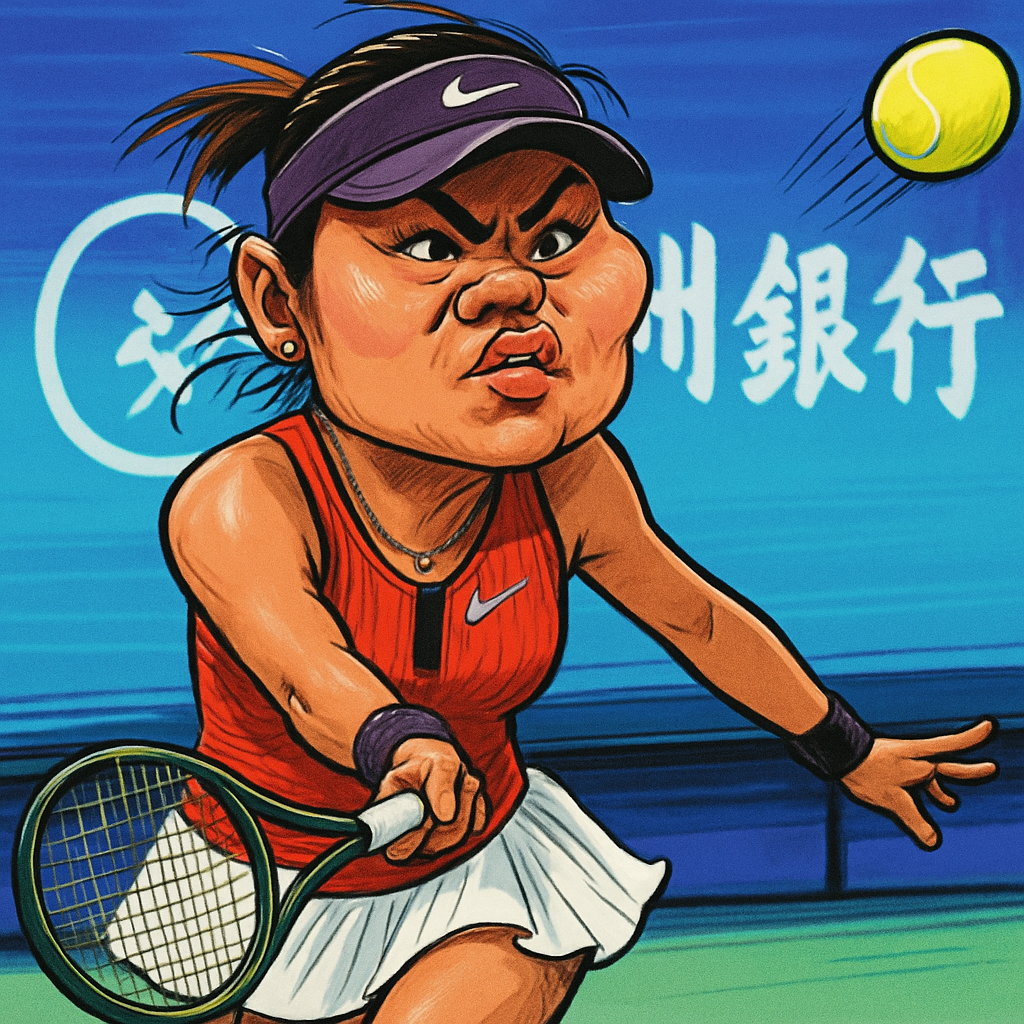
LONDON — The tennis world was set for a blockbuster start to the 2025 season as Great Britain prepared to face the United States in the United Cup in Perth. The spotlight was firmly on Emma Raducanu, slated for a marquee opening-night clash with American star Coco Gauff. Yet, in a move that felt all too familiar to her supporters, Raducanu withdrew from the match just hours before it was due to begin, citing a minor wrist injury.
The announcement, delivered by Team GB captain Colin Beecher, sent a ripple of disappointment through the event and sparked a wave of commentary online. Among the most pointed reactions came from Judy Murray, mother of Andy and Jamie Murray and a seasoned observer of the British tennis scene. Taking to social media platform X, Murray posted a succinct, sarcastic remark that perfectly encapsulated the weary frustration of many fans: "Groundhog Day."
The two-word post, a reference to the 1993 film where a man relives the same day repeatedly, struck a chord. For Murray and countless others, Raducanu’s late withdrawal was not an isolated incident but part of a recurring, frustrating pattern that has defined much of the young star’s career since her fairytale 2021 US Open victory. The promise of a triumphant return or a sustained run of form has too often been interrupted by physical setbacks.
A Pattern of Promising Starts and Painful Stops
Emma Raducanu’s journey since her historic Flushing Meadows win has been a masterclass in navigating immense pressure amid a relentless string of physical ailments. Her withdrawal from the United Cup opener is merely the latest chapter. The 21-year-old had been training in Abu Dhabi in the off-season and spoke positively about her fitness and mindset ahead of the new campaign. Her scheduled match against world number two Gauff was seen as a perfect barometer for her current level.
However, the specter of injury, which has haunted her for over two years, reappeared. Team GB stated the withdrawal was a "precautionary" measure due to "slight soreness" in her right wrist—the same wrist that required surgery in 2023 and kept her off tour for eight months. Captain Beecher emphasized the decision was about the "long-term picture," but the timing felt painfully familiar. This incident fits into a broader narrative that includes:
- The 2022 Wimbledon exit due to side strain suffered during a fourth-round match.
- Multiple retirements and withdrawals throughout the 2022 and 2023 seasons for various wrist, ankle, and hand issues.
- The aforementioned triple surgery in 2023 on both wrists and one ankle.
- A late withdrawal from the 2024 Wimbledon mixed doubles with Andy Murray, which particularly disappointed the British public.
Each episode follows a similar script: hopeful buildup, promising signs in practice or early rounds, then an abrupt physical interruption. Judy Murray’s "Groundhog Day" quip cuts to the heart of this cycle. It reflects not malice, but a profound sense of déjà vu and missed opportunities for a player of immense talent. As one tennis commentator noted, "The greatest opponent Emma Raducanu faces is not across the net; it’s her own physical fragility."
The Weight of Expectation and Scrutiny
Raducanu’s situation is uniquely pressurized. As a Grand Slam champion, every move is magnified. Withdrawals are not seen merely as bad luck but are often framed as a question of resilience or commitment—a narrative many consider deeply unfair. Her commercial stardom, with numerous high-profile endorsements, also fuels a perception in some quarters that focus may be divided, though there is no evidence to support this.
Judy Murray’s remark, while sharp, comes from a place of intimate understanding of the British tennis ecosystem’s pressures. She has watched her own sons navigate brutal injury comebacks and relentless public scrutiny. Her comment can be interpreted as a blunt, wry acknowledgment of the repetitive narrative machine that engulfs British tennis stars, one that Raducanu is now central to. The reaction to her tweet was mixed, with some criticizing it as unhelpful and others applauding it for voicing a widespread sentiment.
In Raducanu’s defense, her team has consistently prioritized long-term health over short-term glory. After her surgeries, she took a deliberate and extended period to rehab, resisting the urge for a premature return. The United Cup decision aligns with that philosophy. As her management stated, "It’s January 1st. The goal is to be healthy for the entire season, not just for one night."
The Road Ahead for Raducanu and Team GB
With Raducanu sidelined for the opener, Katie Boulter stepped in to face Coco Gauff, losing in straight sets. The hope is that Raducanu’s wrist soreness settles quickly, allowing her to participate in later United Cup ties. The immediate focus for her will shift to the Australian Open, which begins on January 13th. Another withdrawal there would significantly amplify the "Groundhog Day" criticism.
For British tennis, the episode underscores a lingering anxiety. Raducanu remains the nation’s only current Grand Slam singles champion and its brightest marketing asset. Her consistent presence on tour is crucial for the sport’s profile. These repeated interruptions stall momentum not just for her, but for the broader interest in the game in the UK. The governing body, the LTA, finds itself in a difficult position, offering support but unable to shield her from the physical demands of the tour or the court of public opinion.
Conclusion: Breaking the Cycle
Judy Murray’s sarcastic remark, while a momentary social media spark, illuminates a persistent and complex reality for Emma Raducanu. It is a reality defined by incredible peaks, frustrating valleys, and a narrative loop that everyone—the player, her team, the fans, and the media—is desperate to break. The path forward is simple in theory but arduous in practice: a sustained, uninterrupted period of competition.
Only by stringing together months of tournaments, weathering losses, and building match fitness can Raducanu shift the conversation from her injuries back to her tennis. The talent that captivated the world at the US Open has not vanished. The United Cup withdrawal is a precautionary setback, not a catastrophe. But as the "Groundhog Day" quip reminds us, the tennis world’s patience, while often sympathetic, is wearing thin with the repetitive plotline. The 2025 season presents yet another chance for Raducanu to finally change the channel.
The coming weeks in Australia will be telling. The hope is that this latest chapter is a minor footnote in a season of resurgence, rather than the defining theme of another year. For Emma Raducanu, the ultimate goal is to make Judy Murray’s next post about her a celebration of a victory, not a weary sigh of repetition. As one seasoned coach put it, "The cure for ‘Groundhog Day’ in tennis isn’t a magic pill; it’s consecutive Mondays on the match court."