
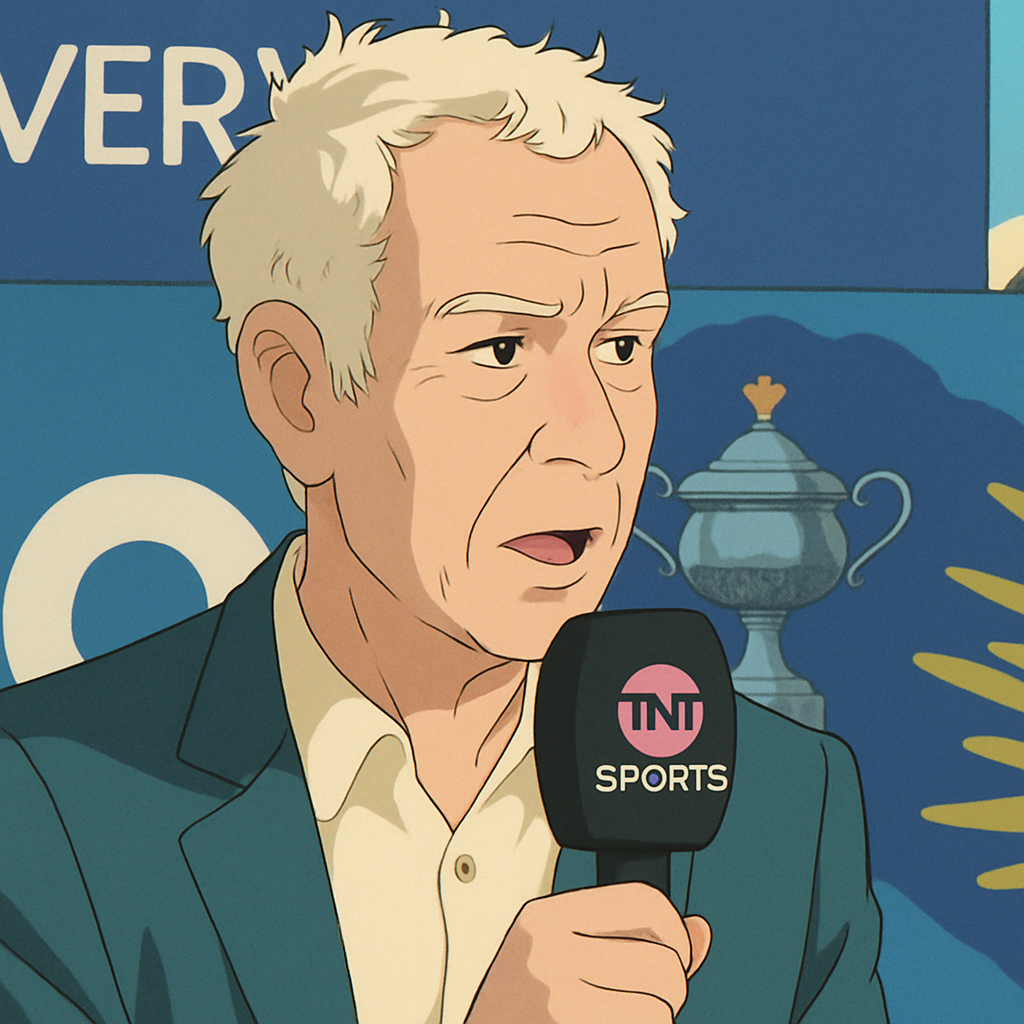
MELBOURNE — The Australian Open broadcast became the stage for a fiery exchange of tennis philosophies this week, as legendary commentator and former world No. 1 John McEnroe launched a pointed accusation at Andy Murray regarding the Brit's potential retirement plans.
Speaking on the TNT Sports coverage during a discussion about the future of the sport's elder statesmen, McEnroe did not mince words. He suggested that Murray, a three-time Grand Slam champion and two-time Olympic gold medalist, was lingering on tour partly for financial reasons, a claim that immediately sparked controversy among fans and pundits alike.
The Broadcast Bombshell
The conversation unfolded as analysts reflected on the first-round exit of 2023 champion Novak Djokovic. The focus shifted to the "Big Four" generation, with McEnroe's co-host, Andy Roddick, praising Murray's enduring fighting spirit. It was then that McEnroe interjected with his stark assessment. "There's also the part of him that I think likes to make a little bit of money," McEnroe stated bluntly. "I think he's cashing in on that a little bit, to be perfectly honest."
McEnroe expanded on his point, drawing a contrast with the serene retirement of his own rival, Bjorn Borg. He argued that Murray's recent struggles with form and fitness, including a disappointing first-round loss at the Australian Open to Tomas Martin Etcheverry, indicated a player whose time at the top had passed. "It's tough to watch him struggle like this," McEnroe added, acknowledging the emotional difficulty for fans.
Context and Career Crossroads
Andy Murray's journey over the past five years has been one of the most compelling narratives in sports. After undergoing major hip resurfacing surgery in 2019—a procedure that many believed would end his career—Murray mounted a remarkable comeback. His stated goal has been to finish his career on his own terms, ideally with a victorious farewell at Wimbledon or the Olympics.
However, results have been mixed. While he has shown flashes of his former brilliance and climbed back into the world's top 50, deep runs at major tournaments have eluded him. This context made McEnroe's comments particularly charged. The American legend seemed to question the purity of Murray's motivation, implying that financial incentive was now a primary driver for his continued participation.
Murray's potential revenue streams at this career stage are significant and include:
• Tournament appearance fees, which can be substantial for a star of his stature at ATP 250 and 500-level events.
• Lucrative sponsorship deals with brands like Castore, Head, and Jaguar, which are tied to his active playing status.
• Prize money, though inconsistent, which remains a factor for any professional athlete.
Immediate Backlash and Defense
The reaction to McEnroe's accusation was swift. Many in the tennis community rushed to Murray's defense, highlighting his well-documented love for competition and his unparalleled work ethic. British tennis journalist Mike Dickson wrote that reducing Murray's career twilight to a cash grab "profoundly misunderstands the psyche of a champion."
Fellow players also weighed in indirectly. Novak Djokovic has frequently spoken of his admiration for Murray's "warrior spirit." Current British No. 1 Cameron Norrie has often cited Murray as an inspiration for his grit and dedication. The consensus among defenders is that a player who has endured metal hip surgery and years of rehabilitation is not motivated by minor prize money increments.
McEnroe, for his part, later attempted to clarify his remarks in a separate interview, insisting his commentary came from a place of respect and concern. "I have incredible respect for Andy. What he's done is miraculous after that surgery," he said. "But there comes a time for every athlete where you have to ask if the struggle is worth it."
Murray's History and Legacy
To fully grasp the weight of McEnroe's comments, one must consider Andy Murray's unique career. He broke through during the greatest era in men's tennis, famously shouldering the burden of British expectation to win Wimbledon in 2013, ending a 77-year drought. His career earnings, estimated well over $60 million, suggest financial security is unlikely to be a pressing concern.
His motivations appear far more intrinsic:
• A desire to compete at the highest level for as long as physically possible.
• Setting an example of resilience for his four children.
• The simple, undimmed love for the sport and the competition that has defined his life.
In past emotional press conferences, particularly after early losses at Grand Slams, Murray has openly wrestled with the retirement question. He has confessed to journalists that the decision torments him, balancing the pain of losses against the joy of training and the thrill of victory, however infrequent.
The Unspoken Code and Commentary Ethics
McEnroe's accusation also touched on an unspoken code in sports commentary: the line between analysis and personal speculation about an athlete's private motivations. While commentators are paid to offer opinions, attributing financial motives is often seen as reductive and dismissive of an athlete's passion.
This incident echoes previous controversies where retired greats have been criticized for overly harsh assessments of active players. The dynamic raises questions about the role of former champions in the broadcast booth and whether their unique insight sometimes crosses into territory that current players find disrespectful or disconnected from the modern game's realities.
Conclusion: More Than Money at Stake
John McEnroe's live broadcast accusation has ignited a debate that extends far beyond Andy Murray's bank account. It strikes at the heart of how we perceive athletes in the twilight of their careers. Is continued participation in the face of decline a noble pursuit of passion, or a diminished spectacle?
For Andy Murray, the answer has always seemed clear. His career has been defined by defying odds and logic, from his surgical comeback to his historic championships. While McEnroe's commentary may reflect a pragmatic, outsider's view, it likely overlooks the internal fire that still drives a competitor of Murray's caliber.
As the tennis tour moves on from Melbourne, the conversation serves as a poignant preview of the inevitable and complex retirement discourse awaiting Murray. One thing, however, remains certain: when the 36-year-old Scot does decide to hang up his racket, it will be a decision made on his own terms, for reasons that almost certainly have very little to do with a paycheck.