
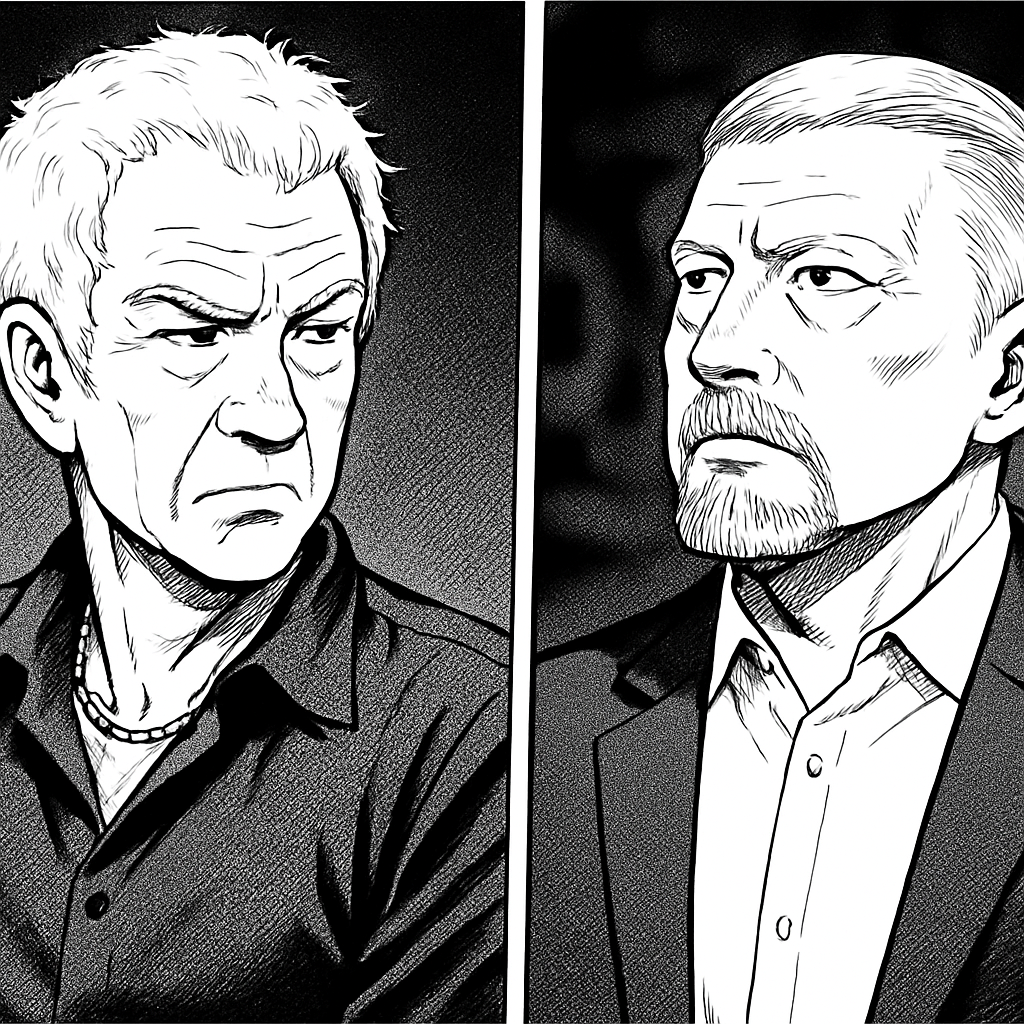
LONDON — The tennis world is no stranger to fiery debates, but when two of the sport's most iconic and outspoken figures, John McEnroe and Boris Becker, clash over the legacy of the game's greatest champion, the discussion reaches a fever pitch. In a recent exchange of opinions, the American legend and the German maestro offered starkly contrasting views on Novak Djokovic's current form and demeanor, with McEnroe branding the Serb as "irritable" while Becker leapt passionately to his former charge's defense.
The Spark of Disagreement
The divergence in opinion emerged in the wake of Djokovic's 2024 season, a period marked by uncharacteristic early tournament exits and visible on-court frustration. Speaking on various platforms, McEnroe, known for his own combustible temperament during his playing days, suggested that Djokovic's legendary focus and aura of invincibility were showing cracks. "He seems more irritable to me," McEnroe observed, pointing to Djokovic's interactions with his support box and his general body language during matches. "I've never seen him like this. It's weird to see Novak, the guy that's been so good, the ultimate mental giant, look vulnerable."
This assessment, however, did not sit well with Boris Becker, who coached Djokovic to six Grand Slam titles between 2014 and 2016. Becker, possessing an intimate understanding of the pressures Djokovic faces, offered a vehement counter-narrative. He framed Djokovic's current challenges not as a decline, but as the natural consequence of an unparalleled career and the immense weight of expectation.
McEnroe's Critique: Signs of Vulnerability
John McEnroe's analysis focused on the tangible shifts in Djokovic's on-court presence. For McEnroe, the signs were not just in the results—a semi-final loss at the Australian Open to Jannik Sinner and a third-round defeat at Indian Wells to lucky loser Luca Nardi—but in the subtler, psychological indicators. He noted that Djokovic, who has built his empire on mental fortitude, appeared to be battling himself as much as his opponents.
Key points in McEnroe's critique included:
- Visible Frustration: Increased gestures of exasperation towards his team, including his coach Goran Ivanišević and physiotherapist Ulises Badio.
- Unforced Errors: A higher frequency of mistakes in crucial moments, which McEnroe attributed to a lapse in concentration or patience.
- The Burden of History: The pressure of maintaining his status as World No. 1 and extending his record 24 Grand Slam titles, a weight McEnroe believes is now manifesting.
"When you've done what he's done, and you're expected to win every single time you walk out there, that can wear on you," McEnroe stated, speaking from personal experience. "He's set a standard so high that even a slight dip is magnified. Right now, he looks like he's feeling that magnification."
Becker's Defense: The Champion's Burden
Boris Becker's rebuttal was swift and comprehensive. He dismissed the notion of Djokovic being "irritable" as a superficial reading of a champion navigating an unprecedented phase of his career. For Becker, Djokovic's reactions are not signs of weakness, but of an undimmed competitive fire and the immense personal standards he holds himself to.
"To judge a champion like Novak by a few matches or a few expressions is to completely misunderstand his journey," Becker argued. He emphasized that Djokovic, at 36, is competing in an era where the physical and technical gap with the younger "Next Gen" has all but closed. The margins for error are infinitesimal, and every loss is now scrutinized as a potential "end of an era" narrative.
The Intangible Pressure of Greatness
Becker highlighted several factors that McEnroe's critique, in his view, overlooked:
- Historical Pursuit: Every match Djokovic plays is part of a larger quest to cement a statistical legacy that may never be matched. This, Becker insists, is a unique and exhausting pressure.
- Target on His Back: For over a decade, every opponent raises their game to a career-high level when facing Djokovic, treating the match as their personal Grand Slam final.
- Physical Management: At 36, preparation and recovery are more demanding, requiring a meticulous schedule that can limit match play and rhythm.
"What people call 'irritability,' I call the pain of a perfectionist," Becker explained. "He is annoyed not with others, but with himself when he falls short of his own impossible standards. That is what has driven him to 24 majors. That fire is still there." Becker pointed to Djokovic's decision to skip the Miami Open, splitting with Ivanišević, and bringing in a new fitness coach as evidence not of crisis, but of a champion proactively adapting.
A Clash of Perspectives and Eras
At its core, the McEnroe-Becker disagreement represents more than just two pundits differing on form. It is a clash of perspectives shaped by their distinct eras and relationships with the player. McEnroe, the brilliant outsider looking in, applies a lens sharpened by his own experiences with volatility and the media's glare. He sees the external symptoms and interprets them through that prism. Becker, the former insider and confidant, looks beyond the immediate reactions to the structural pressures and the champion's relentless internal engine.
Their debate also touches on a central paradox of sporting greatness: the very traits that forge a champion—obsessive perfectionism, relentless self-criticism, and a burning competitive fury—can, in a less dominant phase, be misinterpreted as frustration or decline. McEnroe sees the visible output of those traits; Becker understands the immutable input.
Conclusion: The Unfinished Narrative
The final word on this debate, as both McEnroe and Becker would likely concede, belongs not to them, but to Novak Djokovic himself. History has shown that writing off the Serb is a perilous endeavor. His career is a testament to resurrection, from overcoming elbow surgery to dominating the tour post-pandemic. The "irritability" noted by McEnroe may well be the precursor to a ferocious and focused response, a pattern Djokovic has repeated throughout his career. As the clay-court season dawns, with the French Open and the Olympic Games on the horizon, Djokovic has the ultimate platform to silence critics and validate defenders. Whether this period is a temporary dip or a true turning point remains the most compelling question in tennis, a question that only the champion, in his inimitable way, can answer.