
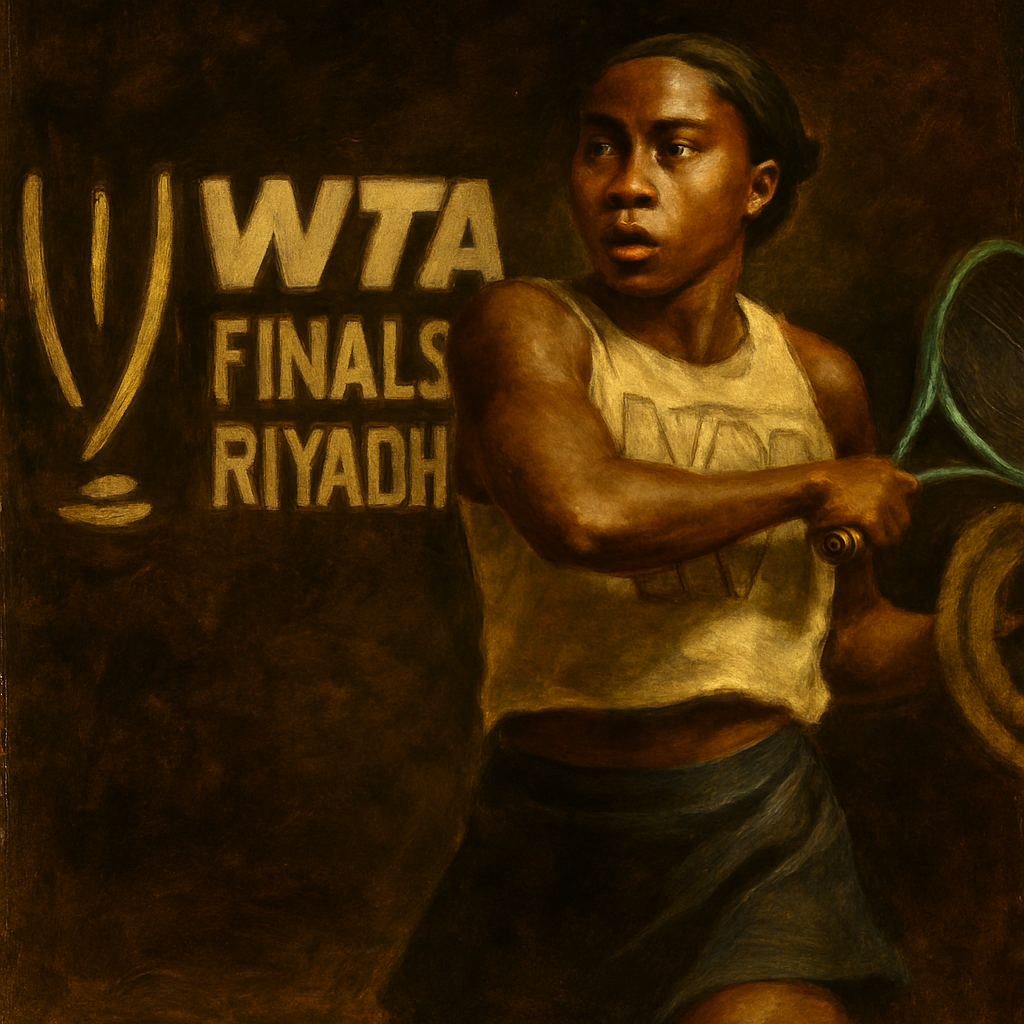
RIYADH, Saudi Arabia — For the second consecutive year, the King Abdullah Sports City Hall in Riyadh is hosting the season-ending WTA Finals, an event that brings together the top eight singles players and doubles teams on the women's tour. The decision to award the prestigious tournament to Saudi Arabia, however, remains one of the most scrutinized and controversial moves in modern tennis.
The Women's Tennis Association (WTA) signed a three-year deal with the Saudi Tennis Federation in 2024, solidifying a partnership that has drawn both sharp criticism and cautious optimism. Proponents argue that the move is a powerful catalyst for social change, while detractors point to the nation's human rights record and its "sportswashing" agenda, questioning the moral cost of bringing a premier women's sporting event to the kingdom.
The debate is not new, but its intensity has not diminished. As the world's best female athletes compete for a record $15.25 million prize purse, the event itself is playing out on a court far larger than the one marked with white lines, situated squarely at the intersection of global sport, geopolitics, and social progress.
The WTA's Rationale: Growth and "Engagement"
WTA Chairman and CEO Steve Simon has consistently defended the decision, framing it as a strategic imperative for the growth of women's tennis. In official statements, Simon has emphasized the organization's goal to "expand the global footprint of the WTA" and "inspire a new generation of women and girls." The financial commitment from Saudi Arabia is undeniable; the prize money for the 2024 finals represents a significant increase, ensuring the players compete for the richest purse in women's tennis history.
Simon has argued that engagement, not isolation, is the path to influence. In a letter to the tennis community last year, he wrote, "We believe that engaging, rather than isolating, can be more effective in delivering meaningful change, and we have a strong record of leading progress for the women’s game, including being the first global sports organization to withdraw from China due to the Peng Shuai situation."
The WTA's stance is that its presence can act as a force for good, leveraging the platform of sport to encourage societal evolution from within. This perspective is supported by some players who have visited the country. Former world number one, Martina Navratilova, a vocal initial critic, has since acknowledged the potential for positive impact, stating, "While the concerns are valid, you have to start somewhere. If it opens doors for women and girls, then it's a conversation worth having."
The Counter-Argument: Sportswashing and Human Rights
Opponents of the move are equally passionate. Human rights organizations, including Amnesty International, have repeatedly warned that high-profile sporting events are used by the Saudi government to "sportswash" its international image—diverting attention from a long-documented history of human rights abuses. These include:
- The criminalization of homosexuality, with punishments that can include flogging, imprisonment, and even the death penalty.
- The systemic discrimination against women, despite recent reforms such as the lifting of the driving ban.
- The 2018 killing of journalist Jamal Khashoggi inside the Saudi consulate in Istanbul.
- A severe crackdown on freedom of expression and the imprisonment of political dissidents and activists.
For many, holding a celebration of women's athletic excellence in a country where women's rights are so severely restricted is a profound contradiction. Human Rights Watch released a statement ahead of the finals, arguing, "The WTA is lending its prestige to a government that silences women's rights activists and jails people for their sexual orientation or gender identity."
Player Reactions: A Spectrum of Opinions
The player corps itself is divided, reflecting the complexity of the issue. World number one Iga Świątek has expressed her reservations, stating she was "not 100% sure if it's a good place for the WTA Finals." She acknowledged the arguments on both sides but emphasized the need for the tour to "stick to its values." Other top players, like Aryna Sabalenka and Ons Jabeur, have been more supportive.
Jabeur, a trailblazing Arab and Muslim player, has been a particularly influential voice. She sees the tournament as a monumental opportunity for the region. "I believe in engagement," Jabeur said. "Having this event here is a dream for me. I want to see more girls in Tunisia and across the Arab world picking up a racket. This is how we change perceptions and build a future."
Tangible Changes and "Window Dressing"
There is evidence of tangible, if incremental, change spurred by the event. The Saudi Tennis Federation has launched a series of grassroots initiatives, including "Tennis for All" programs aimed specifically at encouraging female participation. The stands in Riyadh feature a mixed-gender audience, and female fans are not required to adhere to a strict dress code, a noticeable shift from norms in other public spheres.
However, critics argue that these are superficial changes designed for an international audience. They point out that the reforms do not extend to the broader legal system and that the male guardianship system, which grants men significant authority over female relatives, remains largely intact. The question remains: is this genuine, lasting reform or merely strategic "window dressing" for a global sporting audience?
Conclusion: A Grand Experiment in Progress
The WTA Finals in Saudi Arabia represents a grand, high-stakes experiment. The WTA has bet that its presence will accelerate social progress and unlock a new, lucrative market. Its critics fear it has compromised its core principles for a financial payoff and lent its credibility to a repressive regime.
The ultimate impact may not be known for years. Will the sight of powerful, independent female athletes competing at the highest level truly inspire a grassroots revolution in women's sports and rights within the kingdom? Or will the tournament be remembered as a successful sportswashing operation, a moment where the world's gaze was averted from systemic injustices by the spectacle of elite tennis? For now, the ball is in play, and the world is watching to see where it lands.