
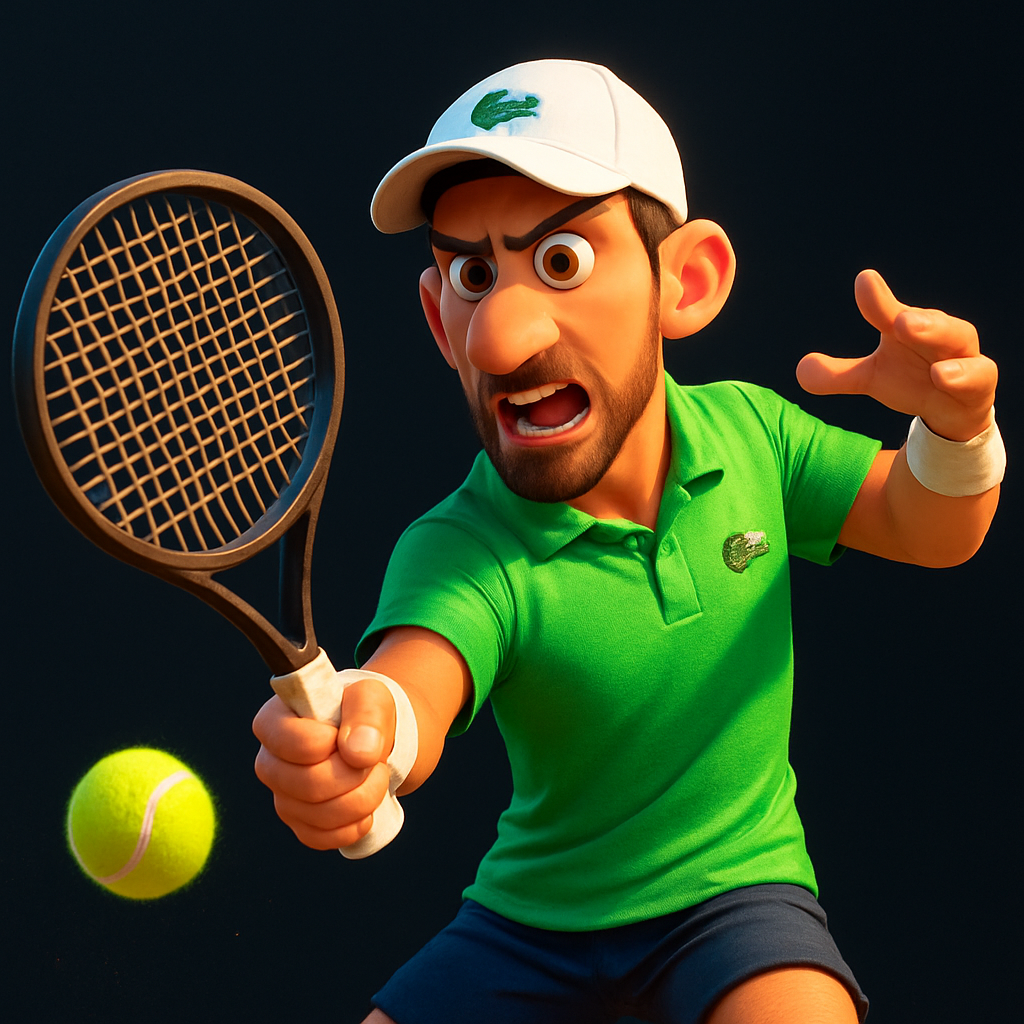
MELBOURNE — The roar that greeted Novak Djokovic as he walked onto Rod Laver Arena for his second-round match against Frances Tiafoe on Thursday night was familiar, but the circumstances were not. For the first time in a long time at the Australian Open, the ten-time champion was not the unquestioned, odds-on favorite. A wrist niggle, a patchy first-round performance, and the ominous form of rivals like Carlos Alcaraz and Jannik Sinner had seeded a rare crop of doubt. What followed was a performance that simultaneously quelled concerns and raised a fascinating new question for the rest of the field.
Djokovic dispatched the talented and charismatic Tiafoe in straight sets, 6-3, 6-3, 7-6(2), in a match that showcased the Serb’s trademark blend of relentless pressure and tactical precision. From the first ball, his movement was fluid, his service games were commanding, and his focus was laser-sharp. The wrist, heavily strapped, showed no visible sign of hindrance as he ripped backhands down the line and defended with elastic ease. It was, by any measure, a statement victory against a dangerous opponent. But there’s a catch.
A Masterclass in Controlled Aggression
The first two sets were a clinic in suffocating tennis. Djokovic targeted Tiafoe’s one-handed backhand with deep, heavy returns, denying the American any rhythm or opportunity to unleash his forehand. Tiafoe, known for his explosive power and flair, was pinned behind the baseline, forced into a series of errors. Djokovic’s own serve was a fortress; he didn’t face a single break point in the entire match. This level of control, particularly under the bright lights of a night session against a top-tier player, was a stark reminder of his baseline supremacy. As tennis analyst Gill Gross noted on social media, "That’s the cleanest Djokovic has looked in months. The depth on his groundstrokes is back to its punishing best."
The third set provided the only moment of tension, as Tiafoe, to his immense credit, lifted his level and began finding his forehand. He saved break points and pushed the set to a tiebreaker, thrilling the crowd with his athleticism and fight. Yet, this is where Djokovic’s Grand Slam experience becomes a tangible force. He elevated his game precisely when needed, racing to a 6-1 lead in the tiebreaker before closing it out 7-2. The message was clear: the door had been opened a crack, and he immediately slammed it shut.
The Lingering Question: The Serve
While the groundstrokes and movement were pristine, a key metric from the match reveals the potential catch. Djokovic’s first-serve speed was noticeably down. Throughout the match, his first serves frequently clocked in the 170-180 km/h (105-112 mph) range, a significant drop from his usual average which sits comfortably above 190 km/h (118 mph). He compensated brilliantly with placement, variety, and a high percentage of first serves in (72%), but the raw power was absent. This strategic throttling back could be interpreted in two ways:
- Smart Management: A conscious decision to protect the wrist, prioritizing accuracy and court positioning over sheer velocity on a night when he didn’t need the extra heat.
- A Lingering Issue: A sign that the wrist injury, while not affecting his groundstrokes, is still preventing him from unleashing his full serve—a weapon he will absolutely need against the very best.
This dichotomy is what makes Djokovic’s current form so intriguing. He demonstrated that even at 90% of his serving capacity, his all-court game is enough to dismantle a player of Tiafoe’s caliber. Post-match, Djokovic addressed the issue with characteristic pragmatism, stating, "The wrist is good. I had time to recover. I’m not going to reveal too much about the tactics, but I’m feeling confident in all aspects of my game."
The Road Gets Tougher From Here
The draw now presents a fascinating progression of tests. Next up is Tomas Martin Etcheverry, a clay-court specialist with immense power but limited variety on hard courts. He should be a straightforward hurdle if Djokovic maintains this level. The real litmus test likely awaits in the quarterfinals, where a clash with Stefanos Tsitsipas or Taylor Fritz looms. Both possess massive serves and the offensive firepower to attack a potentially diminished Djokovic delivery.
To win a record-extending 11th Australian Open title, Djokovic will almost certainly have to navigate a gauntlet featuring, in order:
- A big-serving, top-10 opponent in the quarters (e.g., Tsitsipas).
- The explosive, all-action game of Jannik Sinner, who demolished him at the Davis Cup and ATP Finals, in the semifinals.
- The dynamic brilliance of Carlos Alcaraz or the relentless power of Daniil Medvedev in the final.
Against Sinner and Alcaraz, a first serve sitting at 180 km/h may not be enough to earn easy points or escape tight service games. He will need that extra 10-15% to keep them off balance. The question for his rivals is whether tonight’s serving stats were a one-off, a product of the match-up and a desire for preservation, or a genuine vulnerability they can exploit.
Conclusion: A Warning and a Whisper
Novak Djokovic’s performance against Frances Tiafoe was a powerful message to the tournament. It declared that the king of Melbourne Park is very much still here, that his movement is fine, his backhand is a weapon, and his competitive ferocity burns as brightly as ever. He can win matches, and win them convincingly, playing within himself. That in itself is a terrifying prospect for the rest of the draw.
But the subdued serve whispers a secondary, more nuanced message. It suggests that the path to dethroning him, while still monumentally difficult, may have a newly visible coordinates. The champions he must now face will have watched closely. They saw a Djokovic who looked "good," even "great" in most facets. But they also saw a number on the speed gun that might just represent a chink in the armor. The statement was delivered, but the fine print—the service speed—leaves the narrative of this Australian Open tantalizingly open. The next time he faces real adversity, we will discover if the catch is a minor footnote or the central plot twist of the tournament.