
WIMBLEDON — Every tennis player who has ever faced Rafael Nadal knows the drill. The meticulous, almost ritualistic routine that begins long before the first ball is struck. For many, the psychological battle starts in the tunnel, a claustrophobic space where Nadal’s aura feels most potent. I was no different when I drew the 22-time Grand Slam champion in the second round of Wimbledon. But what happened that day on Court No. 1 wasn't just about forehands and backhands; it was a masterclass in mental warfare, one where I learned that even the most intimidating tactics have a crack you can slip through.
The Tunnel and The Stare
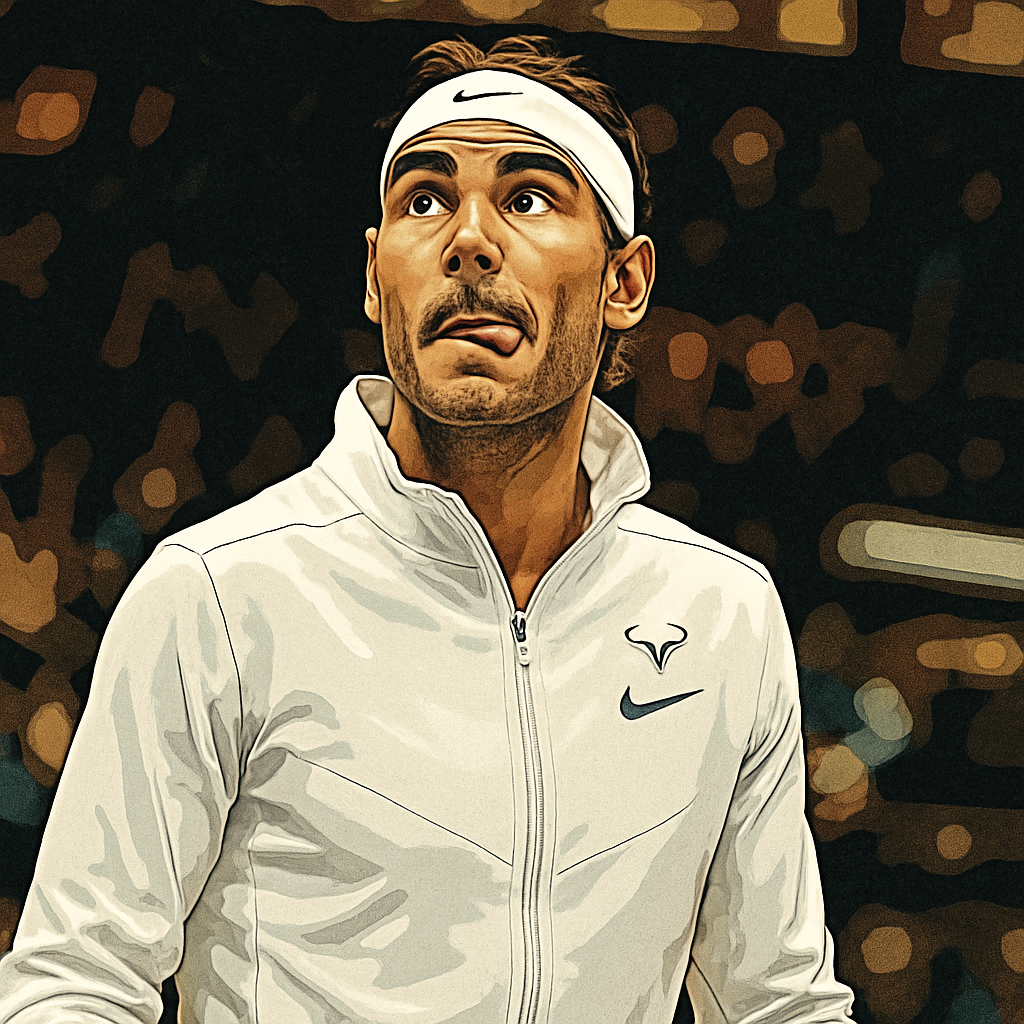
Walking to the court alongside Nadal is an experience that strips away any sense of normalcy. He moves with a focused, predatory energy, his game face already locked in. But his most famous pre-match tactic isn't his warm-up or his sprint to the baseline. It's The Stare. As we stood side-by-side in the dim tunnel, waiting for our cue to walk out, I could feel him looking at me. Not a glance, but a prolonged, intense, unblinking examination. It’s designed to assert dominance, to make you feel like prey being sized up. The great Roger Federer famously refused to engage with it, looking straight ahead. Andy Murray has admitted to being completely unnerved by it in his early encounters.
In that moment, the noise of the crowd faded. All I was aware of was the weight of that gaze. My heart was pounding, and every instinct screamed to look back, to meet the challenge. But I remembered the advice of my coach, who had prepped me for this exact scenario: "Don't play the game. It's his game. You play yours." So I stared at the green rectangle of light at the end of the tunnel, at the grass court beyond, and took slow, deliberate breaths. I acknowledged the tactic, felt its full, off-putting force, and then consciously let it go. The first small victory was mine before we'd even stepped into the sun.
Surviving The Early Onslaught
If you think the stare is intense, wait for the first ten minutes of the match. Nadal’s strategy is to blitz you from the first point. He comes out swinging with furious topspin, aiming to break your spirit and your game before you’ve found your rhythm. The opening games are a hurricane of heavy balls, loud grunts, and relentless physicality. He took the first set 6-3, and it felt like I’d been through a physical examination. His intent was clear: to make me doubt my ability to even compete at his level.
But here’s the thing about blitzes: they are energy-intensive. And on grass, a surface where Nadal, despite his two titles, has always had to work harder to impose his extreme topspin, that early expenditure can be telling. I focused on a few key adjustments:
- Depth, not power: I stopped trying to out-muscle him and focused on getting every return deep at his feet.
- Chipping and charging: I used his own heavy spin to chip low slices, rushing the net to cut off angles.
- First-serve percentage: I absolutely had to get my first serve in to start the point on my terms.
The Turning Point: A Glimmer of Doubt
Midway through the third set, we played a marathon game on my serve. It went to eight deuces. It was a brutal physical exchange, but it was also a pure mental duel. Every time he got a break point, I found a big serve or a brave volley. This was the crucible. This was where Nadal usually breaks opponents, by being an immovable object in these pivotal moments. But I held. And as we changed ends, I saw something I’ll never forget: a slight slump of the shoulders, a towel draped over his head for a beat longer than usual. It was the smallest sign of frustration, but for a competitor like Nadal, it was a neon light. He knew I wasn't going away. The script he had written in the tunnel was tearing at the seams.
Shocking Him, And Myself
I won the third set. The crowd, initially firmly in the corner of the legendary champion, began to rally behind the underdog. The momentum was mine. In the fourth, I played the most fearless tennis of my life. I was anticipating his famous whipped forehand, taking time away, and using the grass to my advantage. When I hit a backhand pass down the line to go up a break, the roar was deafening. I looked across the net. Nadal was pacing behind the baseline, talking animatedly to himself, gesturing with his hands. The aura of invincibility was gone. In its place was a frustrated, battling genius—still immensely dangerous, but now visibly shocked that his well-worn playbook wasn't working.
I served for the match at 5-4. The pressure was unlike anything I’d ever experienced. The first serve deserted me. Double fault. 15-30. Then, from somewhere, I found a huge forehand to get to 30-30. On match point, he unleashed one last furious forehand. I stretched, framed it, and the ball floated high off my strings. Time seemed to stop. It dropped, just inside the baseline. He scrambled but could only shovel it back. I put away the volley. Match. The stadium erupted. I had beaten Rafael Nadal at Wimbledon. The man whose stare had tried to break me hours before was now at the net, offering a firm handshake and a respectful, "Too good. Well played." The sincerity in his eyes in that moment meant more than the victory itself.
The Lasting Lesson
I didn't win the tournament. My run ended in the next round. But that day taught me a lesson that has defined the rest of my career. Nadal’s pre-match tactics—the stare, the early blitz—are legendary for a reason. They work on almost everybody because they target the mind first. But they are not magic. They are a strategy. And like any strategy, they can be understood, weathered, and ultimately, overcome.
The key isn't to avoid feeling the pressure or the intimidation. That's impossible. The key is to accept it as part of the Rafa Nadal experience, to let the wave of his intensity wash over you without sweeping you away, and to trust that your own game, executed with belief, is enough. He shocked me with his intensity in the tunnel. But by refusing to play his mental game and sticking relentlessly to my own tennis, I managed to shock him right back on the scoreboard. It’s a reminder that in tennis, the greatest battles are often won not by the player with the best weapons, but by the one who best manages the chaos between their ears.