
MELBOURNE — The roar of a tennis crowd is a familiar soundtrack at Melbourne Park, a rhythmic pulse of applause and gasps that echoes across the complex. But on a scorching Tuesday afternoon during the 2024 Australian Open, a different, more unsettling sound took over: the collective sigh of relief from thousands of fans as the extreme heat policy was finally invoked, suspending play on all outer courts for nearly five hours. And in that unexpected pause, something remarkable happened. People didn't miss the tennis.
The Relentless Grip of the Melbourne Heat
The forecast had been ominous for days. A high-pressure system was settling over southeastern Australia, promising a brutal run of temperatures well above 30°C (86°F). On Day 4 of the tournament, the mercury didn't just climb; it soared. By 1:00 PM, the on-site temperature gauge at Melbourne Park registered a staggering 38°C (100.4°F) in direct sunlight, with the official Bureau of Meteorology reading hitting 33°C (91.4°F). The Wet Bulb Globe Temperature (WBGT)—a critical measure used by tournament officials that accounts for humidity, wind, and solar radiation—surged past the threshold of 32.5, triggering the Extreme Heat Policy (EHP).
The announcement crackled across the PA system and flashed on the big screens: play was suspended on Courts 3 through 24. The reaction from the fans streaming between courts was not one of frustration, but of profound relief. As one spectator, dabbing his forehead with a soaked towel, put it to me, "It's not just hot. It's dangerous out there. They made the right call."
An Unplanned Festival in the Shade
With the matches halted, the usual frantic migration from court to court ceased. Instead, a mass migration began toward any patch of shade. The grassy knolls under trees transformed into impromptu picnic grounds. The shaded concourses, normally thoroughfares, became communal lounges. And this is where the real story of the day unfolded. Stripped of the central spectacle, the Australian Open revealed its other, often overlooked, identity: as a massive, vibrant social gathering.
The tournament's famed food and drink offerings, from gourmet doughnuts to Aperol Spritzes, saw queues longer than those for show courts. The shaded seating near the practice courts became prime real estate, as fans watched stars like Novak Djokovic and Iga Świątek go through their paces in the protected indoor facilities. The atmosphere shifted from focused observation to relaxed congregation.
How Fans Filled the Void
Without a point to be played outside, creativity flourished. I observed a fascinating array of activities that took the place of baseline rallies:
- Strategic Hydration Sessions: Groups debated the merits of frozen grapes versus electrolyte ice blocks.
- Hat Fashion Critique: A lively discussion on the most effective (and most ridiculous) sun hats in attendance.
- Player Impersonations: Kids in the fan zone perfected their Djokovic and Sabalenka grunts.
- Cloud Watching: A genuinely popular pastime, with everyone hoping to spot a rain-bearing one.
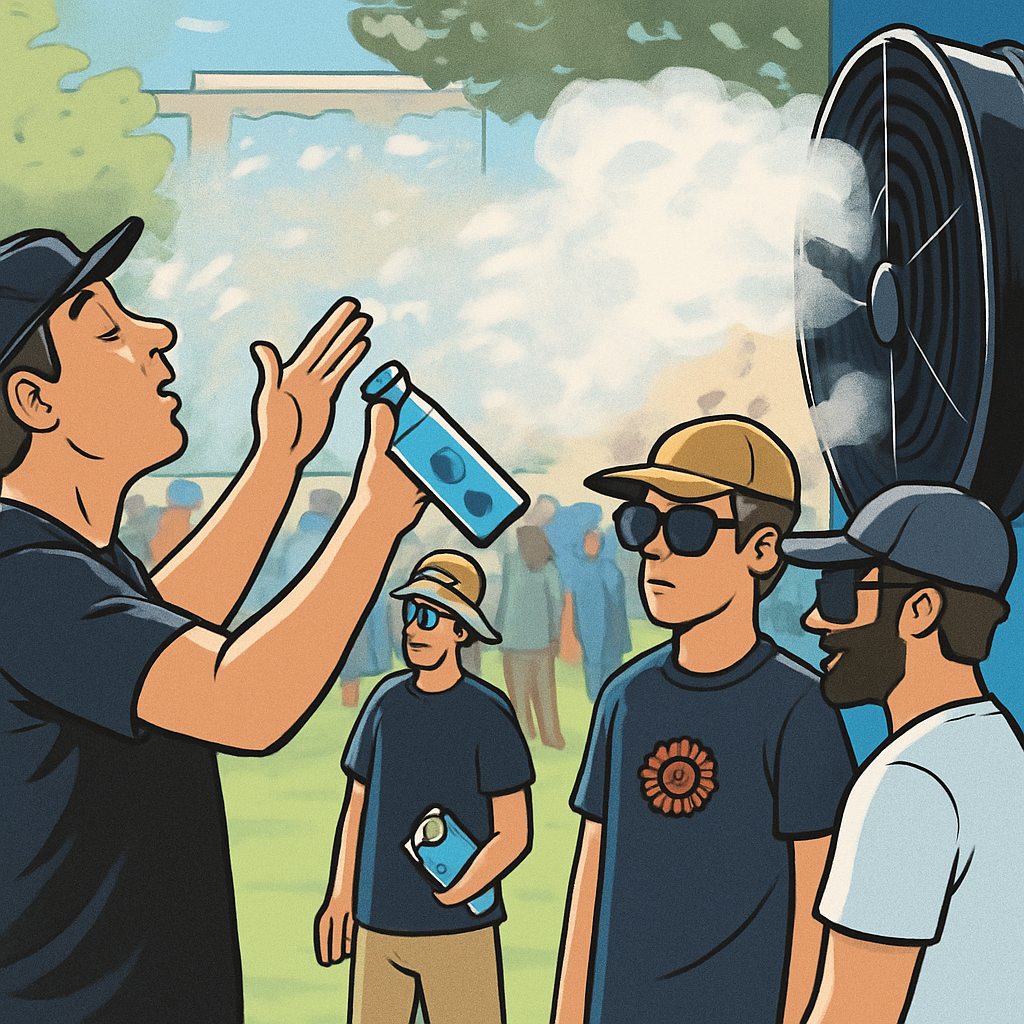
The tournament organizers, to their credit, leaned into the pause. MCs on the Grand Slam Oval hosted extended Q&A sessions and trivia contests. The big screens switched from live scores to classic match highlights, prompting collective nostalgia. A vendor selling portable misting fans became the most popular person in the park. As one family from Brisbane told me while sharing a giant cup of slushie, "We came for the tennis, but we're staying for the survival experience. It's a story we'll tell for years!"
The Players' Perspective: A Necessary Respite
While fans adapted, the suspension was a critical intervention for the athletes. The conditions on court before the halt were described as "brutal" and "like an oven." Players not scheduled on the three main stadium courts (Rod Laver Arena, Margaret Court Arena, and John Cain Arena), which have retractable roofs, were facing a significant and unfair physical risk. The policy, while disruptive to the schedule, is designed precisely for player welfare, preventing heat-related illness.
Social media feeds from players reflected the sentiment. Many posted thanks to the tournament for making the tough call, while others shared images of their extended downtime—icing in the locker room, playing cards, or catching up on messages. The break, though long, was universally acknowledged as necessary. It leveled the playing field, ensuring that matches resumed in the early evening under dramatically more manageable conditions, allowing skill, not just stamina, to determine the outcomes.
A Revealing Pause in the Action
As the shadows lengthened and the WBGT reading finally dipped below the threshold just after 5:00 PM, the announcement of resumed play was met with a cheerful, but not frantic, response. The five-hour intermission had proven something profound about the modern Grand Slam experience. While elite athletic competition is the draw, the event itself is a powerful social catalyst. It is a shared pilgrimage, a test of endurance for fans as much as players, and a community built around a common passion.
The day concluded with thrilling night matches under the lights, the extreme heat a fading memory. But for those of us who lived through the great suspension of 2024, the lasting memory won't be a specific backhand winner. It will be the image of thousands of strangers, united by circumstance, finding joy and connection not in the sport they came to see, but in the shared experience of waiting it out together. The tennis was secondary. The community was everything. As I left the park, I overheard a perfect summary from a group of exhausted, smiling fans: "Well, that was different. And honestly, kind of brilliant."