
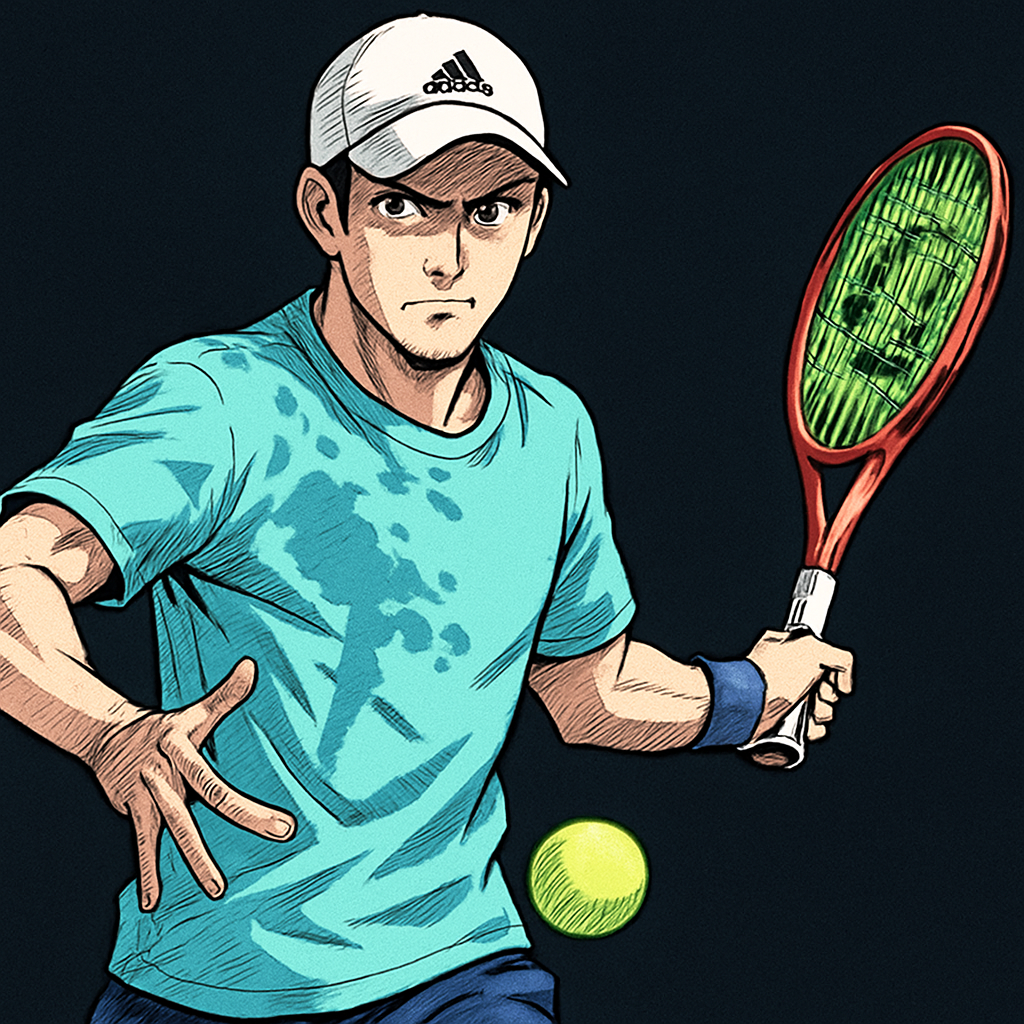
The world of professional tennis is often a bubble of privilege and predictability, a global circuit of hotels, courts, and airports. For British doubles specialist Henry Patten, ranked inside the world's top 40, that bubble was violently popped in the skies over Dubai. His story is not one of match points and rankings, but of explosions, fighter jets, and a desperate scramble to escape a region spiraling into conflict.
A Routine Trip Turns to Turmoil
Patten had arrived in Dubai for the ATP 500 tournament, a regular stop on the tour. The initial days were focused on preparation. Yet, the atmosphere shifted palpably following the unprecedented Iranian drone and missile attack on Israel on the night of April 13-14, 2024. The direct assault, launched in retaliation for a suspected Israeli strike on an Iranian diplomatic compound in Damascus, marked a dangerous escalation, raising fears of a full-scale regional war. While most projectiles were intercepted, the threat was now airborne and undeniable.
"I Saw a Drone Hit the US Consulate"
The abstract news reports became terrifyingly concrete for Patten and others in Dubai. "I saw a drone hit the US consulate," Patten recounted to the BBC. The incident he likely witnessed was part of the coordinated barrage. While the UAE government later stated there was "no significant damage" on its territory, the psychological impact was profound. The sight of interceptions lighting up the night sky and the realization that conflict had literally landed on their doorstep created an atmosphere of acute anxiety.
The tennis tournament itself became a secondary concern. Practice schedules were disrupted, and the focus of players and staff turned to news alerts and contingency plans. Patten described a scene of growing unease: "You could hear explosions... fighter jets were going over the hotel constantly." The sound of active defense systems and military aircraft became the unsettling soundtrack to their stay.
The Decision to Flee
With the situation appearing increasingly volatile, Patten and his team made the decisive choice to abandon the tournament and attempt to leave the UAE. Their goal was to reach Doha, Qatar, from where they could secure a flight back to Europe. This decision launched them into a logistical nightmare, highlighting the chaos that ensues when commercial travel intersects with geopolitical crisis.
Their initial plan was to drive from Dubai to Qatar, a journey that requires crossing the border of Saudi Arabia. However, upon reaching the Saudi frontier, they were met with a blunt refusal. "We got to the Saudi border and they turned us away because we didn't have the correct visas," Patten explained. Stranded at the border, with tensions high and options dwindling, the reality of their predicament set in.
Navigating a Maze of Closed Doors
The failed border crossing forced a frantic reassessment. Returning to Dubai felt like a step backwards into danger. They explored every conceivable route out, encountering a series of dead ends common to many travelers during the crisis:
- Commercial flights from Dubai and Abu Dhabi were either fully booked for days or subject to sudden cancellations.
- Overland routes through other Gulf Cooperation Council (GCC) countries were complicated by visa restrictions and heightened security.
- The option of flying to a nearby neutral country like Oman was explored, but connections from there to Europe were scarce.
- A constant stream of alerts about further potential attacks made staying put an increasingly untenable risk.
A Daring Drive and a Lifeline Flight
With persistence and local assistance, Patten's group managed to secure a rare and expensive commodity: seats on a flight from Dubai to Doha. The short hop across the Gulf felt like a major victory. From the relative calm of Doha's Hamad International Airport, they finally boarded a flight to Europe. The relief upon landing was immense, but the experience left a deep mark.
Patten's account sheds light on the precarious position of international athletes and civilians caught in sudden geopolitical storms. Their mobility, usually taken for granted, was instantly revoked. "It was pretty scary," he stated simply, underscoring the universal fear that transcended his professional status.
The Aftermath and a Wider Perspective
The Dubai tournament proceeded, albeit under a cloud, with France's Ugo Humbert winning the title. The ATP released a statement emphasizing player safety but confirming the event's continuation. For Patten, the return to the tennis court in Europe was a return to normality, but with a starkly altered perspective.
His story is a microcosm of the disruptions caused by the Middle East conflict, affecting lives far beyond the immediate war zones. It highlights how modern global events can instantly transform a center of commerce and leisure like Dubai into a potential front line, trapping visitors in a web of security and bureaucracy. Patten's escape was ultimately successful, but it serves as a sobering reminder of the fragility of peace and the complex realities faced by those whose careers are built on global travel when regions descend into crisis.