
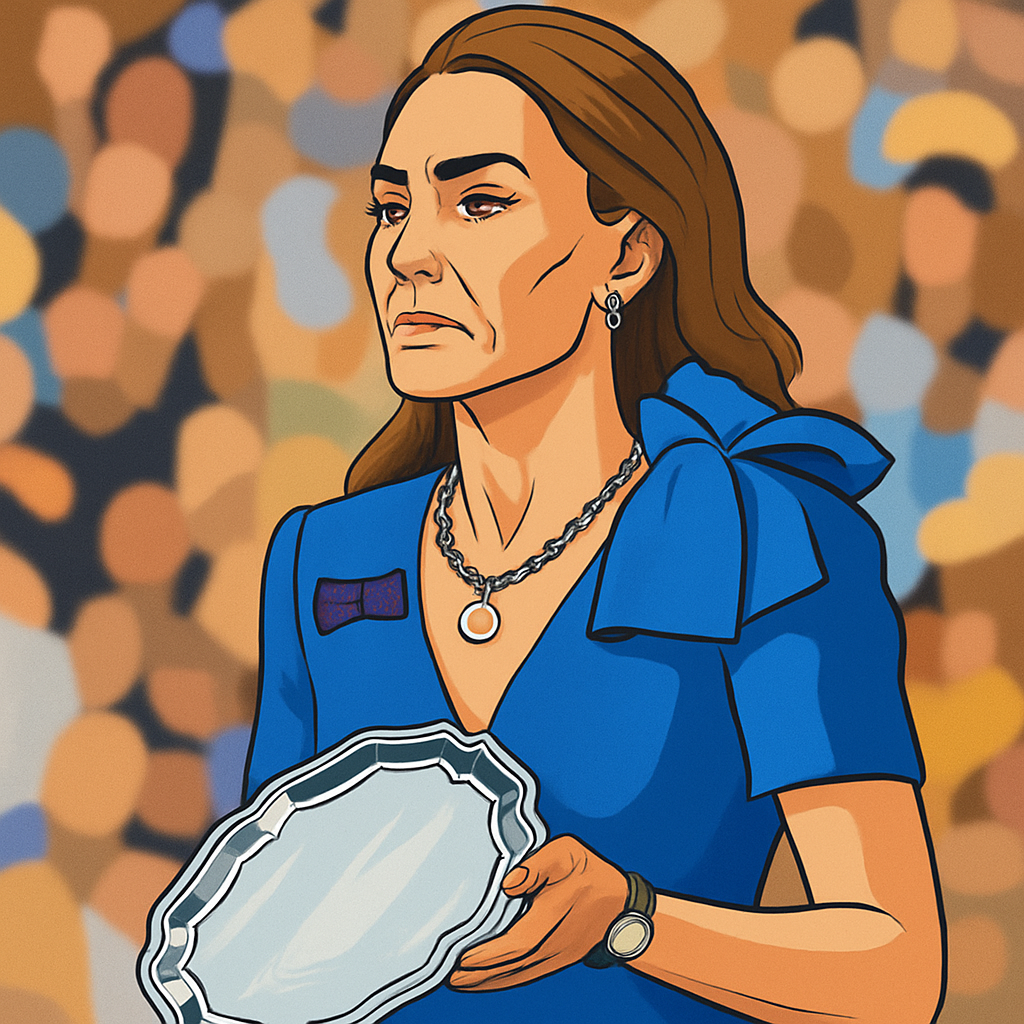
LONDON — The hushed reverence of Centre Court at Wimbledon is a sacred space in the sporting world. It’s a cathedral of tennis, where the only sounds are the thwack of felt on gut, the squeak of sneakers on pristine grass, and the collective, polite gasp of the crowd. So, when Catherine, Princess of Wales, arrived in the Royal Box last summer in her role as Patron of the All England Club, the atmosphere shifted into something even more rarefied. I was there, a few rows back, and as she took her seat, my immediate, unbidden thought was one that I know may offend some people: She looks utterly exhausted.
This wasn't a critique of her style, which was, as ever, impeccable in a chic green blazer dress. It was a human observation that cut through the royal veneer. In the months leading up to that July day, the Princess had been largely out of the public eye, recovering from planned abdominal surgery and, as we would later learn, undergoing preventative chemotherapy for cancer. The official line was a desire for privacy, but the vacuum was filled with a global frenzy of speculation. Seeing her in person, the toll of that private battle was subtly, yet unmistakably, visible in the gentle firmness of her smile and a certain fragility in her bearing.
The Weight of a Public Smile
For years, Kate Middleton has been the picture of polished composure. At Wimbledon, she is a fixture of summer, presenting trophies with effortless grace and sharing genuine, joyful moments with champions. Her role is one of celebration and support. But in 2024, her appearance felt profoundly different. It was a carefully managed return, a statement in itself. As she clapped for the players, my mind raced with the incongruity of her position. Here was a woman carrying an unimaginable private burden, yet her public duty was to project normalcy and joy for others. The cognitive dissonance was staggering.
The thought that struck me—the one about her visible fatigue—felt immediately transgressive. We are not supposed to acknowledge the human frailty of our public figures, especially not royalty. We are to admire the outfit, note the elegance, and move on. To peer behind the curtain of protocol and see the person felt like a violation of an unspoken rule. Yet, it was also the most authentic reaction I could have had. It cut through the pageantry and connected on a basic human level: that is someone going through something immensely difficult.
A Masterclass in Poise Under Pressure
What followed that initial observation was a deepening respect. Her exhaustion wasn't a sign of weakness; it was the backdrop against which her strength was displayed in high definition. Every wave, every smile directed at the players, every composed conversation in the Royal Box was an act of immense will. She wasn't just attending a tennis tournament; she was demonstrating a core tenet of the monarchy she serves: the "must go on" ethos, often called "The Firm" for a reason.
Her interactions, though limited, were pointed. Presenting the trophy to a visibly emotional Carlos Alcaraz, her warmth seemed to genuinely put him at ease. In that moment, she wasn't a distant figurehead but a gracious host sharing in his triumph. This ability to connect, even while undoubtedly conserving her own energy, highlighted what has always made her an asset to the institution: an empathetic authenticity that resonates. The day was less about a royal appearance and more about a quiet, powerful demonstration of resilience.
Why This Moment Felt Different
Previous Wimbledon appearances by the Princess of Wales were studies in summer fashion and sporting enthusiasm. This one was layered with new meaning. The context of her health battle, which she had bravely disclosed in a raw video message in March, changed everything. The crowd's applause for her felt warmer, more protective. The global media coverage focused not just on her dress but on the significance of her step back into public life. Key elements that defined the day included:
- The Symbolism: Her return at a beloved, traditional British event signaled a tentative step towards normalcy, both for her and for a public concerned about her wellbeing.
- The Controlled Environment: Wimbledon is a predictably formal setting. The protocol is clear, the seating arranged, limiting unexpected demands. It was a safe, structured choice for a comeback.
- The Shift in Narrative: The conversation moved from wild speculation about her absence to one of support and admiration for her courage in attending.
The most poignant quote from the day didn't come from Kate herself, but from a BBC commentator who, perhaps sensing the same thing I did, noted softly, "It's just so wonderful to see her here, looking so well, and being part of this occasion again." The phrase "looking so well" was loaded. It was a public blessing, a collective sigh of relief, and an acknowledgment of the struggle without having to name its details.
The Offense in Seeing the Truth
So why might my initial thought be offensive? Because it challenges the curated image. The monarchy, in many ways, relies on a degree of mystique and untouchable grace. To observe that a Princess looks tired is to implicitly acknowledge that she is susceptible to the same mortal coils as the rest of us. It pulls back the velvet rope. For staunch traditionalists, it might seem disrespectful, a failure to maintain the proper deferential distance. For those who have followed Kate's journey from commoner to future Queen, it might feel like an intrusion on a private struggle she has tried so hard to shield.
But I would argue the opposite. That moment of human recognition is what makes figures like Kate Middleton relevant in a modern world. Her later, more active return to public duties, including her moving speech at the Trooping the Colour ceremony where she acknowledged she is "not out of the woods yet," has only reinforced this. The perfection is no longer the point; the perseverance is.
A Lasting Impression
Months later, I don't remember the specific points scored in the final she watched. I remember the profound sense of witnessing a person mastering a moment far bigger than a tennis match. My "offensive" thought was the gateway to a deeper understanding. Kate Middleton at Wimbledon in 2024 wasn't just fulfilling a duty; she was redefining what strength in the public eye can look like. It isn't about appearing invincible, but about showing up with vulnerability and resolve in equal measure.
Her appearance served as a powerful reminder that behind every title, every tiara, and every impeccably tailored outfit, there is a human story. Sometimes, that story is written in the slight shadows under the eyes and the extra breath taken before stepping into the spotlight. And sometimes, the most respectful thing we can do is not to look away from that truth, but to see it, acknowledge its weight, and admire the incredible fortitude it takes to carry it with such grace.