
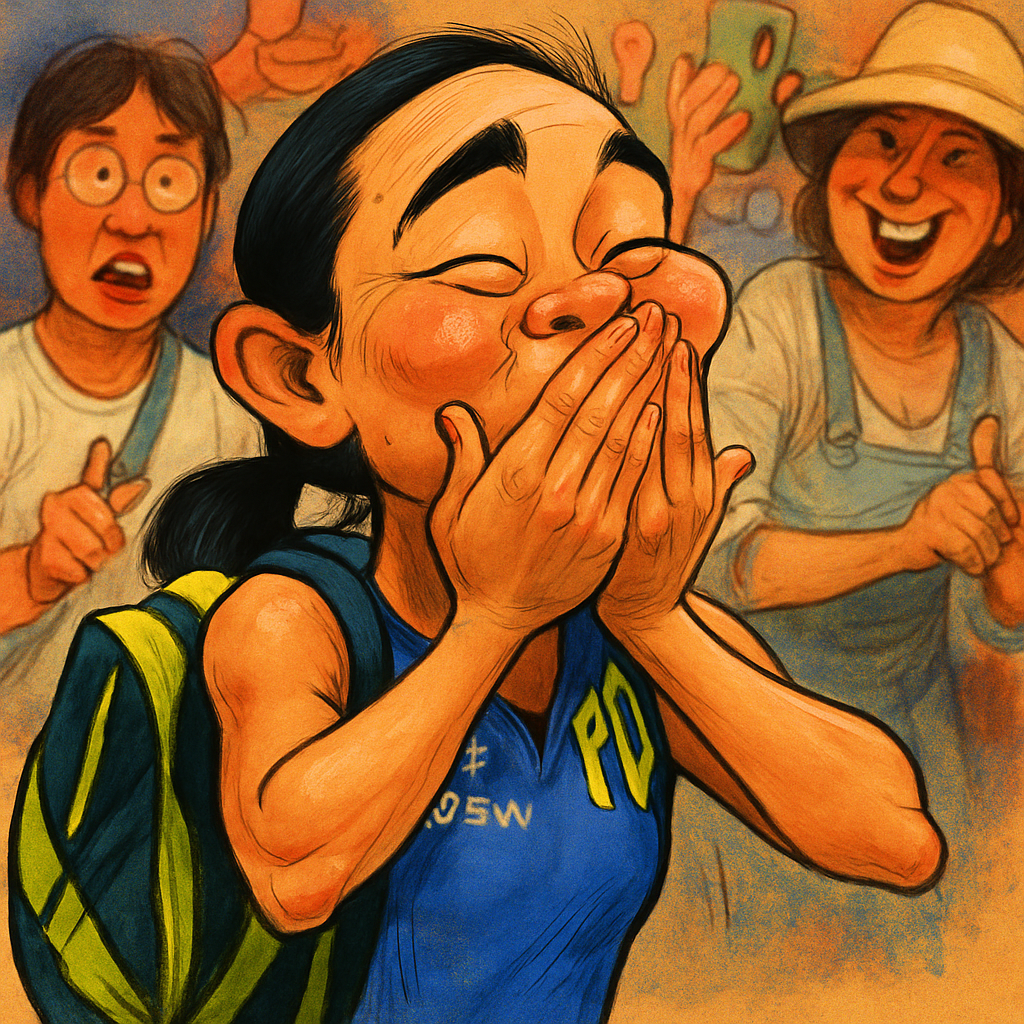
MELBOURNE — In the sprawling, sun-drenched expanse of Melbourne Park, where the world’s top tennis talents command center stage, a curious phenomenon unfolded during the 2024 Australian Open first round. The biggest draw wasn’t a defending champion, a resurgent legend, or a local hero. It was an 18-year-old Filipina qualifier, ranked 185th in the world, playing in only her second Grand Slam main draw singles match. Alexandra “Alex” Eala may have lost her match to French veteran Alizé Cornet, but her presence overwhelmed the tournament’s opening days, revealing the seismic power of a passionate, digitally-connected fanbase in modern sports.
Eala’s 6-4, 6-2 defeat on Court 3 was, on paper, a straightforward result. Yet, the scene surrounding it was anything but. The modest outside court was swarmed hours before her scheduled start. Filipino fans, draped in national flags and wearing Barong-inspired tennis attire, created a festival atmosphere. The queue stretched for hundreds of meters, with many unable to gain entry to the already-packed stands. Online, the match became a trending topic across the Philippines and Southeast Asia, with live streams crashing under the weight of viewership. Eala’s solitary match became the tournament's most talked-about first-round event, a testament to a star power that transcends rankings and results.
The Making of a National Icon
Alexandra Eala’s path to this moment of overwhelming popularity is a decade in the making. A prodigy who moved to the Rafael Nadal Academy in Mallorca at just 14, Eala has long been a beacon for Philippine tennis. However, her fame skyrocketed through a combination of milestone victories and masterful digital engagement. Her 2022 US Open girls’ singles title—a first for the Philippines—was a nation-defining moment. She followed it with her first WTA title in Yecla, Spain, in 2023. Each achievement was meticulously chronicled and shared with a growing online audience that numbers in the millions across Instagram and TikTok.
Eala represents more than athletic success; she embodies a relatable, aspirational figure for a young, global Filipino diaspora. Her social media is a blend of intense training clips, playful moments with friends, and heartfelt messages in Tagalog and English. This authentic connection has fostered a sense of collective ownership and pride. As sports journalist Carlo Pamintuan noted, "She isn't just a tennis player to Filipinos; she's *our* tennis player, a symbol of what's possible on the world stage."
A Logistical Challenge for Tournament Organizers
The sheer scale of support for Eala presented an unprecedented logistical scenario for Australian Open organizers. Traditionally, player popularity and court assignments are calibrated by seeding, ranking, and local interest. Eala, as a qualifier, defied all conventional metrics. Tournament director Craig Tiley acknowledged the unique situation, stating, "We are always responsive to fan interest, and the demand for Alexandra's match was extraordinary and immediate. It required a rapid reassessment of our planning."
The challenges were multifaceted:
- Court Capacity: Court 3, with a capacity of approximately 3,000, was utterly insufficient. Organizers implemented one-in, one-out policies and set up overflow viewing areas with large screens, a measure typically reserved for matches on the major show courts.
- Broadcast Demand: Broadcast partners in the Philippines and across Asia requested last-minute upgrades to their coverage, pushing for more camera angles and dedicated commentary.
- Security and Crowd Control: Additional security personnel were deployed to manage the enthusiastic queues and ensure safety, a scene more reminiscent of a pop concert than a first-round tennis match.
This scenario forced a rethink of how tournaments identify "drawcard" players in an era where social media influence can rival competitive pedigree.
The Double-Edged Sword of Phenomenal Fame
For Eala herself, the tidal wave of support is both a powerful motivator and a immense pressure. In her post-match press conference, she displayed remarkable poise, acknowledging the weight of expectation. "Seeing all the support is incredible, it gives me so much energy," she said. "But of course, I also want to win for them. I’m learning to manage that and use it as fuel."
The pressure was palpable during the match against the experienced Cornet. While Eala started brightly, the occasion and the deafening support for every point she won seemed to heighten the tension. Unforced errors crept in as she pressed for winning shots. Cornet, a wily competitor with over 60 Grand Slam main draw appearances, adeptly quieted the crowd by controlling rallies and exploiting the moment's intensity. It was a harsh lesson in the difference between match readiness and the unique strain of carrying a nation's hopes.
A New Blueprint for Player Marketability
The "Eala Effect" at Melbourne Park is not an isolated incident but part of a broader shift in tennis and sports marketing. It highlights a new blueprint for player marketability where:
- Global Fan Communities Trump Traditional Markets: A player can be the biggest star in a tournament without coming from a traditional tennis powerhouse nation like the USA, Australia, or a European country.
- Digital Narrative is Key: A compelling, consistently shared personal journey can build a fanbase that is deeply invested before the player breaks into the elite ranks.
- Tournaments Must Be Agile: Grand Slams and WTA/ATP events need sophisticated metrics beyond rankings to predict fan engagement and prepare logistics for players with massive digital followings.
Brands are taking note. Eala’s sponsorship portfolio, which includes major names like Nike and Babolat, is expanding precisely because of her ability to mobilize a dedicated, demographic-specific audience, not just her on-court results. She represents a direct channel to a massive, engaged community.
Looking Ahead: Beyond the First-Round Hype
The critical question now is how Eala and the tennis ecosystem channel this explosive popularity into sustainable growth. For the WTA and tournament directors, the lesson is to proactively embrace these cultural icons, offering them greater visibility and support structures. For Eala, the focus remains on development. The fanbase has been established; now the mission is to climb the rankings with the same discipline that built her online community. Her immediate plan is a return to the lower-tier ITF circuit to accumulate points and match toughness away from the overwhelming spotlight.
The Australian Open experience, while ending in a loss, provided an invaluable benchmark. "This was a great experience for me, despite the result," Eala reflected. "I now know what it feels like, and next time I will be more ready." Her coach, former Spanish player Daniel Gómez, emphasized the long game: "The noise is outside the court. Our job is to keep building inside the court. The tennis must catch up to the fame, and it will."
Conclusion: A Paradigm Shift in Tennis Stardom
Alexandra Eala’s Australian Open was a landmark moment that signified a paradigm shift. A first-round exit in the record books will forever be juxtaposed with a first-round triumph in the cultural memory of the sport. She demonstrated that in today’s landscape, popularity is a potent force that can overwhelm traditional tennis hierarchies, challenge tournament logistics, and redefine what it means to be a "drawcard." The challenge for Eala is to harness this incredible energy into a lasting career. For tennis, the challenge is to adapt to a new world where a qualifier can be the main event, proving that the game’s future stars are being forged as much on social media feeds as they are on the practice courts.