
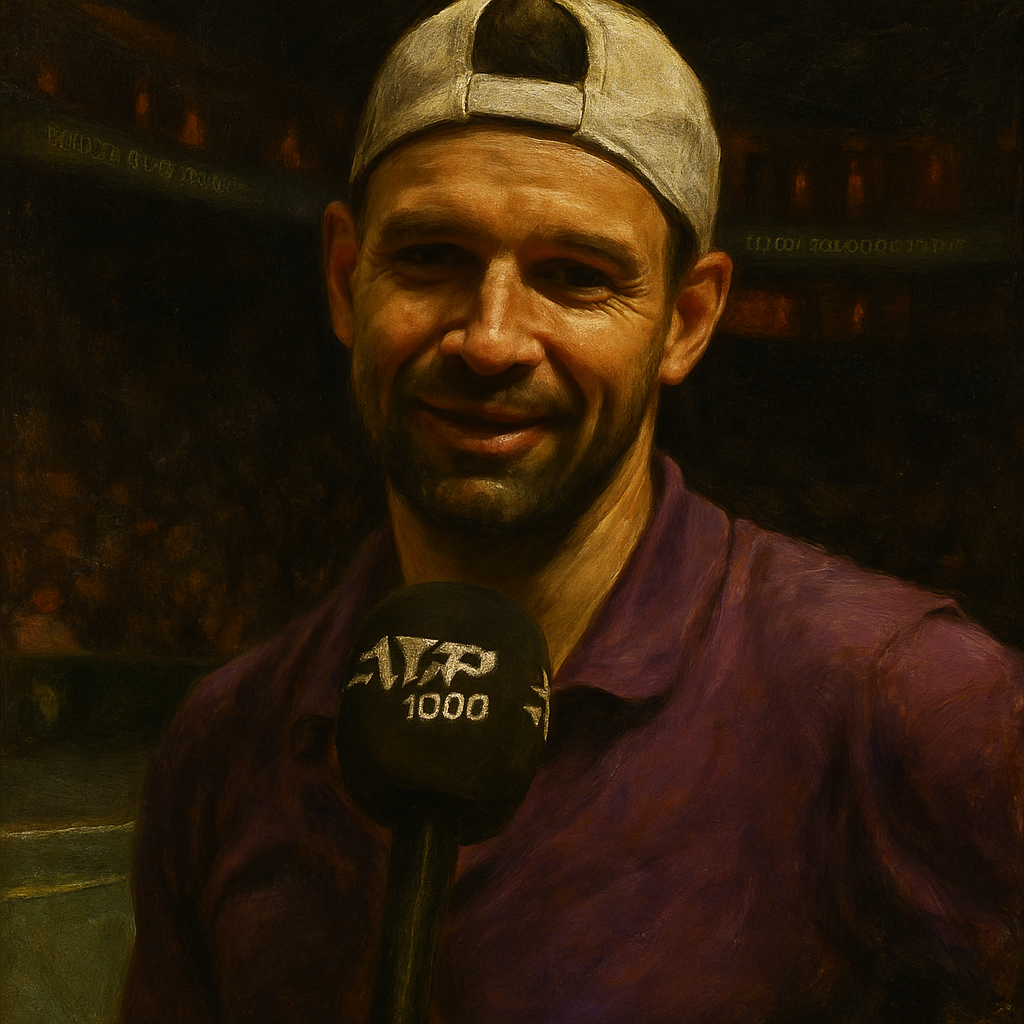
PARIS — A beaming Grigor Dimitrov sealed a commanding 6-1, 6-2 victory over Lorenzo Musetti at the Rolex Paris Masters on Monday, marking a triumphant and emotionally resonant return to competition 112 days after a heartbreaking withdrawal from Wimbledon that left him in tears on Centre Court.
The Bulgarian star, now 32, looked sharp and fluid in his first match back, needing just 68 minutes to dispatch the talented Italian. This dominant performance stood in stark contrast to the scene in July, when a severe knee injury forced him to retire while trailing 5-3 in the first set against former world No. 1 Daniil Medvedev at the All England Club.
After that match, a visibly emotional Dimitrov told the crowd, "I think I've been struggling with my knee for a little bit. I actually had a hard time believing I was going to step on the court today. I tried, and I did my best. I'm just very grateful to be on Centre Court. I'm sorry."
A Grueling Road to Recovery
The period following Wimbledon was one of intense physical and mental challenge for Dimitrov. The injury, diagnosed as a significant knee ligament strain, required a complete shutdown from on-court activities. His rehabilitation process was methodical and demanding, focused not just on healing the physical ailment but also on rebuilding the confidence necessary for elite competition.
In a post-match press conference in Paris, Dimitrov reflected on the difficult journey, stating, "It's never easy coming back from an injury, especially one that forces you to stop during a Grand Slam. The last few months have been a test of patience and resilience."
His training block involved a multi-faceted approach designed to ensure a strong return. Key components of his recovery and preparation included:
- Targeted Physiotherapy: Daily sessions to reduce inflammation and restore full range of motion in the knee.
- Strength and Conditioning: A gradual strengthening program for the muscles surrounding the joint to provide stability and prevent re-injury.
- Gradual On-Court Reintegration: Starting with light hitting and slowly progressing to full-intensity practice matches.
- Mental Conditioning: Working with a sports psychologist to manage the fear of re-injury and the frustration of being sidelined.
A Statement Victory in Bercy
Facing a dangerous opponent in Musetti, who is known for his crafty shot-making and one-handed backhand, Dimitrov left no doubt about his readiness. He broke serve early and often, dictating play with his aggressive forehand and using his sliced backhand effectively to disrupt Musetti's rhythm. His movement around the court appeared unrestricted, a promising sign for the challenges ahead.
The statistics from the match underscored his dominance. Dimitrov won an impressive 91% of points behind his first serve and never faced a break point. He converted four of his eight break opportunities, showcasing a killer instinct that has sometimes eluded him in the past.
"I was just so happy to be back," Dimitrov said with a wide smile. "I wasn't thinking about the knee, I wasn't thinking about the past. I was just focused on my game, my tactics, and enjoying the moment. To play like that in my first match back is more than I could have asked for."
A Resurgent Season Before the Setback
The injury at Wimbledon was particularly cruel given that 2024 had been shaping up as one of Dimitrov's best seasons in years. After a period of inconsistency, the former world No. 3 had rediscovered his top form, reminding the tennis world of the talent that once earned him the nickname "Baby Fed." His resurgence was built on several key performances:
- Marseille Final: A strong run to the championship match in February.
- Miami Open Semifinal: A thrilling deep run at a Masters 1000 event, defeating top players.
- Consistent Top 20 Ranking: He had firmly re-established himself within the world's elite, entering Wimbledon as the 10th seed.
This body of work had positioned him as a dark horse contender at the All England Club and a potential qualifier for the year-end ATP Finals. The knee injury threatened to derail all that momentum, making his successful return in Paris a critical step in reclaiming his place in the sport's upper echelon.
Looking Ahead: The Final Push for 2024
With the victory, Dimitrov advances to the second round in Paris where he will face another stern test against 12th-seeded American Frances Tiafoe. A deep run at the final Masters 1000 event of the season would provide a massive boost to his ranking and confidence as the tour heads toward its conclusion.
More importantly, the win sends a clear message to the rest of the tour: Grigor Dimitrov is back, healthy, and ready to compete. The emotional scars from Wimbledon may not be fully healed, but his performance against Musetti proved that his physical readiness and competitive fire are very much intact.
Reflecting on his emotional exit and his joyful return, Dimitrov offered a perspective forged through experience. "In tennis, and in life, you have to take the good with the bad. That moment at Wimbledon was painful, but it's part of my story. Today is a new chapter, and I'm just excited to be writing it."
For a player whose career has been a rollercoaster of sublime highs and frustrating lows, this triumphant comeback in Paris serves as a powerful reminder of his enduring talent and resilience. The tears at Wimbledon have been replaced by smiles in Bercy, and for Grigor Dimitrov, that is a victory in itself.