
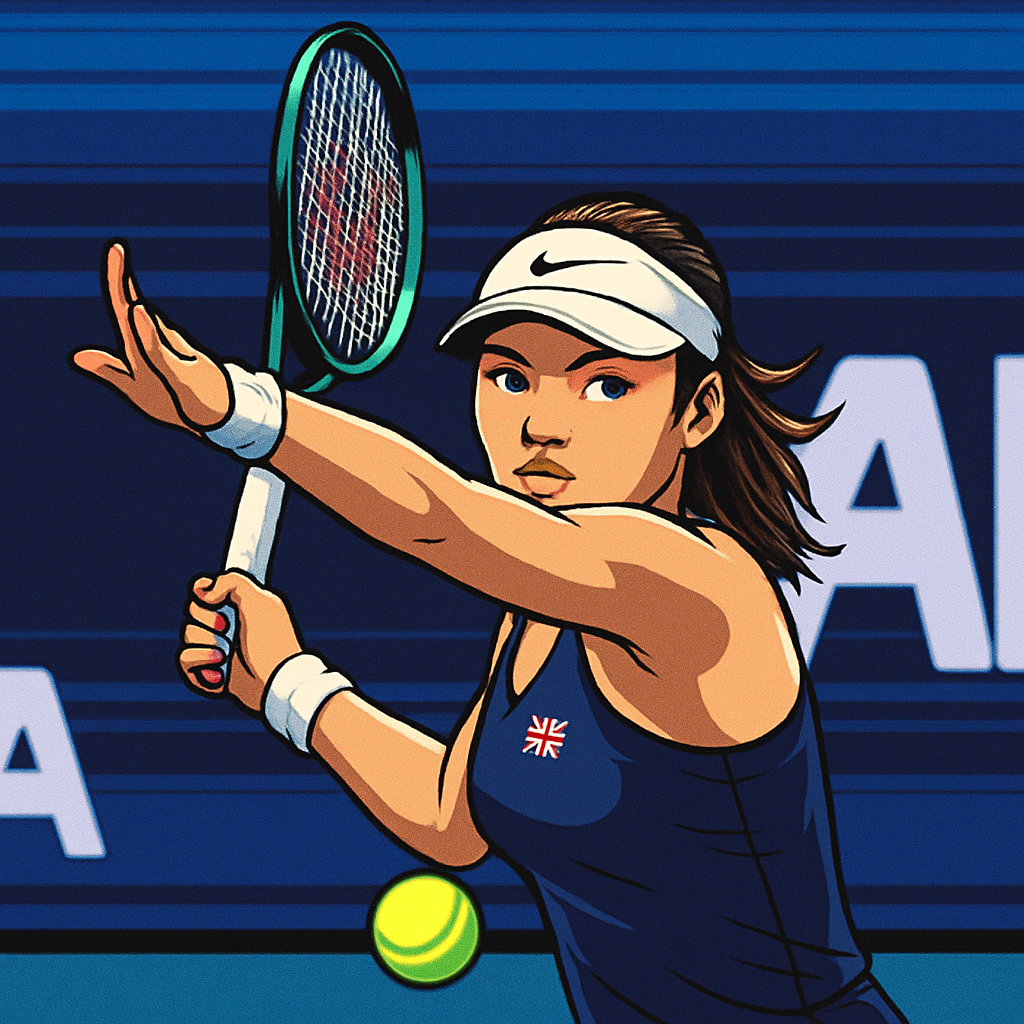
As Emma Raducanu continues her compelling comeback trail, her path is set to intersect with a player whose family tree is deeply rooted not in the clay or grass of tennis courts, but in the hallowed turf of football pitches. The British star's next opponent at the Madrid Open, Maria Lourdes Carlé of Argentina, boasts a sporting pedigree where football is the family business, featuring not one, but three professional footballers, including a World Cup star.
An Argentine Opponent with a Football Dynasty
While Emma Raducanu’s own story of a meteoric US Open triumph captured the world’s imagination, Maria Lourdes Carlé’s narrative is one of steady ascent from a football-mad family. The 24-year-old Argentine, currently ranked World No. 82, has quietly climbed the WTA ladder, reaching a career-high ranking earlier this year. Her game, characterized by gritty determination and heavy topspin from the baseline, presents a unique challenge. But it is her family background that provides a fascinating subplot to this second-round encounter in Madrid. Carlé doesn't just come from a sporting family; she comes from a football dynasty.
The Carlé Football Connection
The most prominent figure in this sporting lineage is her uncle, José Luis Brown, famously known as "Tata" Brown. He is etched in Argentine football folklore as the unlikely hero of the 1986 FIFA World Cup final. With Argentina leading West Germany 2-1, Brown—a central defender—scored a crucial headed goal to extend the lead, a contribution that proved vital in securing a 3-2 victory and the nation's second World Cup trophy. His iconic goal, celebrated in Maradona's shadow, remains a defining moment in football history. Beyond her famous uncle, the football ties run even closer to home:
- Father: Carlos Carlé, a former professional footballer who played as a defender for clubs including Gimnasia y Esgrima de La Plata in Argentina's top division.
- Brother: Tomás Carlé, who has followed in their father's footsteps as a professional footballer, currently playing as a defender.
Growing up in such an environment, Maria was inevitably drawn to sports, but she ultimately chose a different path. In interviews, she has reflected on the unique pressure and perspective her family's fame provides. "Having an uncle who won a World Cup, it's something very big," Carlé has said. "It takes the pressure off in a way because whatever I achieve, it will never compare to that. It allows me to play more freely."
A Clash of Narratives on Clay
The match-up in Madrid represents a fascinating convergence of two distinct tennis journeys. Raducanu, the global superstar and grand slam champion, is meticulously rebuilding her ranking and confidence after multiple surgeries. Her powerful, aggressive game and exceptional court coverage are her trademarks. Carlé, in contrast, embodies the grind of the tour—a player who has honed her craft largely away from the spotlight, leveraging a strong work ethic and the resilient mentality often associated with footballers. Her game is built on consistency, fighting for every point, and wearing down opponents, a style well-suited to the demanding clay courts of the Caja Mágica.
For Raducanu, this match is another critical step in her return to the top echelons of the sport. A victory would signal progress and the ability to consistently dispatch dangerous, lower-ranked opponents. For Carlé, it is a monumental opportunity on one of the sport's biggest stages—a chance to claim a career-defining win against a household name and to perhaps, for a moment, shift the family sporting conversation from the football pitch to the tennis court. The Argentine will undoubtedly draw on the competitive spirit that runs in her family. As she once noted about her famous uncle's influence, "He taught me that in sport, you have to be strong mentally. That has helped me a lot in tennis."
The Weight of a Sporting Legacy
Carrying the name of a national sporting hero brings its own unique dynamic. While it can open doors and provide inspiration, it also sets a formidable benchmark. Carlé has navigated this by carving her own identity in a completely different sport, a decision that required independence and conviction. Her progress on the WTA tour—including a run to the quarter-finals at the Hobart International earlier this year and a main-draw win at the Australian Open—is a testament to her dedication. She is not trying to be the next "Tata" Brown; she is determined to be the first Maria Carlé, tennis professional. This mindset was clear when she discussed her family's reaction to her career choice: "They always supported me. They never pressured me to play football. They saw that I liked tennis and they encouraged me to follow my dream."
What to Expect in Madrid
Tactically, the match presents intriguing questions. Raducanu will look to use her superior power and flat groundstrokes to take time away from Carlé and dictate play. The key for the Briton will be managing her aggression on the slower clay, ensuring she constructs points patiently before going for winners. Carlé’s strategy will likely involve exploiting Raducanu’s potential rustiness in long rallies, using heavy topspin to push her opponent back and targeting the Brit’s movement, which is still being tested after her lengthy layoff. The Argentine’s mental fortitude, perhaps inherited from her footballing relatives, will be crucial if the match becomes a physical and psychological battle.
The setting adds another layer. The Madrid Open is a prestigious WTA 1000 event, offering significant ranking points and prize money. For Carlé, a deep run here could be transformative, potentially propelling her into the top 60. For Raducanu, it is another opportunity to gain match rhythm against a varied field and continue building momentum ahead of the summer grass-court season. The crowd's allegiance may be split, with Raducanu commanding her usual global support, but the Argentine contingent in Madrid will surely rally behind the niece of a national icon.
Beyond the Baseline: A Family Affair
This encounter is a reminder of the rich, interconnected tapestry of international sport. It highlights how athletic talent can manifest in different forms across generations and disciplines. While José Luis Brown was defending his goal in Mexico City in 1986, he likely never imagined his niece would one day be trading groundstrokes with a US Open champion on a clay court in Spain. The Carlé family’s story underscores a universal sporting truth: the values of discipline, resilience, and competitive fire are transferable, whether the arena is a packed football stadium or a sun-baked tennis court.
As the two players prepare to walk onto the court, the narrative extends beyond a simple second-round match. It is a clash between a prodigy who captured a nation's heart overnight and a grinder whose family’s sporting legacy was forged over 90 minutes of World Cup glory. Raducanu will face not only a determined opponent across the net but also the intangible spirit of a family accustomed to high-stakes sporting success. For Maria Lourdes Carlé, this is more than just another match; it is a chance to honor her family's legacy by creating her own.
In conclusion, Emma Raducanu's path at the Madrid Open has led her to a uniquely compelling challenge. Maria Lourdes Carlé represents the depth and variety of talent on the WTA tour—a player whose story is interwoven with footballing greatness. As the match commences, it will be a test of skill, fitness, and mentality. Will Raducanu's grand slam pedigree prove decisive, or will Carlé's football-forged resilience and steady climb create an upset? One thing is certain: the result will be written not just in the tennis record books, but also in the ongoing story of a remarkable Argentine sporting family.