
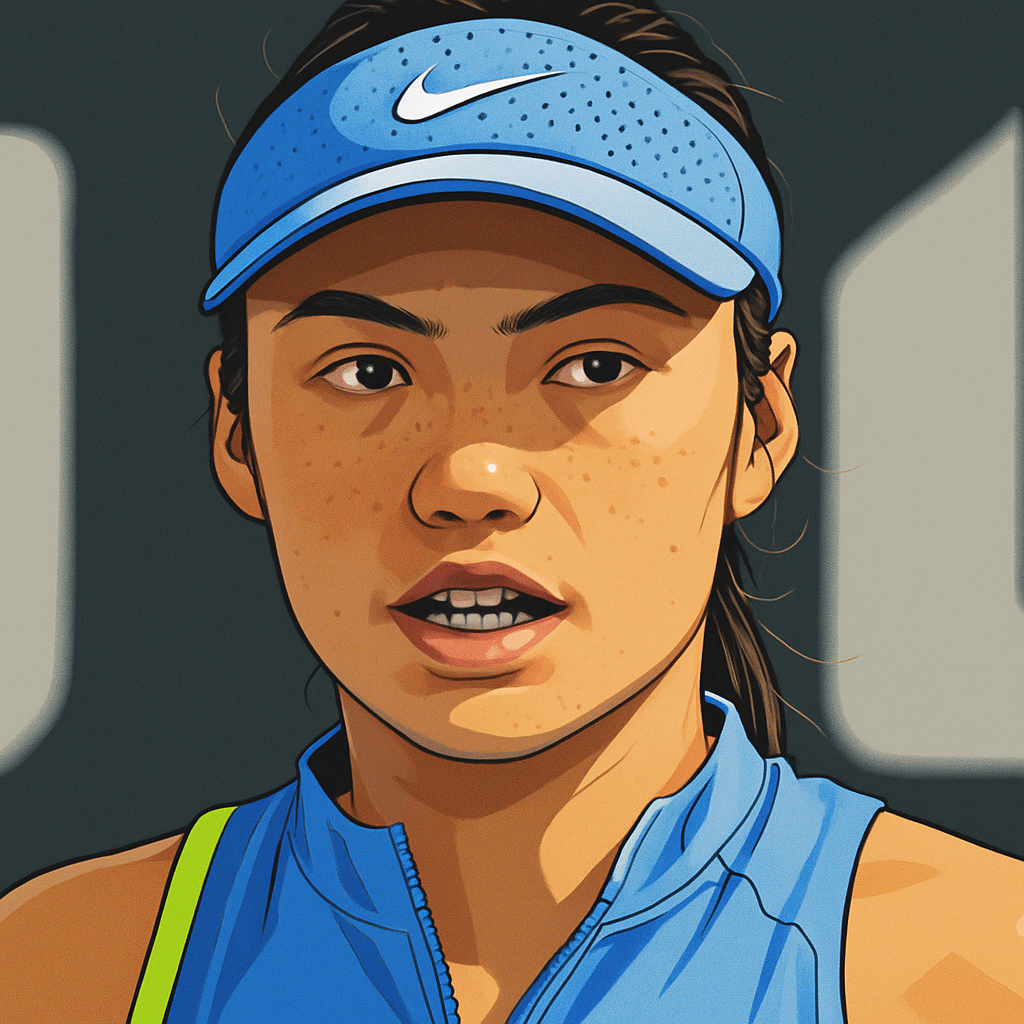
LONDON — Emma Raducanu, the 2021 US Open champion whose career has been a rollercoaster of stunning highs and persistent injury woes, is once again searching for a new coach. The 21-year-old Briton has parted ways with her coach, Nick Cavaday, just weeks after a promising return to Grand Slam tennis at the Australian Open, where she reached the second round.
The split, confirmed by Raducanu's representatives, marks the latest in a long line of coaching changes for the young star. Cavaday, a childhood friend and former coach at the Bromley Tennis Centre where Raducanu trained as a junior, had been by her side since December, guiding her through a rigorous off-season and her comeback from triple surgery on her wrists and ankle.
A brief statement released on behalf of Raducanu read: "Emma and Nick have mutually agreed to part ways. The pair remain good friends and Emma wishes Nick all the best for the future. Emma is taking some time with family and will confirm coaching plans in due course." The decision comes amid reports of a pointed comment Raducanu made in Melbourne, which some have interpreted as a subtle dig at the transient nature of her coaching relationships.
A Pattern of Instability
Since her fairytale run in New York as an 18-year-old qualifier, Raducanu has cycled through a remarkable number of coaches. Her professional journey has been characterized by a search for the right fit, a process that has drawn as much attention as her results on court. The list of former mentors reads like a who's who of tennis coaching:
- Andrew Richardson: The coach who guided her to the US Open title, dismissed shortly after the triumph.
- Torben Beltz: Experienced German coach, partnership lasted just five months.
- Dmitry Tursunov: Worked briefly in 2022 before parting ways ahead of schedule.
- Sebastian Sachs: Former coach of Belinda Bencic, partnership ended due to "circumstances" on both sides.
- Nick Cavaday: The latest departure after a two-month stint.
This revolving door has led to inevitable questions about Raducanu's long-term development and stability. Each split has been framed as amicable and mutual, but the cumulative effect is a narrative of a talent still searching for a definitive direction and a consistent voice in her corner.
The Australian Open "Dig" and Its Aftermath
The timing of Cavaday's exit is particularly intriguing given Raducanu's comments following her second-round loss to Wang Yafan in Melbourne. When asked about her performance and physical condition after a grueling three-setter, Raducanu made a remark that has since been widely analyzed. She said, "I think it's just having someone who knows you and knows your game inside out is really I think a big part of it."
While seemingly innocuous, the statement was interpreted by many in the tennis press as a veiled criticism of her own transient coaching situation. The implication was that the lack of a long-term, deeply knowledgeable guide was a handicap. This "dig," whether intentional or not, now appears prophetic, coming just weeks before the announcement of her latest split.
The Cavaday partnership, while brief, was seen as a potential reset. Their shared history offered a foundation of trust. He oversaw her return from an eight-month layoff, which saw her win a match at the Australian Open and display flashes of the explosive, aggressive tennis that made her a global star. However, the search for that elusive, perfect "someone who knows you inside out" clearly continues.
The Road Ahead and Mounting Pressure
Raducanu's immediate schedule is now a major point of speculation. She is entered in tournaments in the Middle East but her participation is uncertain without a coach in place. The primary goal for her 2024 season was to build a consistent, injury-free schedule and climb back up the rankings from her current position outside the top 250. This latest disruption poses a significant challenge to that plan.
The pressure on Raducanu is multifaceted. There is the immense commercial and media spotlight that has followed her since her US Open win, the constant physical battle to maintain fitness, and now, the recurring narrative of coaching instability. Each new partnership begins under a microscope, with every result scrutinized as a verdict on the latest collaboration.
What Do The Experts Say?
Former British number one, Tim Henman, a close advisor to Raducanu, has often spoken of the need for patience. In a recent interview, he emphasized the long-term view: "She's 21 years of age. She's got her whole career ahead of her. She needs to find that right structure." However, other pundits are less forgiving, suggesting the constant change is detrimental to building the technical and tactical foundations required for sustained success at the highest level.
The key questions now are: Will Raducanu take a more hands-on role in her own development, perhaps relying more heavily on the LTA's support system? Or will she embark on yet another search for a high-profile coach, risking another short-term experiment? The "mutual" nature of the split with Cavaday suggests the decision was not driven by poor results, but perhaps by a differing vision for the path forward.
Conclusion: A Critical Juncture
Emma Raducanu's talent is undeniable. Her US Open victory was no fluke, but a breathtaking display of precision and mental fortitude. Yet, her career since has become a case study in the difficulties of managing sudden fame, physical fragility, and the complex player-coach dynamic in modern tennis. The split with Nick Cavaday, following so closely on the heels of her Australian Open comment, highlights a recurring theme of searching for an ideal that has so far remained out of reach.
As she takes time with family before confirming her next move, the tennis world watches and waits. Her next coaching decision will be her most scrutinized yet. Will it be the beginning of a lasting partnership, or merely another chapter in a ongoing story of instability? For Raducanu, finding that consistent voice—the one that knows her "inside out"—is no longer just a preference; it appears to be the crucial missing piece in the puzzle of fulfilling her vast potential.