
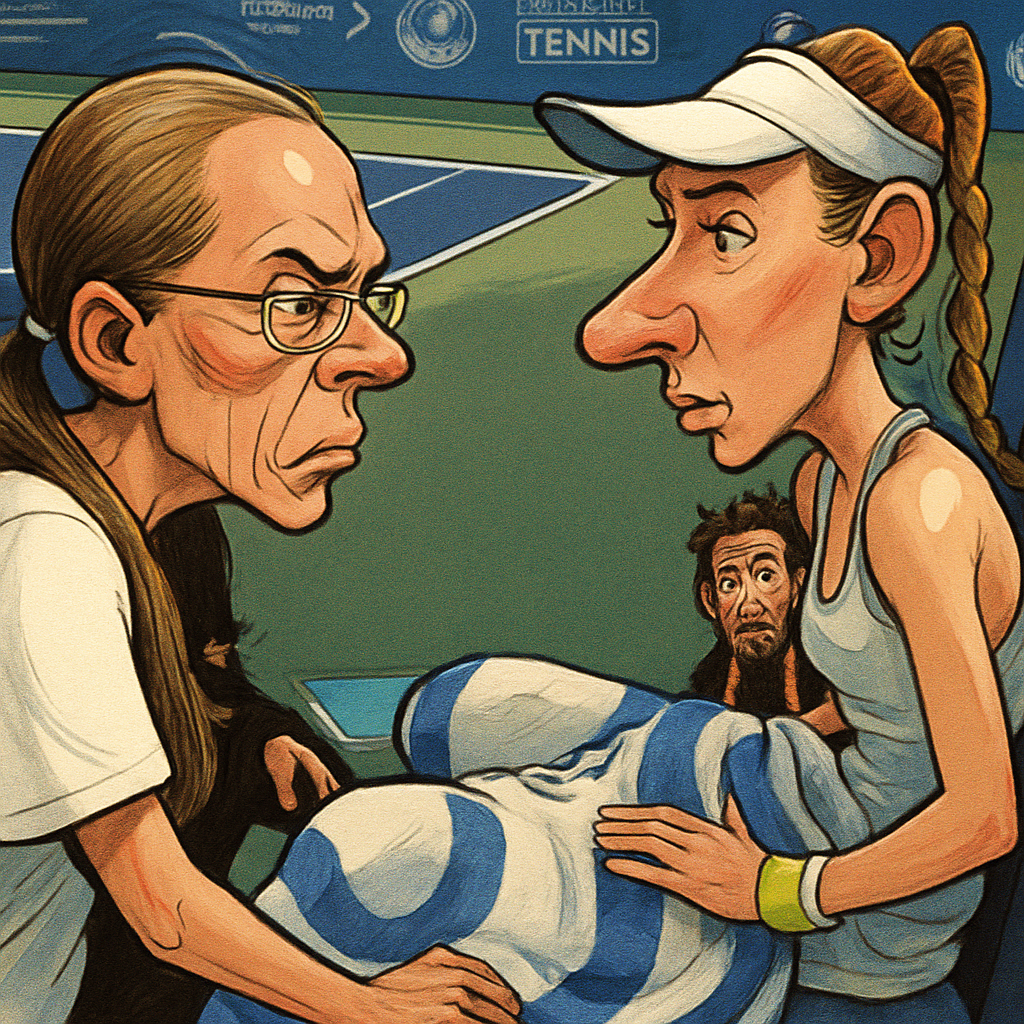
DUBAI — In a stunning and concerning turn of events at the Dubai Duty Free Tennis Championships, world No. 4 Elena Rybakina was forced to retire from her third-round match against Italy’s Jasmine Paolini, telling the on-court doctor, "I'm going to stop" after a valiant but ultimately futile effort to continue. The 2022 Wimbledon champion, who had just conquered a resurgent Emma Raducanu in a high-profile second-round clash, was trailing 6-2, 5-7, 3-4 when she made the difficult decision, citing severe gastrointestinal illness.
The abrupt end to her title defense in Dubai sent shockwaves through the tournament, raising immediate questions about her fitness ahead of the upcoming Sunshine Double in Indian Wells and Miami. Rybakina, known for her powerful and stoic demeanor, appeared visibly unwell and struggled with her movement throughout the match, a stark contrast to the player who had dominated proceedings against Raducanu just 24 hours earlier.
A Spirited Fight Before the Inevitable
The match began under a cloud of uncertainty. Rybakina, who had received a first-round bye, looked out of sorts from the outset against the tenacious Paolini. The Italian, seeded 26th, capitalized on her opponent's clear physical distress, racing to a 6-2 first-set victory. However, demonstrating the champion's resilience that defines her, Rybakina mounted a fierce comeback in the second set.
Despite appearing pale and frequently bending over in discomfort between points, she found a way to elevate her game, breaking Paolini’s serve to force a decider. The effort, however, seemed to drain her last reserves of energy. In the third set, her movement became increasingly labored, and after falling behind a break, she called for the tournament doctor at the changeover.
A brief conversation ensued, with Rybakina audibly stating her intention to halt play. She then walked to the net to inform Paolini and the chair umpire of her retirement. The Italian, who advances to her first WTA 1000 quarterfinal in Dubai, was gracious in victory, acknowledging the unfortunate circumstances. "I’m so sorry for her. I hope she can recover soon," Paolini said in her on-court interview.
The Physical Toll of a Demanding Schedule
Rybakina’s retirement is the latest in a series of health setbacks that have plagued her young career, often linked to the intense physical demands of the modern tour. Just last season, she was forced to withdraw from the French Open third round due to a viral illness, and she has previously dealt with recurring back issues. This incident highlights a critical challenge for top players:
- Congested Calendar: The transition from the Australian Open to the Middle East swing and onto the North American hard courts places immense strain on the body.
- Viral Vulnerability: Constant travel and exposure in player lounges and hotels make athletes susceptible to illnesses.
- Limited Recovery Window: The short turnaround between tournaments, especially after deep runs, offers little time for proper rest and recuperation.
Rybakina’s coach, Stefano Vukov, had expressed concern about the schedule prior to the tournament. While not directly citing it as the cause for this specific illness, the context is undeniable. The physical price of maintaining a position at the pinnacle of the sport was on full display in Dubai, as a contender for the title was undone not by an opponent’s winner, but by her own body’s rebellion.
A Lifeline in Defeat: The Ranking Silver Lining
Despite the painful nature of the retirement, a significant consolation emerged for the Kazakh star. Due to the WTA’s revised ranking rules for 2024, Rybakina will not lose any points from her Dubai title defense. The rules now allow players to retain their points from a mandatory WTA 1000 event if they are unable to compete due to injury or illness, provided they have completed one match at the tournament.
This rule change, designed to offer more protection to players, has thrown Rybakina a crucial lifeline. She will remain at No. 4 in the world rankings, maintaining her position ahead of rivals like Jessica Pegula and Ons Jabeur. This is no small mercy; preserving her seeding for the upcoming major tournaments is a strategic advantage that softens the blow of an early exit.
In a post on social media, Rybakina confirmed the severity of the issue, writing: "Unfortunately, I’ve been struggling with illness since yesterday… I wanted to try to continue but it wasn’t possible." The message underscored her intent to compete, aligning with her reputation as a fierce competitor unwilling to yield without a fight.
Looking Ahead: Recovery and the Road to Indian Wells
The immediate focus for Team Rybakina shifts entirely to recovery. With the BNP Paribas Open in Indian Wells—a tournament she won in 2023—beginning in just over two weeks, the race is on to regain full health. Her powerful game, built on a foundation of massive serves and groundstrokes, requires peak physical conditioning to be effective.
The concern now is whether this gastrointestinal issue is a short-lived bug or a symptom of deeper fatigue. Her withdrawal casts a shadow over her preparation for a title defense she will be eager to mount. The tennis world will be watching closely for updates on her condition, hoping to see one of the game’s most exciting talents return to full strength.
A Stark Reminder of Sport's Human Element
Elena Rybakina’s retirement in Dubai serves as a poignant reminder of the fragile human element at the heart of elite sport. In an era often dominated by statistics and rivalries, moments like these strip back the spectacle to reveal the athlete underneath. The sight of a champion brought low not by an opponent, but by illness, is a humbling one.
It also sparks ongoing conversations about the tour’s demanding structure and the support systems in place for player health. While the new ranking rules offer a financial and competitive buffer, the primary concern remains the well-being of the athletes who drive the sport forward.
For Jasmine Paolini, the path forward is a career-best opportunity. For Elena Rybakina, the journey is now one of rest and rehabilitation. Her words to the doctor, "I'm going to stop," were not a sign of surrender, but a necessary act of preservation—a strategic retreat with the hope of returning stronger for the battles that lie ahead in the desert of Indian Wells and beyond.