
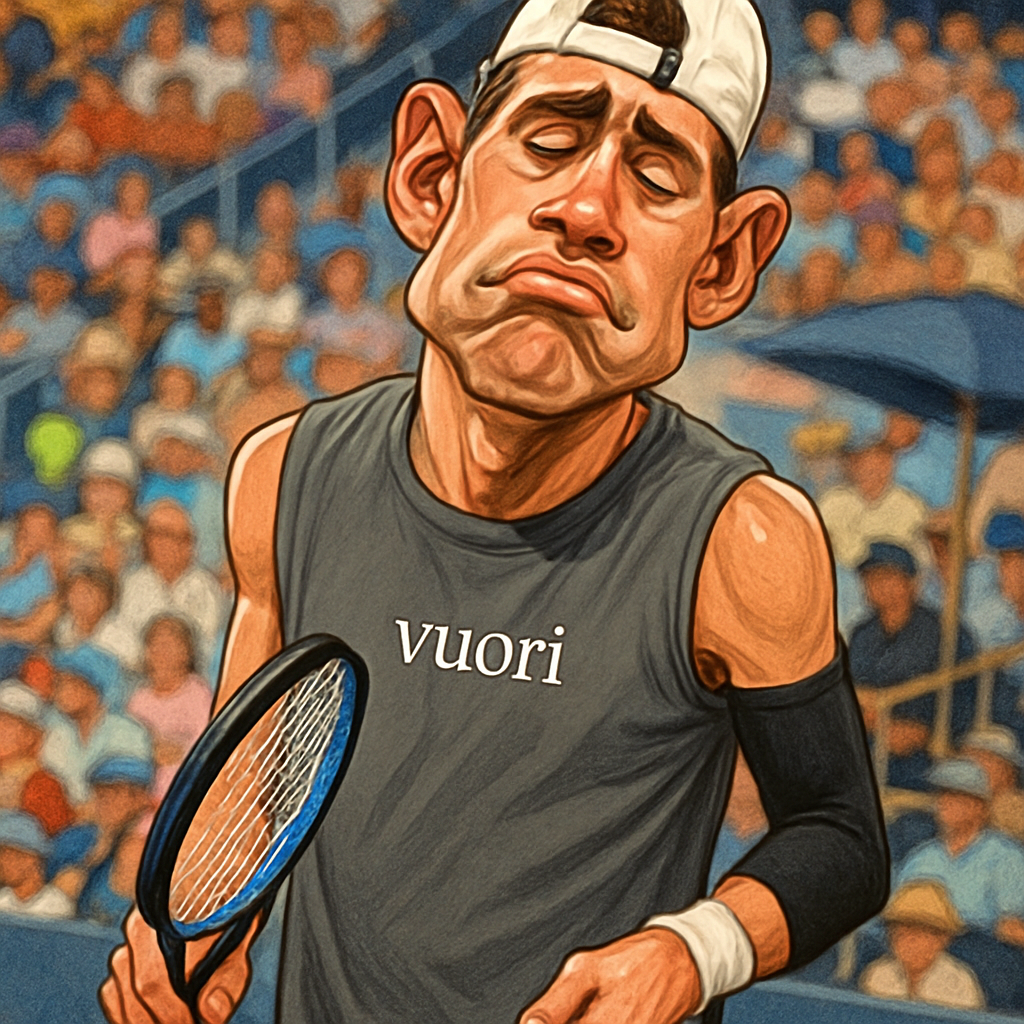
LONDON — In a disappointing turn for British tennis fans, rising star Jack Draper has been forced to withdraw from this weekend’s Ultimate Tennis Showdown (UTS) Grand Final in London. The decision marks a delay in his comeback from a persistent arm injury, casting a shadow over his preparations for the upcoming grass-court season and Wimbledon.
Draper, who had been scheduled to compete at the ExCeL London from May 25-26, announced his withdrawal on social media, stating the need for more recovery time. "Unfortunately I’m going to have to withdraw from the UTS final this weekend," he wrote. "My arm is not where I want it to be right now and I need more time to get back to 100%." His spot in the eight-man field has been taken by French veteran and crowd-pleaser Gaël Monfils.
A Recurring Setback Halts Momentum
This latest withdrawal is part of an unfortunately familiar pattern for the 22-year-old left-hander, whose prodigious talent has often been hampered by physical issues. The current problem stems from an arm injury sustained during his run to the quarter-finals of the Bavarian International in Munich in mid-April. Despite the setback there, Draper attempted to compete at the Madrid Open shortly after but was visibly hampered.
His first-round match in Madrid against Czech player Jiří Lehečka laid the concerns bare. Struggling with his serve and forehand, Draper required a medical timeout for treatment on his right arm before eventually retiring from the match. It was a stark reminder of the physical demands of the tour and the fine line players walk between fitness and injury. Since that retirement, Draper has not played a competitive match.
The Significance of the UTS Grand Final
Missing the UTS Grand Final is a particular blow for both Draper and the event organizers. The innovative, fast-paced team tennis format, founded by Patrick Mouratoglou, has become a popular off-calendar attraction. For Draper, it represented a prime opportunity to:
- Gain much-needed match practice in a high-intensity but slightly less formal environment.
- Compete in front of a passionate home crowd in London, boosting his profile.
- Build rhythm and confidence ahead of the crucial grass-court swing, where he is considered a major threat.
His replacement, Gaël Monfils, is a spectacular showman who will undoubtedly entertain the fans, but the absence of Britain’s top male hope diminishes some of the local buzz. Draper’s powerful, aggressive style is perfectly suited to both the UTS format and grass courts, making his absence all the more palpable.
The Road to Wimbledon Now in Question
All eyes for Draper and his team are now firmly fixed on the grass. The British No. 1 has historically excelled on the surface, with his big serve and flat groundstrokes proving extremely effective. He reached the semifinals at Queen’s Club last year and the fourth round of Wimbledon in 2022, announcing himself as a future contender. However, his preparation for the 2024 Championships is now under a cloud.
The traditional British grass-court tournaments at Queen’s Club (the Cinch Championships, starting June 17) and Eastbourne (starting June 24) are the critical warm-up events. Draper’s participation in these will be heavily dependent on his recovery progress in the coming weeks. A statement from his team emphasized caution, noting, "Jack’s focus is on a full recovery. He is working diligently with his medical team and will return to competition only when he is completely ready."
A History of Managing Physical Challenges
While still young, Draper has already navigated a series of physical challenges that have interrupted his steady climb up the rankings. These have included:
- Shoulder problems in 2023.
- Abdominal issues in 2022.
- A heart rate concern during the 2023 US Open.
Each time, he has demonstrated resilience, returning to achieve new milestones, such as winning his first ATP title in Stuttgart last year and breaking into the world’s top 40. This resilience will be tested once more as he manages this latest arm setback. The goal is clearly long-term sustainability, even if it means missing short-term opportunities like the UTS final.
The Bigger Picture for British Tennis
Draper’s withdrawal also highlights the precarious state of British men’s tennis heading into its home Grand Slam. With Emma Raducanu generating positive momentum on the women’s side, there is immense hope for Draper to lead the charge for the men. His potential is undeniable, but his fitness remains the pivotal variable. Other British hopefuls like Cameron Norrie and Dan Evans have experienced mixed form, increasing the weight of expectation on Draper’s shoulders when he is fit.
The tennis community has largely responded with support for Draper’s cautious approach. Commenting on the withdrawal, UTS organizer Patrick Mouratoglou said, "We are of course sad that Jack cannot play, but health always comes first. We wish him a speedy recovery and look forward to welcoming him back soon." This sentiment echoes across fan forums and punditry, recognizing that a fully-fit Draper is far more valuable than one rushing back and risking longer-term damage.
Conclusion: Patience is the Priority
Jack Draper’s decision to pull out of the UTS Grand Final is a short-term disappointment but a necessary one in the broader scope of his career. In an era where the physicality of the sport continues to intensify, managing injury comebacks with precision is a critical skill for any athlete with grand slam ambitions. While London fans will miss seeing him this weekend, the hope is that this extra period of rehabilitation will allow him to return stronger for the grass-court season. The dream of a deep Wimbledon run for the British star remains alive, but its realization depends entirely on the successful healing of an aching arm. The message from Team Draper is clear: patience is not just a virtue; it is a strategy.